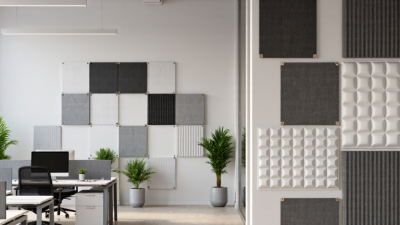
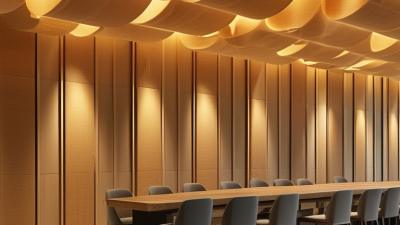
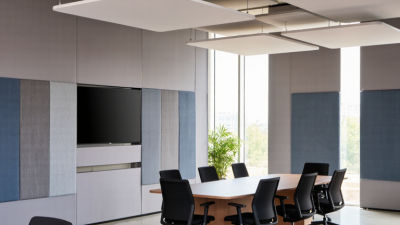
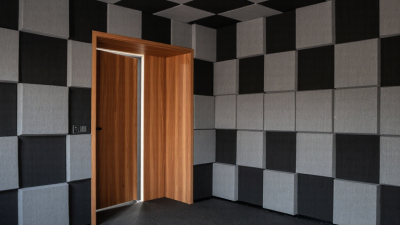
When searching for decorative acoustic panels in China, buyers face a crowded field: felt tiles, fabric-wrapped boards, timber slats, and custom-shaped products can look similar online. Their acoustic performance may differ sharply. A polished photograph is not evidence of sound absorption. Ask suppliers for test reports, material details, and samples that show the finish under ordinary room lighting.
There are useful benchmarks. ISO 354:2003 specifies how sound absorption is measured in a reverberation room, while ASTM C423 provides a related test method used in North America. These standards help buyers compare results, but a number alone cannot predict how a panel will perform in a particular room. The World Health Organization’s 2018 Environmental Noise Guidelines also underline that noise exposure matters to health; they are not, however, a product-testing guide for interior panels. That distinction is easy to miss.
This guide looks at where to source panels in China, how to assess manufacturers, and which questions to ask before requesting a quotation. Check whether reported results identify the tested product, thickness, mounting method, and laboratory. Confirm lead times, minimum order quantities, packaging, and sample costs in writing. A small sample can reveal uneven edges or color variation that a product page hides. It cannot prove long-term durability. That requires better evidence. No supplier is automatically the right choice because it is based in a major manufacturing hub; careful verification still matters.
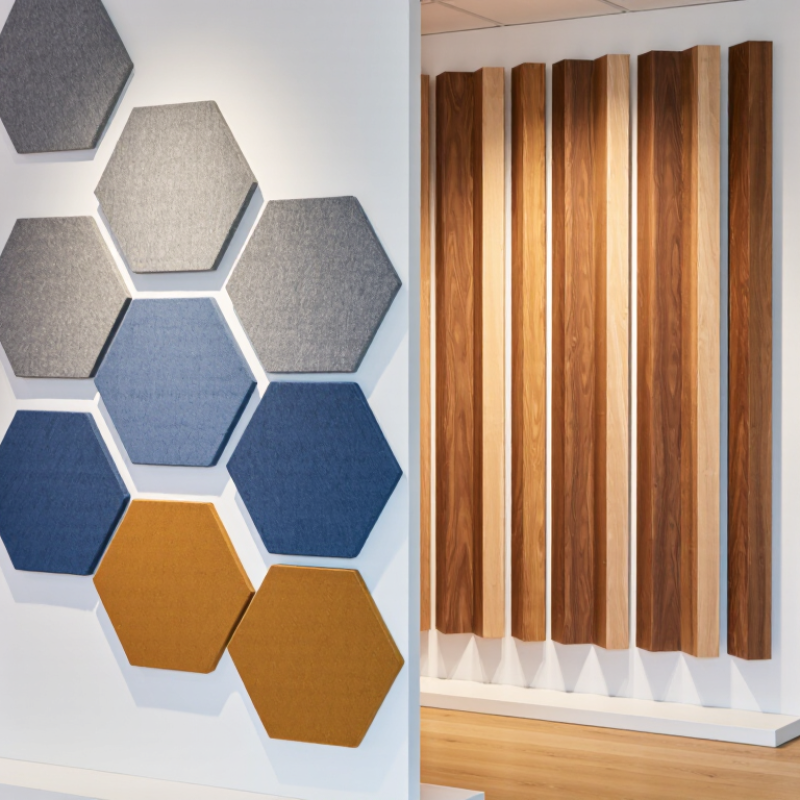
Decorative acoustic panels combine sound-absorbing materials with finishes that contribute to a room’s appearance. They can soften echoes and reduce harsh reflections, especially in spaces with hard floors, glass, or bare walls. Many use fabric-wrapped cores, perforated wood, or textured composite surfaces. Their visual appeal matters, but appearance alone cannot predict acoustic performance. A beautiful panel may do little in the wrong location.
These panels suit meeting rooms, restaurants, home offices, classrooms, and media spaces. In a busy café, panels above seating can make conversation less tiring without eliminating background activity. In a home office, a few panels near reflective walls may help reduce voice echo during calls. Coverage, thickness, mounting method, and room layout all affect results. More panels are not always better; excessive absorption can make a room feel unnaturally dull. That balance is easy to overlook.
Tips: Check published absorption data, such as a tested rating across relevant frequencies. Ask how the panel is installed and whether its finish is suitable for the room. Place panels where sound reflects, not only where they look attractive. If possible, test a small area first. Real rooms can surprise you.

To find decorative acoustic panel suppliers in China, search export directories, trade-fair exhibitor lists, and manufacturing hubs in Guangdong, Zhejiang, and Jiangsu. Shortlist factories that make the panel type you need, such as PET felt, perforated wood, or fabric-wrapped boards. Ask for a current product sheet, material details, minimum order quantity, lead time, and a sample from the same production line. Measure the room first. A polished catalog is useful, but it cannot confirm how a panel will look or perform in your space.
Check acoustic claims against independent test documents. The World Health Organization’s Guidelines for Community Noise (1999) gives indoor guidance of 35 dB LAeq for classrooms and 30 dB LAeq for bedrooms. These are room-noise benchmarks, not panel ratings. Request absorption test results, including the test method and frequency data; a single headline rating may hide weak performance at lower frequencies. Confirm fire-test documentation, finish consistency, and packaging with the supplier. Test before scaling. One sample may differ slightly from a full batch, so agree on an acceptable color and surface variation before placing a larger order.
When sourcing decorative acoustic panels in China, evaluate the manufacturer as carefully as the finish. Ask whether it makes the panels or mainly coordinates suppliers. Request recent project photos, production details, and test reports for the exact panel construction. Check the report date, sample thickness, mounting method, and test standard; absorption figures can change when these details differ. Small details matter. A clean-edged sample is useful, but it cannot prove consistent quality across a full order. Ask for a pre-shipment inspection or samples from a regular production run. Some suppliers may resist. That is worth noticing.
Compare products by core material, panel thickness, fabric durability, edge treatment, and installation method. If possible, test samples in the intended room; a high absorption rating does not guarantee the right sound balance. For pricing, request an itemized quotation covering dimensions, quantity, finish, mounting hardware, packaging, customization, and freight. Confirm the minimum order quantity, lead time, replacement terms, and any additional charges. Cheap offers may omit these. Prices are not directly comparable until specifications match. I would keep a simple comparison sheet, though it feels tedious; skipping one can lead to costly surprises.
| Where to Buy Top Decorative Acoustic Panels in China? - How to Evaluate Manufacturers, Products, and Pricing | ||||
|---|---|---|---|---|
| Category | Product or Evaluation Factor | Typical Specifications or Evidence to Check | Indicative Price / Performance | Buyer’s Evaluation Notes |
| Decorative Acoustic Panel Options | ||||
| Product | PET felt panels | Commonly made from recycled polyester fiber; available in flat, grooved, and custom-cut designs. Thickness and mounting method affect absorption. | Indicative export-market range: approximately US$8–30 per m². Absorption varies by thickness, air gap, and test setup. | Request fiber-content details, fire-test documentation for the intended market, color samples, and acoustic test reports for the exact panel build-up. |
| Product | Fabric-wrapped fiberglass or mineral-fiber panels | Porous acoustic core with a fabric finish; commonly supplied in wall-panel formats with different edge details and mounting systems. | Indicative export-market range: approximately US$18–55 per m². Many tested systems achieve strong absorption, but results are assembly-specific. | Check core density and thickness, fabric cleanability, edge construction, and whether the acoustic report covers the proposed fabric and mounting method. |
| Product | Wood veneer or decorative slat panels with acoustic backing | Typically combines a decorative wood or wood-look surface with an absorptive backing; performance depends on perforations, slat spacing, backing, and cavity depth. | Indicative export-market range: approximately US$25–80 per m². Finish, veneer type, backing, and installation system can substantially change the price. | Confirm veneer or finish specification, substrate composition, emissions documentation where required, and test results for the complete panel system. |
| Product | Perforated metal acoustic panels | Perforated metal facing is generally used with an absorptive infill or backing. Hole pattern, open area, finish, and backing influence performance. | Indicative export-market range: approximately US$20–70 per m². Custom metal thicknesses, coatings, and infill materials affect cost. | Ask for panel drawings, metal and coating specifications, corrosion-resistance details when relevant, and acoustic results for the specified backing. |
| Product | Perforated gypsum acoustic panels | Gypsum boards with regular perforations and an acoustic tissue or backing; available in different hole patterns and surface finishes. | Indicative export-market range: approximately US$12–35 per m². Price depends on board thickness, pattern, finish, and packing requirements. | Check board dimensions and tolerances, edge details, installation requirements, and test data for the specified perforation and backing configuration. |
| How to Evaluate Manufacturers and Offers | ||||
| Manufacturer | Factory capability and quality control | Review production process, inspection procedures, material traceability, sample approval process, and quality records for comparable orders. | Compare suppliers using the same product specification and order quantity; a low unit price alone does not establish equivalent quality. | Request a factory audit or a live production walkthrough, and confirm who is responsible for inspection before shipment. |
| Manufacturer | Acoustic and fire-test documentation | Look for reports from a competent laboratory. Commonly referenced methods include ISO 354 or ASTM C423 for sound absorption; fire requirements depend on the destination market and application. | Test results apply to the tested sample and mounting arrangement, not automatically to every thickness, finish, or installation. | Match report details to the quoted product, including dimensions, backing, air gap, mounting, and any required classification. |
| Manufacturer | Materials, emissions, and compliance | Request material declarations and applicable emissions or safety documentation for the intended project and destination market. | Compliance requirements vary by country, building type, and project specification. | Verify document scope, issuing body, product model, and validity; do not rely on a certificate for a different material or product family. |
| Pricing | Quote basis and cost breakdown | Compare panel dimensions, thickness, finish, backing, accessories, packaging, order quantity, and trade term on a like-for-like basis. | Prices above are broad indicative ranges in US dollars per square metre, not supplier quotations. Actual offers vary with specification, quantity, exchange rates, and shipping terms. | Ask for separate prices for panels, accessories, packing, tooling if applicable, and freight. Clarify whether the quote is EXW, FOB, or another Incoterm. |
| Ordering | Samples, lead time, and shipment protection | Approve a production sample and written specification before placing a bulk order. Confirm packing method, inspection timing, and delivery schedule in the contract. | Lead times and minimum order quantities are supplier- and product-specific; obtain written confirmation for the actual order. | Check color consistency, panel tolerances, carton labeling, spare quantities, and packaging suitability for the planned transport route. |
| Pricing and performance note: Price ranges are indicative market estimates for comparison only, not verified quotes or guaranteed current prices. Sound absorption and compliance depend on the complete tested assembly and the requirements of the project. | ||||
Online marketplaces make it easy to compare panel shapes, finishes, prices, and stated sound-absorption ratings. Look closely at product specifications. Ask whether ratings apply to the exact panel thickness and test setup, not just a similar product. Request close-up photos of edges, fabric, and mounting hardware. A polished listing can still leave practical questions unanswered.
Industry directories can help identify manufacturers and compare their stated capabilities, but directory entries may be outdated. Verify factory addresses, production experience, sample policies, and quality checks directly. Factory visits offer a different view. You can inspect how panels are cut, wrapped, packed, and stored, while discussing custom sizes with production staff. If travel is impractical, request a live video tour and recent production photos. Details matter. A small sample is useful, though it may not reveal how a large installation will look or perform. I would avoid choosing on appearance alone; it is easy to overvalue a neat finish and overlook delivery packaging or installation requirements. Compare written specifications, samples, and communication across all three channels, and keep a record of unanswered questions. That process is not perfect, but it makes gaps easier to spot.
When sourcing decorative acoustic panels in China, request a test report for the exact panel build-up, not just a product family. Check results from ASTM C423 or ISO 354 testing, including thickness, mounting method, and sound absorption rating. A rating can change when installation details change. Ask for a current certificate, its issuing laboratory, and a traceable report number. Then order samples. Inspect the fabric under warm and cool light, press the corners, and check whether the backing sheds or smells strongly. Small details matter.
The World Health Organization’s 2018 Environmental Noise Guidelines recommend keeping road traffic noise below 53 dB Lden and 45 dB Lnight. These are outdoor exposure benchmarks, not guarantees for indoor panels. Absorbers can reduce reflections; they do not automatically block traffic noise. Ask the supplier to explain that difference. Also confirm sample-to-production color tolerance, carton dimensions, moisture protection, lead time, and shipping terms such as FOB or CIF. Request packing photos before dispatch. A polished quotation can still leave gaps. I would compare the written specification against the sample before approving production, because that step is easy to rush.