How to Choose Decorative Acoustic Panels in 2026?

Choosing decorative acoustic panels in 2026 requires more than matching colors to a wall. The right product must balance sound absorption, visual character, durability, and responsible installation. A panel may look refined under warm lighting, yet perform poorly in a lively restaurant. That mistake is common.

Professor Trevor Cox, an acoustics expert and author, offers a useful principle: “Good acoustics is about making spaces work for people.” This idea should guide every purchasing decision. Consider the room’s purpose, dimensions, occupancy, and dominant noise sources. A home office needs speech clarity. A hotel lobby may need controlled reverberation. A music room demands a different acoustic strategy.

Start with measurable performance. Check the panel’s absorption rating, tested frequency range, thickness, core material, and installation method. Do not rely on attractive product photographs. Fabric-wrapped panels can soften voices, while slatted wood systems may combine reflection and absorption. Perforated surfaces can behave differently again. Small details matter.

Look closely at the ceiling height, hard flooring, glass, and furniture. These surfaces shape the final result. Fire performance, low-emission materials, cleanability, and repair options also deserve attention. They are less exciting than color selection. They matter longer.

There is no universal best panel. Sometimes, a modest design performs better than a premium-looking product. That can feel disappointing. It is also why this guide compares decorative acoustic panels through practical evidence, not decoration alone. Expect useful questions, realistic trade-offs, and a few decisions that may challenge first impressions.
How to Choose Decorative Acoustic Panels in 2026?

Understanding Decorative Acoustic Panel Types and Functions

How to Choose Decorative Acoustic Panels in 2026?

Understanding Decorative Acoustic Panel Types and Functions

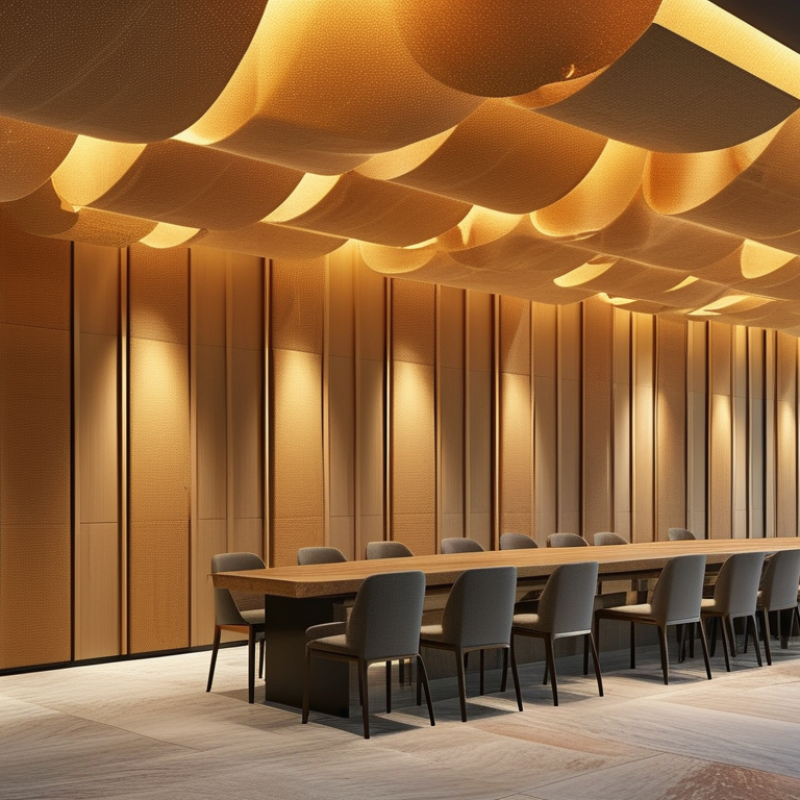
Choosing decorative acoustic panels in 2026 starts with function, not color. Each panel type manages sound differently. Fabric-wrapped panels absorb voices and reduce harsh reflections in offices, classrooms, and meeting rooms. Wood slat panels combine absorption with a warmer visual texture. Their felt backing captures mid-frequency noise, while the slats scatter some reflections.

Perforated wood or mineral panels can support absorption behind their visible surface. They suit corridors, restaurants, and public interiors where durability matters. Ceiling clouds work well when walls are already occupied. They reduce sound from above and can improve speech clarity around conference tables. No panel solves every noise problem. Sound blocking requires heavier construction, sealed gaps, and proper wall design.

Look beyond decorative photos. Check laboratory test data, absorption ratings, fire performance, cleaning requirements, and installation details. A panel with strong high-frequency absorption may not control low mechanical rumble. Room volume, ceiling height, furniture, and occupancy also change results. Measuring reverberation before and after installation gives more reliable evidence than listening briefly in an empty room.

A common design mistake is covering one wall and expecting silence. That approach may look impressive but perform unevenly. Balanced placement usually works better, especially on parallel walls and reflective ceilings. I would also leave space for future changes. Furniture moves, room use changes, and yesterday’s perfect acoustic plan may need adjustment.

Assessing Room Acoustics, Noise Sources, and Treatment Goals

Choosing decorative acoustic panels in 2026 should begin with the room, not the pattern. In site assessments, I listen for fluttering echoes, harsh reflections, and speech that disappears near the back wall. A hand clap helps, but it can mislead. Use measured reverberation time when possible, especially in offices, studios, classrooms, and restaurants. Record room dimensions, ceiling height, hard surfaces, furniture, and occupancy levels before selecting treatment.

Identify the dominant noise source. Traffic noise needs different planning from ringing voices, equipment hum, or footsteps above. Panels mainly reduce reflected sound inside a room; they do not fully block sound entering through walls. For speech-focused spaces, place absorptive surfaces near reflection points, including ceilings and side walls. For music rooms, preserve some liveliness instead of covering every surface. That balance is easy to miss.

Define the treatment goal in practical terms. Do you need clearer conversation, less fatigue, improved recording accuracy, or a calmer dining area? Choose panel thickness, coverage, spacing, and placement according to those needs. Decorative fabric, wood, and perforated finishes can perform differently, even when they look similar. Check tested absorption data, installation requirements, cleaning needs, and fire-performance documentation. I sometimes overestimate what a visually large panel will achieve. A smaller, well-positioned treatment can work better than a beautiful wall with poor acoustic coverage. Evaluate the result after installation, then adjust rather than assuming the first plan is perfect.

Choosing Panel Materials, Shapes, Colors, and Surface Designs

How to Choose Decorative Acoustic Panels in 2026?

Choosing panel materials, shapes, colors, and surface designs starts with the room’s actual acoustic problem. Start with the room. Measure reverberation, ceiling height, and reflective surfaces before selecting a finish. In my project experience, fabric-wrapped mineral wool often controls speech echoes effectively. PET felt offers lighter forms and flexible cutting. Slatted wood can add warmth, but its backing must include an absorptive layer. Always request tested absorption data from a recognized laboratory.

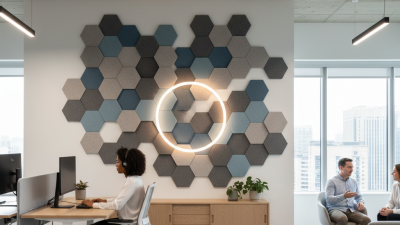
Shape affects both performance and visual rhythm. Large flat panels suit offices, classrooms, and meeting rooms. Curved or suspended panels can soften sound from several directions. Small geometric pieces create movement, yet they may leave untreated gaps. Measure twice. I once favored an attractive scattered layout that looked balanced but absorbed too little sound. That mistake changed my approach.

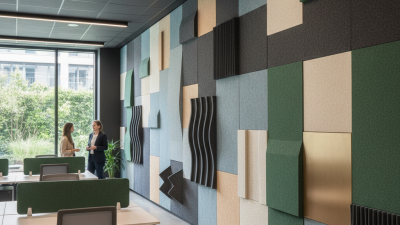
Color should support concentration, not compete with it. Soft greens, warm neutrals, and muted blues usually feel calmer than highly saturated shades. Surface texture also matters. Ribbed, perforated, or woven finishes can hide minor marks and add depth. Check cleaning methods, moisture resistance, edge quality, and fire performance before installation. For dependable decisions, compare the design with occupancy, lighting, ventilation, and maintenance needs. A beautiful panel is not automatically a suitable one.

How to Choose Decorative Acoustic Panels in 2026?

A practical comparison of panel materials, shapes, colors, surface designs, acoustic behavior, maintenance needs, and suitable applications.

Decorative Acoustic Panel Selection Guide
Panel Material Typical Decorative Shapes Color Options Surface Design Typical Acoustic Behavior Durability & Maintenance Sustainability Considerations Best-Fit Applications Relative Cost
PET Felt
Recycled polyester fiber board
Clouds Baffles Hexagons Wall tiles Neutral gray, charcoal, beige, blue, green, terracotta, and custom textile colors Soft felt texture, layered geometry, laser-cut patterns, ribbed finishes Strong mid- and high-frequency sound absorption; performance improves when installed with an air gap Lightweight and easy to vacuum or spot-clean; edges can be damaged by sharp impact Often manufactured with recycled polyester content; verify recycled percentage and end-of-life options Open offices, classrooms, libraries, corridors, restaurants, and creative workspaces $$
Fabric-Wrapped Mineral Fiber
Porous acoustic core with textile covering
Rectangles Squares Circles Clouds Broad textile palette, including light neutrals, saturated colors, and patterned fabrics Flat textile face, printed graphics, contrasting borders, and modular compositions Very high broadband absorption, particularly when panels are thick and mounted with a rear cavity Good dimensional stability; fabric may require professional cleaning after heavy soiling Some cores contain recycled fibers; check fire, formaldehyde, and material-transparency documentation Conference rooms, auditoriums, recording spaces, offices, and learning environments $$$
Wood Slat Panel
Wood veneer or solid-wood slats over an acoustic backing
Linear strips Chevron Grids Curved modules Natural oak, ash, walnut, smoked tones, stained colors, and painted finishes Visible wood grain, alternating slat spacing, perforated backing, and linear rhythm Effective sound scattering and absorption when combined with mineral wool or polyester backing; lower coverage may reduce total absorption Dust with a soft cloth; protect veneer from excessive moisture and direct abrasion Choose responsibly sourced wood and low-emission finishes; solid wood can be repairable and long-lasting Reception areas, hospitality interiors, executive offices, restaurants, and residential media rooms $$$
Perforated Wood Panel
Perforated veneer or engineered wood board with acoustic backing
Wall panels Ceiling panels Screens Geometric blocks Natural wood tones, stained finishes, matte colors, and coordinated edge details Round perforations, micro-perforations, slots, and custom geometric perforation patterns Perforations allow sound energy to reach an absorptive backing; suitable design requires correct open area and cavity depth Durable hard surface; clean with a dry or slightly damp cloth and avoid blocking perforations Wood sourcing, adhesive emissions, and backing composition should be reviewed in project documentation Music rooms, lecture halls, meeting rooms, cultural venues, and premium interiors $$$
Acoustic Foam
Open-cell polyurethane or melamine foam
Wedges Pyramids Egg-crate Clouds Black, charcoal, gray, white, and selected dyed colors Wedge, pyramid, convoluted, and sculpted three-dimensional profiles Good control of reflected mid- and high-frequency sound; thin foam is less effective at low frequencies Lightweight and easy to cut; surface can collect dust and may be vulnerable to tearing or compression Review fire performance, indoor-air emissions, UV stability, and end-of-life recycling limitations Voice booths, podcast rooms, small studios, equipment rooms, and rehearsal spaces $–$$
Cork Composite
Expanded or granulated cork-based acoustic board
Tiles Hexagons Circles Pinboards Natural cork, honey, brown, charcoal, muted green, and pigmented finishes Visible granule texture, smooth cork veneer, flecked patterns, and engraved graphics Provides useful absorption and sound diffusion, mainly in the mid and high frequency ranges Resilient and repairable for light commercial use; keep dry and clean with a soft brush or cloth Cork is a renewable bark material; assess binders, coatings, recycled content, and local availability Home offices, coworking spaces, classrooms, wellness areas, and creative studios $$
Perforated Metal
Powder-coated aluminum or steel with acoustic infill
Linear screens Ceiling rafts Curved panels Large formats White, black, silver, bronze, anodized tones, and architectural powder-coat colors Round holes, slots, expanded patterns, folded edges, and precision-cut graphics Perforated faces protect the absorptive core while allowing sound to pass through; excellent for robust commercial applications Highly durable and wipeable; exposed edges and coatings should be protected from impact and harsh chemicals Metal is widely recyclable; prioritize recycled content, durable coatings, and demountable construction Transport hubs, healthcare spaces, retail, commercial ceilings, and high-traffic public interiors $$$–$$$$
Acoustic Plaster
Sprayed or troweled porous finish over an acoustic substrate
Seamless ceilings Curved surfaces Organic forms Integrated details White, off-white, light gray, earth tones, and selected tinted finishes Continuous monolithic surface with fine, medium, or lightly textured appearance Broadband absorption can be achieved over large areas; final performance depends on substrate, thickness, and installation quality Creates a seamless appearance but usually requires specialist repair if punctured or stained Review binder chemistry, recycled content, VOC emissions, and whether the system can be separated at renovation Auditoriums, museums, galleries, premium offices, restaurants, and large ceiling applications $$$$

Selection note: Acoustic results vary with panel thickness, exposed area, mounting method, air gap, room volume, and the frequency range being evaluated. Request project-specific test data, fire classification, indoor-air-emission information, and installation details before final specification.

Comparing Acoustic Performance, Safety, Durability, and Sustainability

How to Choose Decorative Acoustic Panels in 2026?

Acoustic performance should begin with measured data, not appearance. Ask for absorption results tested under ISO 354 or ASTM C423. The Noise Reduction Coefficient can compare products, but it does not describe every frequency. A panel may soften speech while leaving low-frequency noise almost unchanged. The World Health Organization’s Environmental Noise Guidelines recommend less than 30 dB(A) in bedrooms at night. That target is difficult without treating walls, ceilings, doors, and background systems together. Room testing matters.

Safety needs equal attention. Check fire performance through EN 13501-1 or ASTM E84 reports, depending on the project location. Request emissions testing based on CDPH Standard Method v1.2, especially for schools and offices. A recycled-looking surface is not automatically healthy. Adhesives, coatings, and backing materials can change indoor air quality. Ask for independent laboratory documentation.

Durability is more than a warranty period. Inspect edge protection, cleanability, humidity resistance, and color stability near windows. Sustainability claims should include an Environmental Product Declaration, recycled content, and realistic end-of-life options. The 2023 Global Status Report for Buildings and Construction states that buildings used 34% of global energy and produced 37% of energy-related emissions in 2022. Material choices therefore deserve scrutiny. I would also question “acoustic” products with no embodied-carbon data. Beautiful is not enough. A low-cost panel can become expensive after sagging, staining, or replacement.

How to Choose Decorative Acoustic Panels in 2026?

Comparing Acoustic Performance, Safety, Durability, and Sustainability

This screening comparison uses typical representative values for commonly specified panel constructions. NRC values are based on commonly published laboratory ranges, while recycled-content and service-life figures vary by product composition, installation, maintenance, and certification. Before purchasing, verify the complete assembled system’s fire classification, such as ASTM E84 Class A or an applicable EN 13501-1 classification, together with test reports and environmental documentation.

Planning Panel Placement, Installation, Maintenance, and Budget

How to Choose Decorative Acoustic Panels in 2026?

Panel placement should begin with measurement, not decoration. Record room dimensions, ceiling height, occupancy, and dominant noise sources. The World Health Organization’s Guidelines for Community Noise recommend about 35 dB(A) for classrooms during teaching. That target is useful, but not universal. Open offices need different criteria.

Install absorption near reflection points: ceilings, upper walls, and spaces behind speakers. Place panels opposite hard glass or concrete surfaces when echoes remain obvious. ASTM C423 reports the Noise Reduction Coefficient, while ISO 354 measures sound absorption in reverberation rooms. These laboratory values help comparison. They do not guarantee identical field performance. I have seen attractive panels installed too high, leaving speech reflections untouched. That mistake is easy to repeat.

Budget for the complete system. Include mounting hardware, access equipment, labor, cleaning, and future replacement. A simple maintenance plan should specify monthly dust removal and yearly inspection of edges, anchors, and fabric. Keep a few spare units. It prevents mismatched repairs later. Before purchasing, request certified test data and confirm the tested thickness, air gap, and mounting method. Those details can change performance significantly. My own planning is still imperfect; early cost estimates often ignore installation time. A small pilot area can expose that weakness before the full order.