China has become a major sourcing base for sound deadening panels used in studios, offices, vehicles, factories, and residential buildings. The market includes polyester fiber panels, acoustic foam, rubber sheets, mass-loaded vinyl, and composite barriers. Each material controls sound differently. Some absorb reflections. Others reduce vibration or block transmission. Choosing by appearance alone can create disappointing results.
Dr. Leo Beranek, a respected acoustics engineer, stated, “Noise is unwanted sound.” His simple definition remains useful when comparing manufacturers. A reliable supplier should explain the actual acoustic problem before recommending a product. Look for tested noise reduction data, density information, fire performance, dimensional stability, and installation guidance. Factory experience also matters. A panel may look excellent under showroom lighting, yet perform poorly after cutting, humidity exposure, or careless mounting.
This guide examines China’s leading sound deadening panels manufacturers through practical criteria. These include production capacity, material consistency, customization, laboratory documentation, export experience, and after-sales support. We will also consider whether suppliers understand absorption, insulation, and vibration control, rather than using these terms loosely. Some rankings remain subjective. Public testing data is not always complete. That limitation deserves attention. A lower-cost panel can be valuable, but only when its performance matches the intended room, vehicle, or machine. The best manufacturer is not automatically the largest one. It is the supplier that provides measurable results, honest communication, and a product suited to the real noise source.
China Top Sound Deadening Panels Manufacturers?
What Are Sound Deadening Panels and How Do They Work?
Sound deadening panels reduce unwanted reflections inside a room. They do not completely block sound from entering or leaving. That distinction matters. Most panels use porous materials, such as PET fiber, mineral wool, or acoustic foam. Their open structure allows sound waves to enter. Friction then converts part of the wave energy into a small amount of heat.
In practical terms, a panel helps control echoes from speech, music, or machinery. Imagine a bare meeting room with glass walls and a hard floor. A hand clap may produce a sharp, lingering ring. After panels are installed on key walls, the clap should sound shorter and softer. The result depends on panel thickness, surface coverage, air gaps, and room shape. Thin panels often absorb higher frequencies better than deep bass. That limitation is easy to overlook.
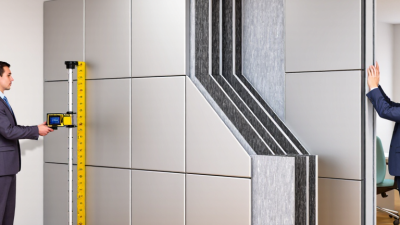
Installation should follow measurement rather than guesswork. Recording the room before and after treatment can reveal changes in reverberation and speech clarity. A simple microphone test is useful, but professional acoustic measurements are more reliable. Panel density, edge finishing, moisture resistance, and verified fire performance also deserve attention. Some materials may look attractive but perform unevenly. I have found that placing panels everywhere can make a room feel unnaturally dry. A balanced layout usually works better, though personal judgment still has a place.
China Top Sound Deadening Panels Manufacturers?
Main Types of Sound Deadening Panels Made in China
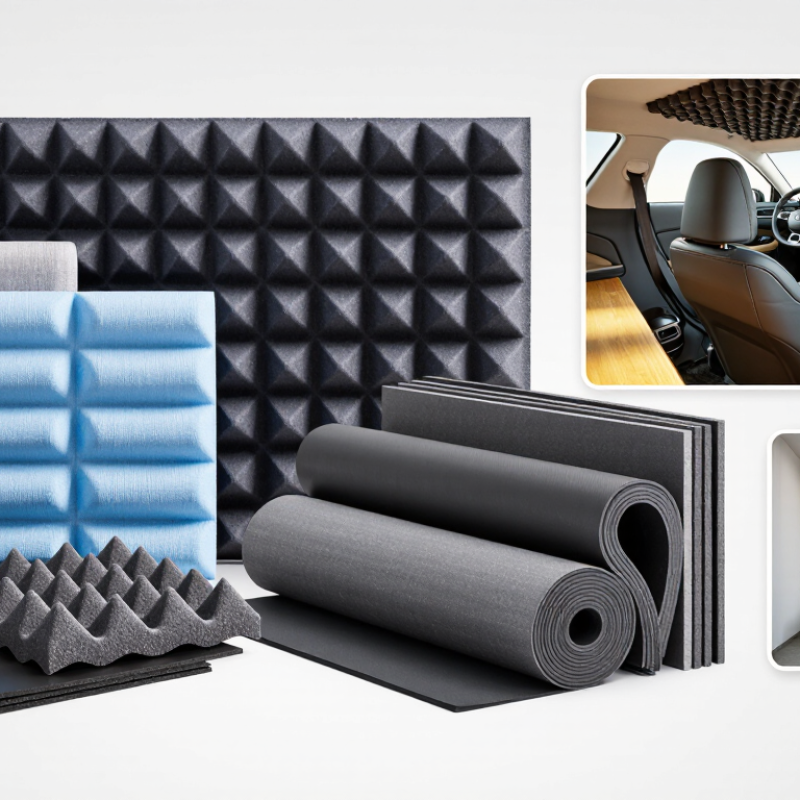
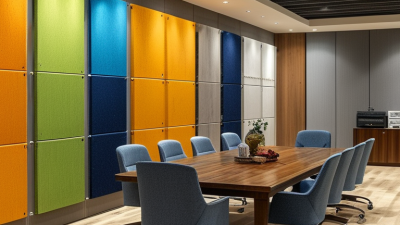
Chinese manufacturers produce several panel types for different acoustic problems. Polyester fiber panels are lightweight, colorful, and easy to cut. They absorb mid and high frequencies in offices, studios, classrooms, and meeting rooms. PET panels often use recycled plastic content, but buyers should verify the stated percentage. Density, thickness, and edge treatment affect real performance.
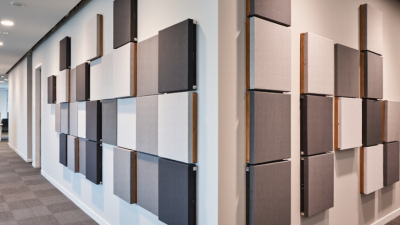
Mineral wool and glass wool panels offer strong broadband absorption. They commonly use fabric-wrapped surfaces and rigid frames. These panels suit recording rooms, factories, cinemas, and equipment spaces. Perforated wood panels combine visual warmth with controlled absorption. Their rear cavity and backing layer matter greatly. A thin decorative panel alone will not block loud machinery.
Foam panels, including melamine and polyurethane types, are light and simple to install. They mainly reduce reflections, not sound transmission through walls. Rubber and composite damping panels target vibration from metal sheets, ducts, and vehicle interiors. They work differently from absorptive panels.
Do not judge quality by appearance alone. Request thickness, density, fire behavior, moisture resistance, and laboratory test reports. ISO or ASTM test methods can make supplier comparisons more reliable. Check whether test samples match production materials. Some factories provide impressive data from thicker samples. That detail can mislead.
Installation changes the result. Air gaps behind panels can improve low-frequency absorption. Poor sealing can weaken a barrier system. No panel fixes every acoustic issue. A careful room assessment is still necessary.
China Top Sound Deadening Panels Manufacturers?
Evaluating China’s leading panel manufacturers requires more than comparing online prices. In practice, I begin with the panel’s intended use, such as machinery rooms, studios, or interior walls. Sound absorption is not the same as sound insulation. This distinction is often missed.
Request samples with stated thickness, density, core material, and surface treatment. A reliable manufacturer should provide test reports from an accredited laboratory. Check the tested frequency range, sound absorption coefficient, and fire performance. Do not accept vague claims like “highly effective.” Ask for production dates and report numbers. Then compare the sample with the document.
Factory experience also matters. Review quality-control steps, adhesive application, cutting accuracy, and packaging methods. A useful factory visit may reveal stacked panels, clean storage, and labeled batches. Ask how defects are recorded. Ask who handles corrective action. The answers can be revealing.
Small details matter.
Before placing a large order, test panels in a representative space. Room shape, air gaps, mounting hardware, and surface coverage can change results. I have seen a good panel perform poorly because installers compressed the acoustic layer. That mistake was not the manufacturer’s fault, but the instructions were too unclear. Communication should be tested, too. Measure response times, drawing accuracy, sample consistency, and willingness to discuss limitations. No checklist is perfect, and even a careful evaluation can miss problems hidden by a polished factory presentation.
China Top Sound Deadening Panels Manufacturers?
Reliable sound panel manufacturing begins with measurable standards, not attractive samples. ISO 354 evaluates sound absorption in reverberation rooms, while ASTM C423 reports absorption coefficients and NRC values. These results depend on installation, spacing, and room conditions. A panel rated 0.90 in a laboratory may perform differently on a crowded office wall. The World Health Organization’s Environmental Noise Guidelines recommend below 30 dB(A) indoors at night for good sleep, showing why acoustic testing needs real-use context.
Material selection also affects durability and safety. PET fiber panels offer lightweight construction and flexible colors. Mineral wool provides strong absorption across mid and high frequencies. Melamine foam is light, but it requires careful surface protection. Manufacturers should verify density, thickness, edge condition, and dimensional tolerance for every production batch. Fire performance may be checked through ASTM E84 or EN 13501-1, while VOC testing under ISO 16000 methods supports healthier interiors. A clean datasheet is not enough.
Tips: Request the original laboratory report, test standard, specimen thickness, and mounting method. Check whether the report matches the supplied material. During inspection, look for warped edges, uneven color, loose fibers, and hidden adhesive marks. No factory is perfect. Even strong production lines can show small defects, so sampling plans and corrective-action records matter. Factory audits should review calibration dates, incoming-material records, and batch traceability before approving large orders.
China Top Sound Deadening Panels Manufacturers?
Sound deadening panels serve different spaces and noise problems. Offices often need speech control near meeting rooms. Recording studios require balanced absorption across mid and high frequencies. Machinery rooms may need thicker panels, vibration isolation, and stronger surface protection. Fabric-wrapped PET, mineral fiber, and perforated wood panels each offer different acoustic results. Choosing only by appearance is a common mistake.
Customization can include thickness, density, dimensions, edge profiles, fabric colors, printed surfaces, and fire-performance requirements. Some projects also need CNC-cut shapes or ceiling baffles. Ask suppliers for acoustic test data, installation guidance, and samples under real lighting. A sample may look excellent but perform poorly in a large, reflective room. That detail deserves more attention.
Tips: Compare certified test reports, not only catalog figures. Confirm production capacity, quality inspection steps, moisture resistance, packaging, and lead times. Ask whether the supplier can repeat the same color and dimensions. Check communication during sampling; delayed replies may signal future project risks. Visit the factory when practical, or request production photos and inspection records. A lower price can hide thinner material or weaker backing. I have seen specifications change between samples and bulk goods, so written approval matters. Still, no supplier is perfect. Leave room for tolerance, rechecking, and honest technical discussion.
| Panel Category | Typical Construction | Common Thickness | Primary Applications | Acoustic Function | Customization Options | Important Performance Data | Recommended Supplier Verification |
|---|---|---|---|---|---|---|---|
| Polyester Fiber Acoustic Panel | Pressed PET fiber, commonly manufactured from recycled or virgin polyester fibers. | 9–24 mm | Offices Classrooms Meeting Rooms Call Centers | Broadband sound absorption that reduces reverberation and improves speech intelligibility. | Panel size, edge shape, color, printed pattern, CNC-cut design, beveling, suspension hardware, and adhesive or clip installation. | Absorption should be reported using test data such as ASTM C423 or ISO 354. Performance varies with thickness, air gap, mounting method, and frequency. | Request laboratory reports, fire classification, density or mass-per-area data, color consistency records, and installation instructions. |
| Fabric-Wrapped Mineral Wool Panel | Porous mineral wool or glass wool core covered with an acoustically transparent fabric. | 25–100 mm | Recording Rooms Auditoriums Restaurants Corporate Interiors | High sound absorption, particularly when thickness and rear air space are properly selected. | Core thickness, panel dimensions, fabric type, fabric color, frame profile, corner treatment, direct fixing, and cloud suspension. | Look for frequency-by-frequency absorption coefficients and a calculated NRC or weighted absorption value. A single NRC value is not sufficient for every design decision. | Check core stability, fabric lightfastness, formaldehyde and VOC documentation, fire test method, and the consistency of panel framing. |
| Micro-Perforated Acoustic Panel | Perforated or micro-perforated surface combined with an air cavity or backing material. | 10–50 mm, excluding the air cavity | Cleanrooms Healthcare Transport Interiors High-End Offices | Resonant absorption with a cleanable and visually uniform surface; useful where exposed fibrous materials are undesirable. | Perforation diameter, open area ratio, panel size, surface finish, cavity depth, color, edge profile, and concealed mounting system. | Acoustic response depends strongly on perforation geometry and cavity depth. Test data should identify the exact construction tested. | Verify cleanability, impact resistance, corrosion resistance where relevant, fire classification, and dimensional tolerance of perforations. |
| Wood Slat Acoustic Panel | Decorative wood or wood-look slats mounted over an acoustic felt or porous backing layer. | 20–50 mm | Hotels Restaurants Residential Interiors Reception Areas | Combines selective sound scattering with absorption through the backing layer and gaps between slats. | Slat width, slat spacing, veneer or decorative finish, backing color, panel length, edge detail, moisture-resistant treatment, and mounting method. | Absorption performance changes with slat spacing, backing thickness, and the distance from the wall. Request test results for the complete assembled panel. | Check veneer matching, moisture content, formaldehyde emission documentation, surface durability, fire performance, and packaging protection. |
| Acoustic Foam Panel | Open-cell polyurethane or melamine foam with a profiled or flat surface. | 25–100 mm | Broadcast Studios Equipment Rooms Small Studios Technical Spaces | Efficient mid- and high-frequency absorption; thicker products generally improve lower-frequency absorption. | Foam type, thickness, profile, color, flame-retardant formulation, die-cut shape, adhesive backing, and custom packaging. | Confirm absorption coefficients by frequency, density, compression recovery, and fire behavior. Foam panels are not a substitute for heavy barriers where sound isolation is required. | Request fire test documentation, aging data, odor or VOC information, dimensional tolerances, and evidence that the supplied foam matches the tested formulation. |
| Constrained-Layer Damping Sheet | Viscoelastic damping layer bonded to a heavy polymer or foil facing, usually applied to a rigid vibrating surface. | Approximately 1.5–5 mm | Vehicle Body Panels HVAC Casings Metal Enclosures Machinery Covers | Reduces structure-borne vibration and panel resonance rather than primarily absorbing airborne room sound. | Sheet size, thickness, adhesive type, facing material, die-cut geometry, temperature range, surface finish, and pre-applied liner. | Relevant data includes loss factor, temperature-frequency behavior, peel strength, shear adhesion, and application temperature range. | Verify adhesion to the target substrate, resistance to oil and moisture, operating temperature, aging performance, and installation surface preparation requirements. |
| Mass-Loaded Vinyl Barrier | Flexible, high-mass polymer barrier used as part of a layered wall, floor, ceiling, enclosure, or vehicle construction. | Approximately 1.5–3.0 mm; mass is commonly specified by area weight. | Partitions Duct Enclosures Generator Rooms Vehicle Cabins | Increases transmission loss by adding limp mass; it is normally installed with decoupling or porous absorption layers. | Area weight, roll width, roll length, polymer formulation, temperature resistance, odor control, color, edge treatment, and die-cut shapes. | Sound transmission loss depends on the complete wall or enclosure assembly. Request ASTM E90 or ISO 10140 test data for the intended system where available. | Check area weight tolerance, flexibility at low temperature, tear strength, fire behavior, odor, heavy-metal compliance, and roll-joint installation guidance. |
| Ceiling Cloud or Suspended Baffle | Vertically or horizontally suspended porous panels installed away from the ceiling surface. | 25–100 mm panel thickness | Open-Plan Offices Cafeterias Sports Facilities Large Lobbies | Increases exposed absorbing area and reduces reflected sound in spaces with limited wall area. | Panel shape, suspension height, cable or rail system, two-sided finish, edge treatment, color, printed graphics, and seismic restraints where required. | Performance depends on panel size, spacing, orientation, and suspension height. Obtain absorption data for the actual mounting arrangement. | Review load ratings, suspension hardware, ceiling compatibility, wind or air-movement considerations, fire classification, and maintenance access. |
| Thermoacoustic Insulation Blanket | Fibrous or polymeric insulation blanket with a facing or protective scrim for mechanical and building applications. | 25–100 mm | HVAC Systems Industrial Equipment Pipework Building Services | Provides airborne sound absorption and may also reduce heat transfer when the material is selected for thermal service. | Thickness, density, facing, foil or scrim type, roll width, seam treatment, moisture resistance, temperature rating, and pre-cut components. | Thermal conductivity and acoustic absorption should be evaluated separately. Acoustic performance changes with facing, compression, air gap, and installation method. | Verify thermal conductivity, maximum service temperature, fire performance, moisture resistance, fiber retention, and installation safety requirements. |
| Supplier Selection Criteria | Evaluation framework for comparing qualified manufacturers without relying on brand reputation alone. | Not applicable | OEM Projects Construction Supply Export Orders Custom Programs | Ensures that acoustic, safety, manufacturing, and commercial requirements are assessed together. | Use a written specification covering dimensions, tolerances, materials, finish, fire rating, acoustic test method, packaging, labeling, and quality acceptance criteria. | Prioritize traceable test reports, production samples, batch consistency, quality-control procedures, capacity, lead time, and documented change-control practices. |
Recommended: Audit material traceability, request pre-production samples, compare third-party test methods, confirm Incoterms, inspect packaging, and define inspection standards before ordering.
Caution: Do not compare NRC, sound transmission loss, and vibration loss factor as interchangeable metrics. |