Choosing the right acoustic treatment can change how a room feels, not just how it sounds. Sound dampening panels help reduce reflections, echoes, and distracting conversations in offices, studios, classrooms, and living spaces. Yet every room behaves differently. A panel that works beautifully beside a podcast microphone may feel underpowered in a high-ceilinged restaurant.
This guide examines the top 10 sound dampening panels for different spaces and practical needs. It considers absorption performance, material quality, appearance, installation, maintenance, and value. Where manufacturers provide testing data, details such as Noise Reduction Coefficient ratings can support a more reliable comparison. Still, ratings never tell the whole story. Placement, wall coverage, furniture, windows, and room shape matter greatly.
Real-world use matters.
A compact home office may need targeted wall panels behind a desk. A music room may require broader treatment, including ceiling clouds and bass control. Fabric-wrapped products can offer a polished finish, while wood slat designs may balance warmth, style, and acoustic performance. Some recycled-fiber options suit environmentally conscious buyers, but their durability deserves closer inspection.
No product solves every acoustic problem. That is worth admitting. Marketing claims can sound impressive, while installation results may vary. This selection focuses on practical evidence and honest trade-offs, helping readers compare attractive designs with measurable performance. Whether you are calming a busy workspace or improving vocal clarity, the best choice should match the room, the sound problem, and the people using it.
Sound dampening panels are often judged by appearance. NRC gives a more useful starting point. Under ASTM C423, the Noise Reduction Coefficient averages absorption at 250, 500, 1,000, and 2,000 Hz. Results are rounded to the nearest 0.05. On the familiar 0.00–1.00 scale, 0.00 means minimal absorption, while 1.00 indicates extremely high average absorption. It does not mean silence. NRC cannot predict every voice, footstep, or bass note.
ISO 11654 uses related frequency-based absorption data, while ASTM C423 supports laboratory performance reporting. These standards matter because room shape, mounting gaps, and test conditions change results. A panel rated NRC 0.75 may soften speech reflections in a meeting room. It may perform differently when installed tightly against a hard wall. That detail is easy to miss. Reliable specifications should list the test method, thickness, mounting condition, and frequency range.
For the top ten options, compare ratings with the room’s actual problem. NRC 0.40 may help a small study with light echo. NRC 0.85 or higher may suit lively classrooms, studios, or open offices, but coverage still matters. The 2023 ASHRAE Handbook identifies reverberation control as part of effective room acoustics. Higher NRC alone cannot create privacy. I would measure the room after installation, not trust one product sheet blindly. Real rooms are stubborn.
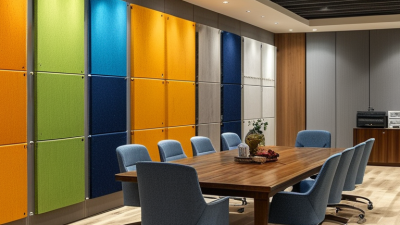
Top 10 Sound Dampening Panels for Any Space
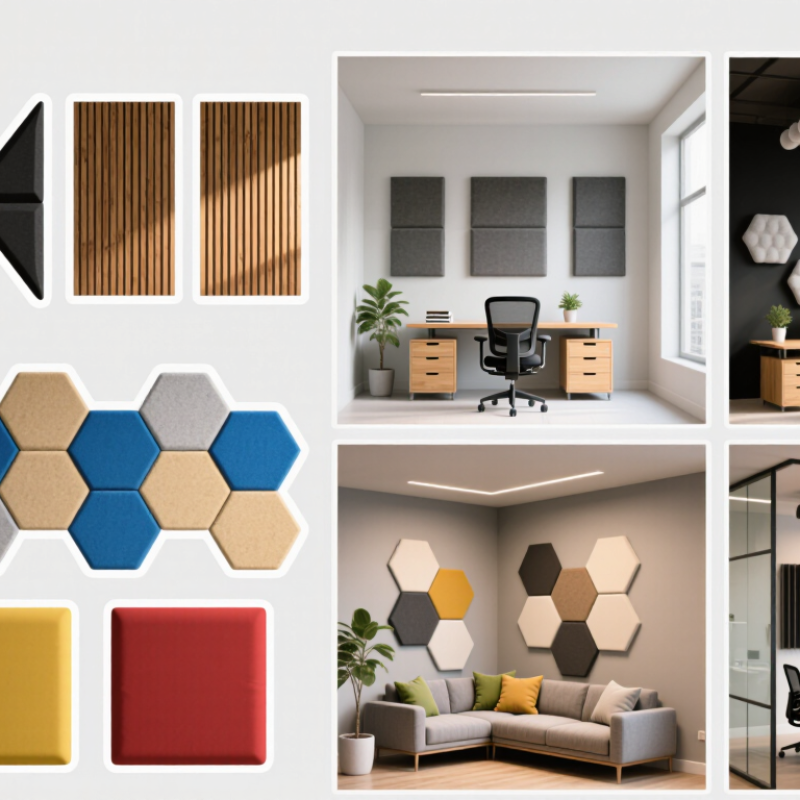
Choosing the right panel starts with its core material, not its surface color. Fiberglass panels usually deliver strong broadband absorption, especially in studios, offices, and meeting rooms. ASTM C423 laboratory reports commonly show high Noise Reduction Coefficient values for two-inch fiberglass products. Foam panels are lighter and easier to install. They mainly control mid and high frequencies, so bass may remain problematic.
Fabric-wrapped panels combine a soft visual finish with an absorptive core. They suit reception areas, classrooms, and home theaters. The fabric still needs airflow. Tight, nonporous coverings can reduce performance. Wood panels offer warmth and diffusion, but their slatted design usually requires an acoustic backing layer. Without that layer, their visual impact may exceed their acoustic value. PET panels, often made from recycled polyester fibers, are thin, flexible, and useful for ceiling clouds, screens, and decorative walls.
Laboratory results matter. ISO 354 measures sound absorption in reverberation rooms, while ASTM C423 supports comparable product testing. However, a high NRC does not guarantee a quiet room. Placement, air gaps, ceiling height, and low-frequency sources change real performance. The World Health Organization’s 2018 environmental noise guidance also connects excessive noise with sleep and health concerns, not merely comfort. I would test a small area first. Real rooms rarely behave like laboratories. A panel can look perfect and still miss the loudest frequency.
| Rank | Panel Type | Typical Construction | Common Thickness | Typical NRC Range* | Best Applications | Key Advantages | Important Limitations |
|---|---|---|---|---|---|---|---|
| 1 | Fabric-Wrapped Fiberglass | Rigid fiberglass core covered with acoustically transparent fabric | 25–50 mm | 0.85–1.15 | Offices, studios, classrooms, conference rooms, restaurants | High broadband absorption; many fabric and color options; professional appearance | Fabric can stain or tear; exposed edges may require careful handling |
| 2 | Rigid Fiberglass Acoustic Panel | Semi-rigid glass-fiber board with a durable facing or edge treatment | 25–100 mm | 0.90–1.20 | Recording rooms, media rooms, lecture halls, noisy work areas | Excellent speech and mid-to-high-frequency control; effective when spaced from a wall | Can be damaged by impact; does not provide meaningful sound isolation by itself |
| 3 | Acoustic Foam Wedge Panel | Open-cell polyurethane foam with a wedge or pyramid surface | 25–75 mm | 0.65–1.00 | Small recording spaces, podcast rooms, practice rooms, home offices | Lightweight, easy to cut and install, effective for flutter echo and reflections | Usually less effective at low frequencies; appearance and fire rating vary by product |
| 4 | Fabric-Wrapped Polyester Panel | Compressed polyester fiber core with a breathable textile covering | 12–50 mm | 0.75–1.05 | Open-plan offices, schools, hospitality spaces, collaborative areas | Lightweight, formaldehyde-free options are available, and fibers do not easily shed | Performance depends strongly on density, thickness, backing, and mounting gap |
| 5 | PET Felt Wall Panel | Molded or cut panel made from recycled polyethylene terephthalate fibers | 9–24 mm | 0.45–0.90 | Modern offices, classrooms, retail interiors, residential spaces | Low weight, easy fabrication, broad color range, and good impact resistance | Thin versions may have limited low-frequency absorption; fire performance must be verified |
| 6 | PET Baffle or Ceiling Cloud | Vertical baffles or horizontal clouds made from rigid PET felt | 12–24 mm panels; larger air gaps | 0.70–1.10 | Open ceilings, cafeterias, offices, libraries, multipurpose rooms | Absorbs sound from both sides and uses ceiling volume efficiently | Requires secure overhead suspension and coordination with lighting and sprinklers |
| 7 | Perforated Wood Acoustic Panel | Perforated or slotted wood-faced panel backed with sound-absorbing material | 16–50 mm | 0.55–0.90 | Auditoriums, restaurants, libraries, executive interiors | Adds architectural warmth and can combine absorption with visual screening | Heavier and more costly to install; solid wood surfaces are mainly reflective |
| 8 | Wood Slat Acoustic Panel | Decorative wood slats mounted over an acoustic felt or mineral-fiber backing | 20–45 mm | 0.55–0.95 | Living rooms, dining spaces, offices, reception areas | Combines design appeal, diffusion, and moderate broadband absorption | Open area ratio and backing material significantly affect acoustic results |
| 9 | Melamine Foam Panel | Lightweight open-cell melamine resin foam with a textured surface | 25–50 mm | 0.70–1.00 | HVAC enclosures, transport interiors, technical rooms, clean environments | Very light, cleanable options are available, and it performs well over a broad frequency range | More specialized and costly than basic foam; product-specific fire and chemical ratings are essential |
| 10 | Polyester-Wrapped Wall Panel | Polyester fiber absorber enclosed in a woven or acoustically transparent textile cover | 25–75 mm | 0.80–1.10 | Healthcare areas, offices, classrooms, home theaters, meeting rooms | Soft appearance, good speech clarity, and safer fiber containment than exposed fibrous boards | Textile durability, cleanability, and fire classification vary by construction |
*Note: NRC values are representative ranges for comparable products tested under standardized laboratory conditions. Actual performance depends on thickness, density, perforation or open area, mounting method, air gap, and room installation. Sound-absorbing panels reduce reverberation and reflections; they do not, by themselves, provide soundproofing or stop sound transmission through walls.
RT60 is the time a room needs to lose 60 decibels after a sound stops. It reveals whether speech lingers or music becomes muddy. ISO 3382-2 describes field measurements for ordinary rooms, using test signals and several microphone positions. A phone app can provide clues, but it should not replace calibrated equipment.
The Sabine formula is T60 = 0.161V/A.
V represents room volume in cubic metres, while A means total absorption in metric sabins. Consider a 5 × 4 × 2.8 metre room. Its volume is 56 cubic metres. For a 0.6-second target, the room needs about 15 sabins of absorption. Ten thin panels may look impressive, yet their real performance depends on thickness, air gaps, placement, and frequency.
ANSI/ASA S12.60 recommends reverberation times of 0.6 seconds or less for many standard classrooms. That benchmark helps when evaluating acoustic panels for study rooms, offices, and teaching spaces. Measure before buying. Record decay from the front, centre, and rear of the room. Compare the average, not one convenient reading.
Panels near first-reflection points often improve speech clarity, while ceiling or rear-wall treatment may control broader echoes.
Low-frequency reverberation remains difficult. The Sabine model also assumes a fairly diffuse sound field, which many small rooms do not provide. That limitation matters. My first estimate is rarely perfect. Rechecking after installation is the honest part of the process.
Choosing among the top ten sound dampening panels requires more than reading a high NRC number.
NRC, or Noise Reduction Coefficient, estimates mid-frequency sound absorption from 250 to 2,000 Hz.
In this comparison, ratings range from 0.70 to 1.00.
Panels near 0.90 usually control speech reflections better than panels near 0.70.
NRC is not a promise of silence. Low bass remains difficult.
Thickness strongly affects performance.
The ten options range from roughly 25mm to 100mm thick, while coverage varies from about 0.6 to 1.2 square meters per panel.
Thicker panels generally absorb more energy, especially when installed with an air gap.
A 50mm panel mounted 50mm from the wall may outperform a thinner panel placed directly against it.
ISO 354 testing measures absorption inside a reverberation room, creating controlled and comparable results.
Real rooms remain less predictable.
A practical test reveals those differences quickly.
In a small office, panels with wider coverage reduced flutter echo across the desk area.
Thicker corner panels helped voices sound less sharp.
I would not select the highest NRC panel automatically.
Installation area, wall spacing, and room volume matter more than one impressive figure.
One imperfect lesson: a well-rated panel cannot fix every reflection when too little wall surface is treated.
Noise control needs measurable data and careful placement.
When choosing sound dampening panels, fire performance deserves equal attention to NRC ratings. ASTM E84 evaluates surface burning through flame spread and smoke developed. Class A requires a Flame Spread Index of 0–25 and a Smoke Developed Index of 0–450. These limits matter in corridors, studios, offices, and public rooms where panels may cover large wall areas.
NFPA’s Fire Loss in the United States During 2023 reported about 1.39 million fires and 3,670 civilian fire deaths.
Acoustic panels do not cause every fire, but their surface materials can influence early flame movement and smoke production. Request a current ASTM E84 test report, not a marketing phrase. Check the exact panel thickness, facing, adhesive, mounting method, and substrate tested. Small changes can alter results.
A Class A rating is useful, but it is not a complete room-fire guarantee.
ASTM E84 is a controlled tunnel test, not a prediction of every installation. That distinction is easy to overlook. I would also confirm whether an independent laboratory issued the report and whether the tested assembly matches the finished wall. Some specifications look reassuring until the adhesive or fabric changes. Recheck the documents before installation. Safety paperwork can be imperfect, too.