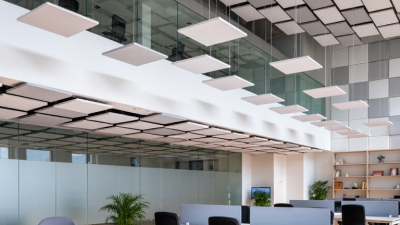
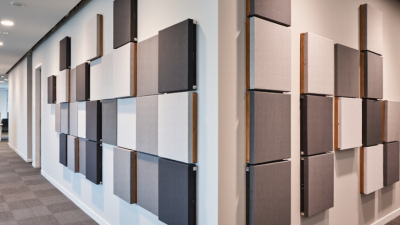
Why Choose Sound Deadening Panels for Global Buyers?

Global buyers increasingly view sound deadening panels as practical tools for improving comfort, concentration, and privacy. In offices, a hard meeting room can return speech like a tennis ball. In workshops, machinery may create constant low-frequency pressure. In hotels, footsteps and corridor conversations can travel through lightweight walls. Sound deadening panels help manage these conditions when their material, thickness, density, and placement match the room.

As acoustics researcher Trevor Cox has observed, “Sound is the forgotten sense.” That idea matters during international purchasing. Buyers should examine measurable performance, not attractive product photos alone. Noise Reduction Coefficient, absorption testing, fire classification, moisture resistance, and installation methods can influence real results. A panel designed for speech reflection may not control heavy mechanical noise. That distinction is easy to miss.

Global procurement also requires practical judgment. Suppliers should provide clear technical sheets, laboratory reports, production details, and consistent batch quality. Packaging deserves attention too. Compressed edges, damaged corners, or unclear installation instructions can reduce performance before panels reach the wall. Different markets may also require specific safety documentation and environmental declarations. Requirements vary.

No panel solves every acoustic problem. That expectation is unrealistic. Room geometry, doors, ceilings, ventilation, and background noise still matter. Experienced buyers therefore compare complete acoustic strategies, not isolated products. Some choices will remain imperfect. Even so, reliable sound deadening panels can deliver a quieter, more usable space when verified data guides the decision.
Why Choose Sound Deadening Panels for Global Buyers?

What Sound Deadening Panels Are and How They Work

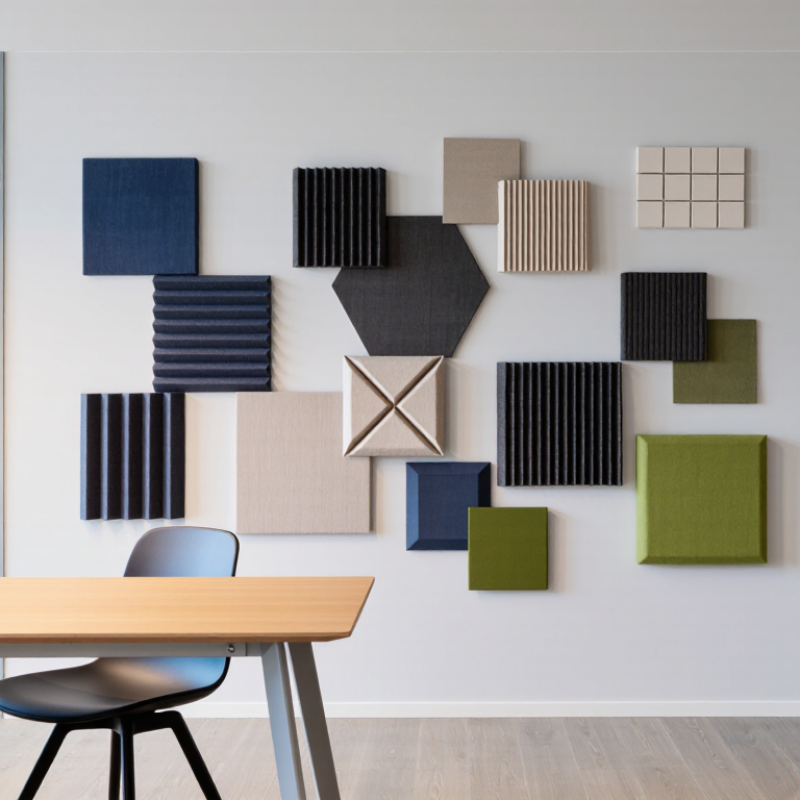
Sound deadening panels are engineered materials that reduce unwanted noise inside rooms, vehicles, studios, and industrial spaces. They commonly use dense rubber, mineral fiber, foam, or layered composite structures. Each material controls sound differently. Dense layers block vibration, while porous layers absorb airborne noise. Some panels also include textured surfaces that scatter reflections.

The working principle is simple, but the result depends on correct placement. When sound strikes a panel, part of its energy becomes low-level heat through friction inside the material. Other energy is reflected or weakened before reaching another surface. In practical installation work, panels perform best on large vibrating areas and near strong reflection points. Sealing gaps also matters. A small uncovered opening can reduce the expected improvement. They are useful for global buyers because many spaces need quieter equipment, clearer speech, and better acoustic comfort without major structural changes. Still, one panel type cannot solve every noise problem. That assumption needs review.

Tips: Check the noise source before purchasing. Measure the room, surface area, and operating temperature. Ask suppliers for test methods, absorption ratings, fire information, and installation guidance. Product data should match your local project requirements. Start with a small test area. It may reveal weaknesses early.

Key Noise-Control Benefits Across Different Environments

Why Choose Sound Deadening Panels for Global Buyers?

Key Noise-Control Benefits Across Different Environments

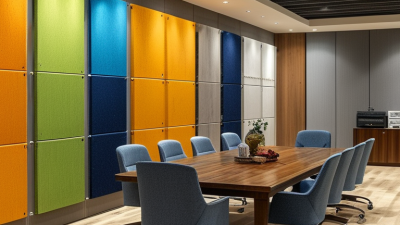
Sound deadening panels help control reflected noise in offices, classrooms, studios, and public interiors. They absorb sound energy instead of allowing it to bounce between hard surfaces. The World Health Organization reported that environmental noise causes the loss of over one million healthy life-years annually in Western Europe. Its 2018 guidelines recommend lower exposure levels for roads, bedrooms, and classrooms. A panel cannot solve every noise problem. It mainly improves room acoustics.

In workplaces, excessive sound can increase fatigue, distraction, and communication errors. NIOSH identifies 85 dBA over eight hours as a recommended exposure limit for occupational noise. Panels may reduce reverberation, but they do not replace hearing protection or structural isolation.

In a classroom, speech becomes clearer when wall reflections are controlled. In a restaurant, fewer echoes can make conversation easier near crowded tables. Low-frequency machinery remains difficult. Thicker or specially designed systems may be required.

Tips: Measure the room before installation. Record background noise, reverberation, ceiling height, and hard surfaces. Use acoustic testing based on ISO 3382 methods where practical. Place absorption near major reflection points, not randomly. Leave ventilation paths clear. The first layout is rarely perfect. Recheck the space after installation, because furniture, occupancy, and humidity can change results. A modest improvement may still feel valuable, but claims should follow measured performance rather than appearance.

Materials, Designs, and Performance Factors to Compare

Global buyers should compare materials, designs, and verified performance before choosing sound deadening panels. “Sound deadening” is often used loosely. Many panels absorb reflections, but they do not automatically block sound passing through walls. The World Health Organization recommends keeping road traffic noise below 53 dB Lden and 45 dB Lnight (WHO Environmental Noise Guidelines, 2018). That target requires room design, not panels alone.

Material density and structure strongly affect results. Recycled PET panels are lightweight, cleanable, and suitable for offices. Mineral wool and fiberglass often provide stronger broadband absorption, especially at mid and high frequencies. Wood-faced systems can improve appearance, but their perforation ratio and backing layer control acoustic performance. Buyers should request ASTM C423 or ISO 354 test data. Look for the Noise Reduction Coefficient, absorption coefficients, and test frequency ranges. One impressive NRC value is not enough.

Design details matter in real installations. Thicker panels and rear air gaps usually improve low-frequency absorption. Ceiling clouds can reduce reflected speech energy above busy workstations. Corner placement may help bass buildup, although field performance can disappoint. A panel is not a magic wall. Check fire classification, moisture resistance, surface durability, VOC documentation, and installation tolerances. ASTM E84 and EN 13501-1 reports support safer international comparisons. The 2023 Global Status Report for Buildings and Construction also emphasizes healthier indoor environments, yet acoustic comfort still depends on layout, occupancy, and maintenance. Test results are useful; site measurements are better.

Why Choose Sound Deadening Panels for Global Buyers? - Materials, Designs, and Performance Factors to Compare

Panel Type / Material Typical Construction Typical Thickness Typical NRC Range* Best Frequency Performance Main Advantages Key Limitations Suitable Applications
Mineral Wool Fibrous acoustic core, usually wrapped in acoustically transparent fabric 25–100 mm 0.70–1.05 Mid and high frequencies; thicker panels improve low-frequency absorption High absorption, non-combustible core options, good dimensional stability Can be heavier; exposed fibers require a proper facing or enclosure Studios, offices, classrooms, conference rooms, auditoriums
Fiberglass Glass-fiber board or batt with fabric, perforated, or micro-perforated facing 25–100 mm 0.75–1.10 Broadband absorption, especially mid-to-high frequencies Lightweight relative to performance, high acoustic efficiency, many finish options Requires protective facing; moisture and impact resistance depend on the finish Commercial interiors, music rooms, transport facilities, industrial spaces
PET Acoustic Felt Thermally bonded polyester fiber, often made with recycled PET content 9–24 mm; thicker or layered designs perform better 0.25–0.85 Mid and high frequencies; grooved or molded profiles improve performance Lightweight, easy to cut, color-stable options, generally fiber-safe to handle Thin products have limited low-frequency absorption; fire performance varies by formulation Open-plan offices, education spaces, retail interiors, decorative wall systems
Melamine Foam Open-cell resin foam, supplied as tiles, panels, or shaped absorbers 20–50 mm 0.55–1.00 Mid and high frequencies; performance depends strongly on thickness and air gap Very lightweight, low thermal conductivity, suitable for complex molded shapes Can be brittle or surface-sensitive; fire and UV resistance must be verified for the specific grade Equipment enclosures, transport interiors, technical rooms, HVAC applications
Wood Slat Acoustic Panel Wood veneer or solid slats mounted over an absorptive backing with an air cavity 20–50 mm plus cavity 0.60–0.95 Mid frequencies; cavity depth increases lower-frequency absorption Combines acoustic treatment with architectural appearance; supports modular layouts Heavier and more expensive than basic felt; wood finish and fire rating require specification control Hospitality venues, offices, restaurants, libraries, residential interiors
Perforated Metal or Wood Panel Perforated facing installed over mineral wool, fiberglass, or another absorptive backing 50–150 mm system depth 0.55–1.00 Broadband absorption when perforation ratio, backing, and cavity are correctly matched Durable, cleanable, impact-resistant, suitable for demanding public environments Higher weight and installation cost; the facing must remain acoustically open Airports, sports facilities, public buildings, industrial and high-traffic areas
Comparison Factor What Global Buyers Should Compare Why It Matters Recommended Verification
Sound Absorption NRC or frequency-specific absorption coefficients NRC is a simplified indicator and may not show low-frequency behavior Request laboratory test data, preferably to ISO 354 or ASTM C423
Panel Thickness and Air Gap Core thickness, mounting method, and distance from the wall or ceiling Greater thickness and a correctly designed cavity usually improve lower-frequency absorption Compare test results using the same mounting configuration as the project
Fire Performance Reaction-to-fire classification for the complete panel assembly The facing, adhesive, frame, and backing can change the final classification Obtain project-relevant documentation under local regulations, such as EN 13501-1 or ASTM E84
Humidity and Moisture Moisture resistance, dimensional stability, mold resistance, and cleaning requirements Climate, condensation, and cleaning conditions differ significantly between markets Review environmental limits and use a moisture-resistant facing where necessary
Installation and Maintenance Wall or ceiling fixing, access requirements, replacement method, and cleaning compatibility Simple installation can reduce labor cost and support future panel replacement Request installation drawings, fixing details, and cleaning instructions
Weight and Logistics Panel weight per square meter, package dimensions, stackability, and shipping volume Weight and packaging affect freight cost, handling, and structural requirements Confirm packed and unpacked dimensions before calculating landed cost
Sustainability Recycled content, recyclability, emissions, life-cycle information, and packaging Environmental requirements and green-building criteria vary by country and project Request recycled-content statements, VOC data, EPDs, or other applicable documentation
Design Flexibility Colors, shapes, perforation patterns, edge details, printing, and custom dimensions Visual integration can improve acceptance in offices, hospitality, education, and public spaces Check color consistency, sample approval, minimum order quantities, and replacement availability

*Indicative ranges only. Actual acoustic performance depends on material density, thickness, facing, edge details, mounting method, air gap, room conditions, and laboratory test configuration. Always compare independently tested data for the complete panel system.

Installation, Maintenance, and Safety Considerations

Sound deadening panels can improve comfort, but installation quality controls their real performance. On site, installers often find that poorly prepared walls reduce adhesion and create visible gaps. Clean, dry, level surfaces matter. Follow the panel maker’s fixing method, and allow expansion where temperature changes are significant. Mechanical fasteners may be safer than adhesive alone on heavy panels.

Acoustic performance should be verified, not guessed. ISO 354 measures sound absorption in a reverberation room, while ISO 11654 supports absorption classification. Buyers should request test conditions, thickness, and mounting details. A high laboratory rating may not match a crowded factory or vehicle cabin. That difference deserves attention.

Maintenance is simple, but not optional. Inspect edges, fixings, and surface damage every six to twelve months. Remove dust with a soft vacuum attachment. Do not soak porous materials. Replace panels after water damage, delamination, or persistent odor. Check fire classification and smoke behavior against local building requirements. The National Fire Protection Association stresses that interior finishes can influence fire development, so acoustic treatment must not block sprinklers, exits, vents, or access panels. OSHA’s noise standard uses 90 dBA over eight hours as the permissible exposure limit, with a 5 dB exchange rate. Panels reduce reflected noise; they do not replace hearing protection. WHO night-noise guidance recommends below 30 dBA indoors for good sleep, yet actual results depend heavily on gaps, doors, and background equipment.

Why Choose Sound Deadening Panels for Global Buyers?

Typical sound absorption performance at 500 Hz is shown below using representative, non-brand-specific values. Fiberglass and mineral wool panels generally provide high absorption, while PET felt offers lightweight installation and easier surface maintenance. Always confirm project-specific fire, emissions, and acoustic test reports before purchase.

Installation should follow the manufacturer’s fixing method and substrate requirements. For maintenance, use a soft brush or vacuum rather than saturating porous panels with water. For safety, check the applicable fire classification, indoor-air-emission requirements, and local building regulations.

How Global Buyers Can Assess Cost and Supplier Reliability

Why Choose Sound Deadening Panels for Global Buyers?

Global buyers should assess sound deadening panels through performance, total cost, and supplier reliability. The World Health Organization reported in 2021 that over 1.5 billion people experience hearing loss worldwide. This highlights the value of controlled indoor noise, especially in offices, factories, hotels, and public buildings.

However, a thicker panel is not always better. Buyers should request laboratory data for sound absorption, fire performance, density, and durability. ISO 10140 testing can help verify acoustic results under controlled conditions.

Cost comparisons must include more than the unit price. Freight, packaging, import duties, installation, replacement rates, and project waste can change the final figure. Grand View Research has reported continued growth in the global acoustic insulation market, driven by construction and stricter indoor comfort expectations. That growth also attracts inconsistent suppliers. A low quotation may be efficient. It may also hide weak backing materials or unstable production.

Tips: Request recent test reports, production photos, sample approval, and batch records. Check whether the supplier can maintain specifications across repeated orders. Ask for a written tolerance range, not only a target value. A video call with the factory can reveal useful details, though it is not proof. Buyers should compare landed cost per installed square metre. I have found that small sample differences can become expensive later. Supplier evaluation is never perfectly clean. It requires evidence, patience, and occasional doubt.