A quiet office is not always a comfortable one. In a meeting room, voices may bounce between glass walls, hard ceilings, and a long table, making each sentence tiring to follow. Sound consultant and author Julian Treasure warned, “We are losing our listening.” His words describe a broader problem, not a specific product recommendation: poor room acoustics can make focused listening harder. That is why choosing sound panels for office spaces should begin with the room’s actual use, not with color samples alone.
Consider where people speak, where noise travels, and which surfaces reflect it. A small huddle room with a glass wall may need a different approach from an open-plan workspace with busy walkways. Panel placement, coverage, thickness, and tested acoustic performance all matter. So does installation: panels placed only where they look attractive may leave the main reflection paths untreated. Not every office needs the same treatment. A few careful observations—such as noticing echo during a call or asking staff where conversations feel unclear—can guide a more informed choice. There is a catch. Product specifications do not fully predict how a particular room will feel once occupied. Use them alongside room measurements or qualified acoustic advice, and review the result after installation. A little uncertainty is honest; acoustics are shaped by the room, its people, and their daily habits.
How to Choose Sound Panels for Office Spaces
Understand How Sound Panels Improve Office Acoustics
Sound panels reduce sound reflections from hard walls and ceilings. In a busy office, those reflections can blur speech and make nearby conversations harder to follow. Absorbing some reflected sound often makes meetings clearer and reduces the tiring sense of constant noise. It does not create silence. Panels absorb sound; they do not block it like a sealed partition.
Consider where noise travels before choosing panel size or placement. A few panels near a meeting table may help with echo, while an open office may need treatment across several surfaces. Check the panel’s published absorption data, and compare it with the room’s needs. Results depend on ceiling height, furniture, and existing finishes. Even a well-chosen panel plan can miss a noisy corridor or loud ventilation system. That deserves a second look.
Tips: Start with the surfaces facing each other, where sound can bounce repeatedly. Add panels gradually, then listen from desks and meeting seats. Keep vents and sprinklers unobstructed. If speech still feels muddy, review the layout before adding more panels.

Before choosing sound panels, identify what makes the office noisy. A steady ventilation hum needs a different response from sharp voices near a meeting table. Note where noise begins, where it travels, and which tasks it disrupts. A simple floor plan can help. Mark open desks, glass walls, hard floors, and busy walkways.
Listen at different times. A quiet morning may hide the afternoon rush. Spend a few minutes near desks, phone areas, and shared rooms, then ask staff what interrupts them most. Notice whether speech echoes around the room or passes through a wall from elsewhere. Panels can reduce reflected sound, but they will not fix every source. That distinction is easy to miss.
Match panel placement to the observed problem. If speech lingers in a meeting room, consider surfaces that face the table and reflect sound across the space. If one corridor creates bursts of noise, panels near that zone may be more useful than covering every wall. Keep doors, windows, and existing furnishings in the assessment. They change how sound behaves. Measurements can help, though a small office may not need a complex survey. Start with the clearest trouble spots, then check whether conversations feel less tiring. The first assessment may be imperfect; revise it after people use the space.
Fabric-wrapped mineral-fiber panels are a common choice for offices because they absorb sound across much of the speech range. Their soft surfaces suit meeting rooms and open work areas, but check the tested absorption rating and cleaning requirements. PET felt panels can be lighter and easier to shape; their performance varies with thickness and mounting. Wood slat panels add a hard, reflective finish, so they usually need absorbent material behind the slats to reduce reverberation.
Shape affects where sound is absorbed. Flat rectangles work well on walls near conversation zones, while ceiling clouds can help when desks sit beneath hard, reflective ceilings. Vertical baffles add exposed surface area, but they need enough ceiling clearance and secure installation. Placement matters. A small panel beside a noisy printer will not fix echo across a large room.
Compare published test data, such as the Noise Reduction Coefficient, but do not treat one number as a complete prediction. Results depend on panel spacing, air gaps, room size, and furnishings. In practice, a room with glass walls and bare desks may still sound harsh after panels are added. I have sometimes underestimated how much placement matters. Also, sound-absorbing panels reduce reflections; they do not soundproof a room or block every conversation. Test a small area before specifying coverage for the whole office.
In an office, panel placement should follow the noise, not a decorative grid. Walk the room during a busy hour and note where speech feels sharp or difficult to follow. A glass meeting-room wall may send voices back across the table, while a hard ceiling can spread sound through an open workspace. Listen from a few seats, not just the doorway. Small differences matter.
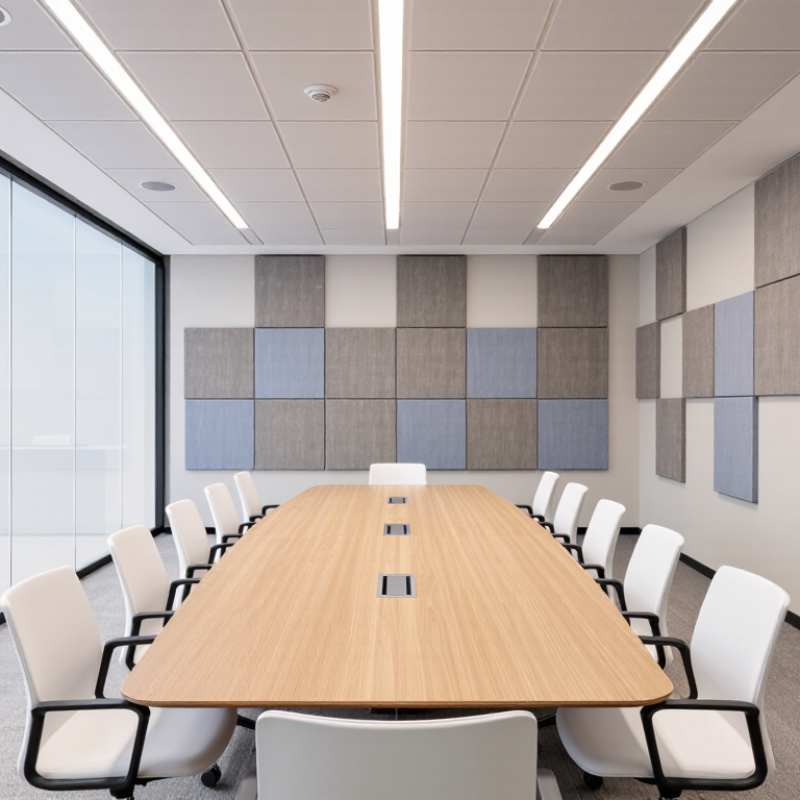
Treat the main reflection points first. In a meeting room, place panels on the side walls near seated head height, especially opposite speakers and along long, bare surfaces. If the ceiling is high or hard, ceiling panels can help reduce sound bouncing overhead. In an open office, target areas around collaboration tables and noisy printer stations, while keeping quiet work zones from becoming the only treated spots. Leave lights, sprinklers, vents, and access points clear.
Coverage depends on room size, finishes, and how much sound absorption is needed; there is no reliable one-panel-per-desk rule. A practical approach is to begin with a modest, evenly distributed area, then listen again during normal use. The result may still feel uneven. That is useful information, not necessarily a failure. Add or move panels where speech remains distracting, rather than covering every available surface. Panels absorb some reflected sound; they do not block all noise between rooms.
Choosing office sound panels means checking how they attach, not just how they look. Lightweight panels may suit approved adhesive or mechanical fixings; heavier units often need fasteners matched to the wall. Read the installation instructions and check the wall before drilling. Painted partitions can conceal weak plasterboard. It happens.
Keep panels clear of sprinklers, alarms, lights, vents, and access panels. Never cover fire-safety equipment or obstruct an exit route. In shared offices, confirm plans with the building manager, especially for panels above desks or walkways. Use fixings suited to the panel’s weight and mounting surface. If the ceiling is high or the substrate is uncertain, ask a qualified installer to assess it. A neat row is not worth a loose panel.
Maintenance should be easy to repeat. Dust fabric faces with a soft brush or upholstery attachment on low suction. Test spot-cleaning in an inconspicuous area; moisture can leave marks or affect the core. Inspect corners, seams, and fasteners every few months, and after renovations or leaks. Replace damaged panels rather than hiding torn edges. Acoustic performance can change when panels are moved, so note their locations before rearranging the room. The plan may not stay perfect.
How to read this chart: NRC is a laboratory rating of sound absorption, not a guarantee of how quiet a finished office will be. The figures shown are indicative; actual ratings vary by product, thickness, mounting method, and test results. Compare tested ratings for the specific panels you are considering.
Installation and upkeep: Use hardware rated for the panel and wall or ceiling substrate, and follow the installation instructions. Keep panels clear of sprinklers, detectors, and ventilation openings; check fire-safety requirements before installation. For routine maintenance, use a soft brush or vacuum and follow the panel manufacturer’s cleaning guidance.