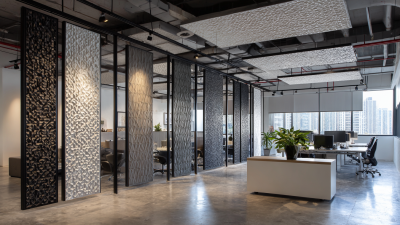
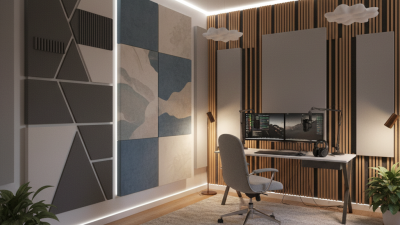
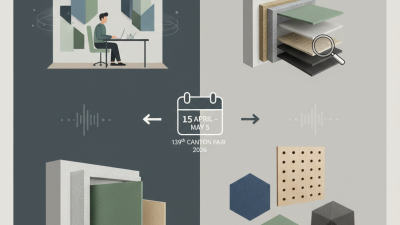
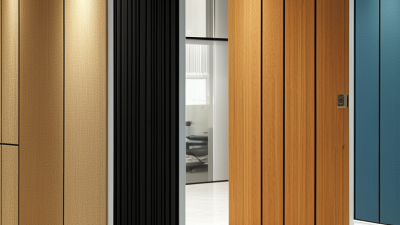
What Are the Top China Sound Panels for Office Spaces?
Choosing sound panels for office spaces is not simply a matter of matching colors to desks. In busy Chinese offices, voices, printers, video calls, and hard surfaces often compete throughout the day. The right acoustic treatment can reduce distracting reflections and make conversations easier to follow. It cannot solve every noise problem. That distinction matters.
This guide examines leading China sound panels for office spaces through practical criteria. We consider acoustic performance, material quality, fire safety, indoor air emissions, installation methods, and long-term maintenance. Products may include PET felt panels, fabric-wrapped absorbers, wood acoustic slats, and ceiling baffles. Each option behaves differently in an open-plan office, meeting room, reception area, or private booth. A panel that looks impressive online may perform poorly when installed on too little wall area.
Real-world details deserve attention. Check independent test reports, absorption ratings, product density, edge finishing, and mounting hardware. Ask whether the manufacturer can provide consistent color batches and replacement panels. Confirm compliance with applicable building and fire requirements in the project location. Supplier communication also reveals reliability. Slow drawings, unclear specifications, or vague warranty terms should not be ignored.
There is no universal winner. Not quite.
The best choice depends on room volume, ceiling height, speech privacy needs, budget, and design goals. Some manufacturers offer excellent customization, but delivery times and quality control can vary. This review aims to balance verified specifications with practical experience, while acknowledging areas that need closer testing. A quieter office should support concentration, not merely create a fashionable background.
Define Office Acoustic Targets: NRC ≥0.70 and RT60 ≤0.6 Seconds
Choosing sound panels from China for an office requires more than comparing prices or surface finishes. The key question is performance. Specify panels with an NRC of at least 0.70 for speech-focused spaces. This rating indicates strong average sound absorption, but it does not describe every frequency equally. Open offices may need thicker panels, ceiling clouds, and wall absorbers near meeting areas. Thin decorative panels can look effective while leaving low-frequency noise untreated.
Set the room’s RT60 target at 0.6 seconds or less. This helps reduce lingering voices, keyboard noise, and conference-call echoes. An acoustic consultant should measure the untreated room, then model panel coverage. After installation, verify results with field testing. Manufacturer data is useful, but it may come from controlled laboratories. Real offices contain desks, glass, people, and equipment. Conditions change. A target is not a guarantee.
Tips: Request laboratory absorption data, panel thickness, mounting details, and test standards. Check whether the stated NRC applies to the installed system. Use ceiling treatments above collaborative zones. Place wall panels opposite hard glass surfaces when possible. Leave access for maintenance. I have seen offices over-treat quiet corners and under-treat central walkways. That mistake is easy to repeat. Review speech privacy, reverberation, and employee comfort together before approving the final panel layout.
Top Acoustic Panel Constructions for Office Spaces
Office acoustic targets are defined as an NRC of at least 0.70 and an RT60 of no more than 0.60 seconds. The representative values below reflect typical performance ranges for commonly used panel constructions and should be confirmed with project-specific laboratory test reports.
Evaluate Product Evidence: ISO 354, ASTM C423, and EN 13501-1 Reports
Choosing the top China sound panels for an office starts with evidence, not attractive photographs. ISO 354 reports show how a panel absorbs sound in a reverberation room. ASTM C423 reports commonly provide sound absorption data, including NRC values. These results help compare products under controlled conditions. They do not perfectly predict every open-plan office.
Check the details carefully. A reliable report should identify the panel, thickness, mounting method, test date, laboratory, and measured frequency range. Missing information weakens confidence. EN 13501-1 reports address reaction to fire classification, which is separate from acoustic performance. A panel may absorb sound well but still require careful fire review for the intended interior application. I would not treat a high NRC as a complete answer. That assumption is tempting, but incomplete.
Tips: Ask for full test reports, not cropped certificates. Compare the same thickness and installation method. Review 250–4,000 Hz results, because speech clarity matters in offices. Confirm whether the tested configuration matches ceilings, walls, or suspended baffles. Independent laboratory details also matter. Still, reports can contain limitations. Installation quality, air gaps, furniture, and room geometry may change the final result. Request samples and observe speech comfort in a real meeting room before making a large purchase. Small differences become noticeable.
Match Panel Coverage to Space: Treat 20–40% of Wall Area in Open Offices
Choosing top China sound panels for an office starts with coverage, not appearance. In open offices, treat 20–40% of wall area as a practical acoustic starting point. This range can reduce reflected speech and typing noise without covering every surface.
During site assessments, I measure wall dimensions, ceiling height, desk density, and reverberation. A 30-square-meter wall may need 6–12 square meters of panels. Place them near conversation zones and opposite hard glass surfaces. PET felt panels suit flexible layouts and offer many shapes. Fabric-wrapped mineral wool panels usually provide stronger absorption across speech frequencies. Perforated wood panels can add warmth, but their acoustic backing matters greatly.
Do not trust the percentage alone. A crowded office may need less wall coverage than a bright, empty room. Test a small area first. Listen near the meeting table. Check whether voices sound softer after installation. I have seen attractive panels installed too high to help seated workers. That mistake is easy to repeat. Panel thickness, spacing, mounting gaps, and fire documentation also affect performance. Ask Chinese manufacturers for laboratory data, material specifications, installation guidance, and consistent batch quality. Some suppliers provide excellent engineering support; others offer vague ratings. Compare evidence, not just photographs.