What Are the Top Types of Sound Absorbing Art in 2026?
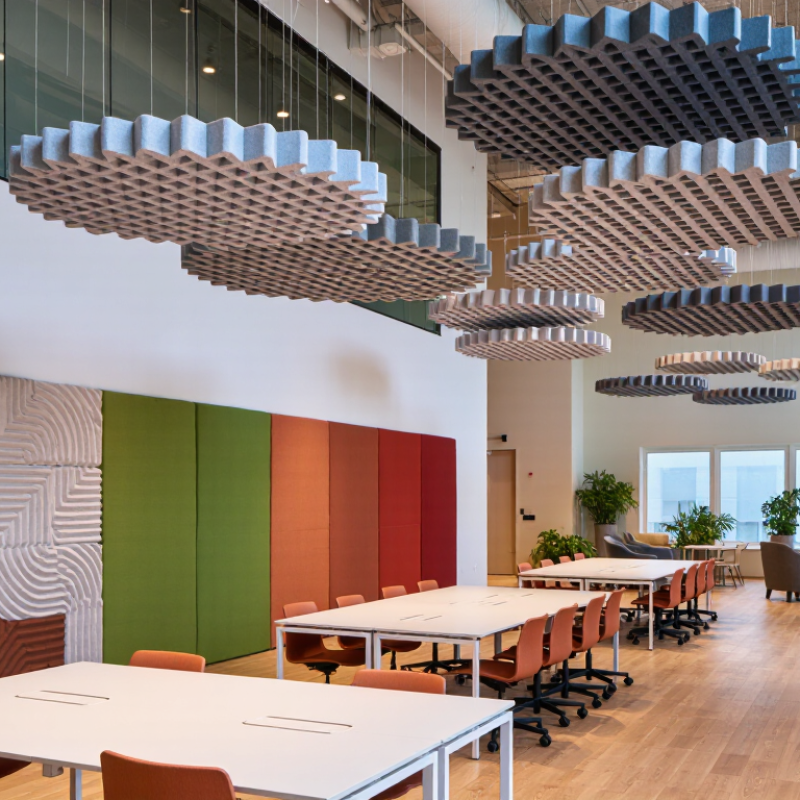
In 2026, sound absorbing art is becoming a practical design choice, not merely a decorative trend. It combines visual identity with measurable acoustic performance. A colorful fabric panel can soften speech reflections across a busy office. A sculptural ceiling cloud can reduce the sharpness of voices in a restaurant.
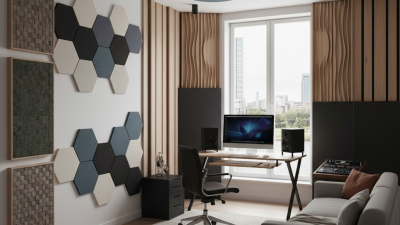
The leading options include printed acoustic panels, recycled-felt wall compositions, suspended baffles, acoustic ceiling clouds, and three-dimensional fiber sculptures. Each type serves a different spatial need. Wall panels work well beside desks, meeting tables, and home theater seating. Ceiling systems help open rooms where wall space is limited. Felt art offers warmth, texture, and lower environmental impact when responsibly sourced.
Julian Treasure, a respected sound consultant, said, “Sound affects us physiologically, psychologically, cognitively and behaviourally.” His observation explains why visual beauty alone is not enough. People notice calmer conversations, fewer echoes, and less listening fatigue.
But performance claims deserve caution. A beautiful panel may absorb mid-frequency speech while doing little for deep bass. Product testing, absorption ratings, room dimensions, and installation height all matter. I have seen attractive installations underperform because designers treated them like paintings. That mistake remains common.
The strongest sound absorbing art balances appearance, material density, coverage, and maintenance. Look closely. Check the evidence. Then choose artwork that makes the room feel quieter without making it feel lifeless.
Sound absorbing art combines visual expression with acoustic control. It uses porous or layered materials to reduce reflected sound inside a room. Unlike ordinary wall decoration, it helps soften echoes, speech noise, and harsh reverberation.
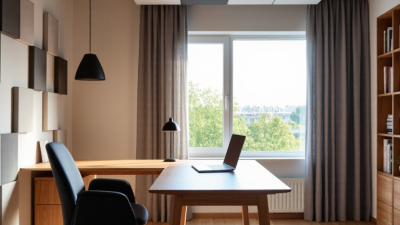
In modern interiors, this art supports comfort without making spaces feel technical. Offices may use printed acoustic panels near meeting tables. Restaurants often choose suspended felt forms above busy dining areas. Homes can benefit from fabric-wrapped paintings, sculptural fiber pieces, and perforated wood artworks with acoustic backing.
These are among the most useful types to consider in 2026. Material thickness, air gaps, and panel placement affect performance. A beautiful surface alone does not guarantee meaningful absorption.
I have seen attractive installations placed too high, where they changed little. That mistake is easy to repeat.
Tips:
Observe the room before choosing artwork. Clap near hard walls and listen for a sharp return. Place absorption near speaking zones, ceiling reflection points, or noisy work areas.
Ask for tested acoustic data, such as noise reduction ratings, when available. Keep visual balance in mind. Too many panels can make a room feel heavy, while too few may disappoint.
Measure the space, note its furnishings, and review the result after installation. Acoustic improvement is often gradual, not dramatic. That can be frustrating. Still, small changes may make conversation clearer and concentration easier.
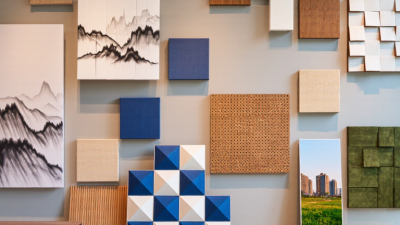
Sound absorbing art now combines visual storytelling with measurable acoustic performance. The main material choices remain important because each one handles sound differently. PET felt, often made partly from recycled fibers, is lightweight and easy to cut into layered shapes. It performs well with speech frequencies in offices, studios, and classrooms. Its dense surface can also create crisp geometric patterns without adding much wall weight.
Mineral wool offers stronger broadband absorption when it is properly framed and covered with breathable fabric. It can reduce harsh reflections from voices, music, and hard furniture. However, the core needs careful protection and installation. Fabric choice matters too. A tightly woven textile may restrict airflow and lower performance. I have seen attractive panels disappoint when appearance receives more attention than acoustic testing.
Wood-based artwork brings warmth and texture. Perforated or slotted wood can absorb selected frequencies when paired with an air cavity and backing layer. It usually needs more depth than felt. Recycled cotton and polyester blends provide softer, flexible alternatives, though their results vary by density. Buyers should review independent test data, including absorption ratings and frequency ranges. A panel may look impressive yet perform weakly in the low frequencies. That limitation deserves honest attention.
What Are the Top Types of Sound Absorbing Art in 2026?
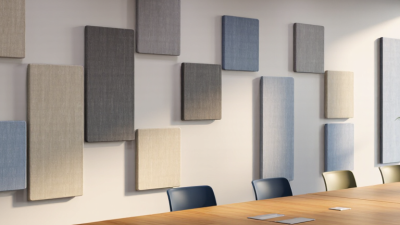
Fabric-wrapped panels are becoming a practical choice for decorative sound absorption. They combine printed artwork, color, and acoustic performance in one wall element. Their porous core reduces reflected speech and music energy, while the fabric protects the surface. According to ISO 354, laboratories measure sound absorption through reverberation-room testing. Buyers should request the tested absorption coefficient, not rely on attractive product photos.
Placement matters more than many designs suggest. Panels work best at strong reflection points, such as walls beside meeting tables or behind speakers. The 2021 ASHRAE Handbook identifies reverberation control as a key factor in speech clarity. ANSI/ASA S12.60 recommends classroom reverberation times near 0.6 seconds for smaller rooms. That target offers useful guidance for offices, studios, and learning spaces, although room volume changes the result.
The 2024 Global Wellness Institute report connects healthier buildings with growing attention to indoor environmental quality. Acoustic comfort belongs in that discussion. A fabric panel cannot block traffic, machinery, or loud neighbors. It mainly controls echo inside the room. That distinction is often missed. Designers should check NRC or αw values, fire performance, fabric durability, and cleaning requirements. Installation gaps can also weaken results. In real projects, a beautiful panel may still underperform when too little wall area is treated. Testing, measured room conditions, and honest post-installation review remain essential.
Exploring Fabric-Wrapped Panels as Decorative Sound Absorbers
| Sound-Absorbing Art Type | Typical Construction | Typical Thickness | Indicative NRC Range | Visual Design Options | Key Acoustic Strength | Best-Fit Spaces | Important Considerations |
|---|---|---|---|---|---|---|---|
| Fabric-Wrapped Acoustic Panels | Porous fiberglass, mineral wool, or polyester core covered with acoustically transparent fabric | 25–100 mm | 0.70–1.10 | Printed artwork, photography, solid colors, gradients, multi-panel compositions, and custom geometric layouts | Strong mid- and high-frequency absorption with effective speech-noise control | Offices, conference rooms, classrooms, hospitality areas, galleries, and home theaters | Performance depends on core density, panel thickness, fabric openness, air gap, installation area, and test method |
| Acoustic Canvas Artwork | Absorptive board or fibrous core wrapped with printed canvas or acoustically suitable textile | 25–75 mm | 0.50–0.90 | Wall art, murals, abstract graphics, photography, and coordinated décor sets | Combines visual focal-point design with broadband reverberation reduction | Restaurants, waiting areas, residential rooms, studios, and creative workplaces | Dense or sealed print surfaces may reduce airflow through the covering and lower acoustic efficiency |
| PET Felt Art Panels | Decorative panels made from compressed polyester fibers, often produced with recycled content | 9–24 mm | 0.30–0.80 | Laser-cut patterns, layered reliefs, color blocks, letters, logos, and nature-inspired forms | Lightweight, flexible, and effective for reducing reflections in the speech range | Open-plan offices, libraries, education spaces, corridors, and collaborative zones | Thicker panels or rear air gaps generally improve low-frequency performance; verify fire and cleaning requirements |
| Acoustic Baffles with Artistic Graphics | Vertical or suspended absorptive elements positioned above occupied areas | 25–100 mm | 0.60–1.20 | Printed surfaces, alternating colors, sculptural arrangements, and suspended art installations | Uses both panel surface and exposed edges to absorb sound while treating ceilings | High-ceiling offices, atriums, cafeterias, gyms, libraries, and multipurpose halls | Requires secure suspension, adequate ceiling coordination, and sufficient spacing for airflow around each baffle |
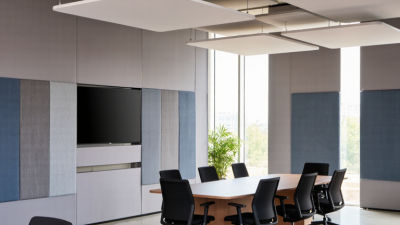
| Acoustic Clouds | Horizontal or angled absorptive panels suspended below the ceiling | 25–100 mm | 0.70–1.10 | Printed imagery, curved silhouettes, layered forms, and coordinated ceiling compositions | Reduces ceiling reflections and can improve speech clarity across larger rooms | Meeting rooms, dining spaces, lecture rooms, open offices, and reception areas | Air gaps above and below the cloud can increase effective absorption; lighting and sprinkler clearance must be reviewed |
| Wood Slat Acoustic Artwork | Wood or wood-look slats installed over an absorptive backing or acoustic infill | 20–60 mm | 0.60–1.00 | Linear patterns, curved layouts, mixed tones, framed compositions, and decorative wall features | Balances sound diffusion, absorption, and warm architectural appearance | Reception areas, restaurants, boardrooms, homes, studios, and premium interiors | Acoustic performance depends heavily on open area, backing material, slat spacing, and wall mounting details |
| Perforated Decorative Acoustic Panels | Perforated wood, metal, or composite face with an absorptive layer or cavity behind it | 25–100 mm | 0.50–0.90 | Perforated images, patterned screens, line art, geometric motifs, and custom panel layouts | Provides controlled absorption while retaining a durable, architectural surface | Auditoriums, corridors, commercial interiors, transit areas, and education facilities | Open perforation percentage, cavity depth, backing material, and panel placement strongly affect results |
| Three-Dimensional Acoustic Wall Art | Layered, folded, molded, or sculpted absorptive elements arranged as a decorative wall installation | 20–100 mm | 0.30–0.80 | Relief patterns, waves, topographic forms, modular sculptures, and tactile compositions | Adds surface area and visual depth while helping break up strong wall reflections | Lounges, creative offices, hotels, galleries, and residential living spaces | Uneven coverage can create variable results; combine with ceiling or opposite-wall treatment for balanced control |
| Acoustic Room Dividers and Screens | Freestanding or movable absorptive panels covered with textile, felt, or printed fabric | 25–100 mm | 0.40–0.90 | Double-sided artwork, translucent patterns, color zoning, and modular folding arrangements | Controls sound paths while providing visual separation and flexible space planning | Open offices, coworking areas, classrooms, healthcare waiting areas, and event spaces | Both sides should be treated for two-way absorption; stability, mobility, and clearance around circulation paths are essential |
Data note: NRC values are indicative ranges for comparable absorptive constructions, not guaranteed product ratings. Actual performance varies with material composition, thickness, mounting method, air space, coverage, frequency range, and laboratory test conditions. Confirm project requirements with tested acoustic data and applicable fire-safety standards.
Sculptural acoustic art combines sound control with a visible three-dimensional form. Deep folds, fins, and suspended shapes create more exposed surface area for absorbing reflections. They can soften speech in galleries, studios, and open offices without making a room feel clinical. However, shape alone is not proof of performance. ISO 354 laboratory testing and Noise Reduction Coefficient values provide stronger evidence.
The World Health Organization reported that environmental noise causes over one million healthy life-years lost annually in Western Europe.
Interior reverberation is only one part of that problem, but it deserves practical attention.
Wood acoustic art offers warmth, texture, and useful diffusion. Slatted wood systems can scatter sound while mineral or recycled-fiber backing absorbs energy behind the surface. Printed acoustic art uses fabric or perforated panels to display landscapes, patterns, or workplace graphics.
A 2024 analysis by Grand View Research estimated the global acoustic panels market at approximately 9.6 billion U.S. dollars in 2023, with continued growth expected through 2030. That expansion reflects demand for quieter, more adaptable interiors.
Still, printed artwork may underperform when its face material blocks airflow. I have seen attractive panels installed too high, leaving speech reflections untouched. Designers should review absorption data by frequency, not only a single NRC figure. Low-frequency control remains difficult. The room may still sound harsh.
What Are the Top Types of Sound Absorbing Art in 2026?
Choosing Sound Absorbing Art for Different Rooms and Acoustic Needs
Sound absorbing art should match the room, not only the wall color. In open offices, large PET-felt panels can soften conversations and keyboard noise. Printed fabric panels suit meeting rooms, where speech clarity matters. Perforated wood artwork adds warmth, but usually absorbs less mid-frequency sound than thick felt. Acoustic ceiling art can help when walls are already crowded.
Room size changes the decision. ISO 354 measures sound absorption in a reverberation room, while ISO 11654 converts results into weighted absorption ratings. Look for tested data, not decorative claims. A panel with a high absorption rating may still perform poorly if it covers only a small wall area. That mistake is common.
In bedrooms, textured fabric art can reduce sharp reflections near hard floors and windows. WHO’s Environmental Noise Guidelines recommend indoor bedroom noise below 30 dB(A) at night. Art alone cannot achieve that target. Classrooms need broader coverage, especially behind speakers and across rear walls. WHO recommends less than 35 dB(A) in classrooms during teaching. Reception areas may need durable, washable surfaces instead of delicate canvas.
Leave space around the artwork.
My practical concern is balance. Too much absorption can make a room feel dull and unnatural. Measure reverberation before buying, then review the result after installation. A small test panel may reveal more than a polished product photograph.
Representative Noise Reduction Coefficient (NRC) ratings for common sound-absorbing art constructions. Higher NRC values indicate greater average sound absorption across the speech-frequency range.
Fabric-wrapped fiberglass and mineral wool art panels generally provide the highest absorption, making them suitable for offices, classrooms, studios, and restaurants. PET felt and decorative wood systems can be effective when visual design, durability, and moderate acoustic control are priorities. Actual performance varies with thickness, mounting method, backing, air gaps, and laboratory test conditions.