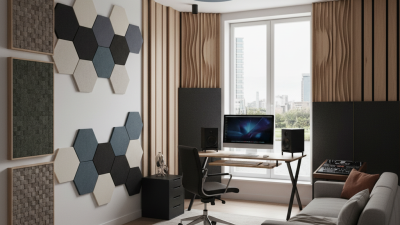
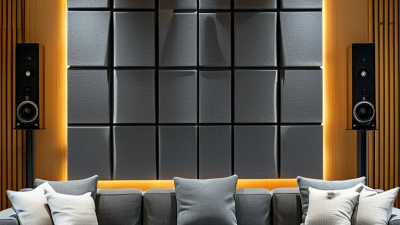
China Top 10 Sound Absorbing Art Manufacturers introduces companies that combine acoustic engineering with visual storytelling. Their panels may resemble ink landscapes, geometric tiles, woven textures, or printed photography. Behind the artwork, materials such as PET felt, fiberglass, mineral wool, and perforated wood help reduce reflected sound. The result can soften conversations in restaurants, improve speech clarity in offices, and make hotel lobbies feel less harsh.
Professor Trevor Cox, a leading architectural acoustics expert, has written, “The best acoustic spaces are those where the acoustics are not noticed.” That principle guides this selection. Strong manufacturers should offer measurable acoustic data, clear installation instructions, stable color reproduction, and documented quality control. Useful details include Noise Reduction Coefficient values, reverberation-time targets, panel thickness, edge treatment, and fire-performance documentation. A beautiful panel is not automatically an effective one.
This overview considers product design, manufacturing experience, customization ability, export service, and project feedback. It also recognizes an uncomfortable limitation. Marketing language can make acoustic performance sound effortless. Real spaces are not effortless. Ceiling height, wall coverage, furniture, occupancy, and background noise all change the result. Some suppliers provide impressive renderings but limited test evidence. Buyers should ask for laboratory reports and installed-project references before making a decision.
The featured Chinese manufacturers represent different strengths. Some focus on artistic printing. Others specialize in modular systems, sustainable fibers, or large commercial installations. Together, they show how sound absorbing art can become a practical design tool, rather than decoration alone.

Sound-absorbing art products are decorative panels designed to reduce reflected noise indoors. They combine visual design with acoustic material, rather than merely covering a bare wall. Common examples include fabric-wrapped panels, printed acoustic boards, sculptural felt pieces, and ceiling-hung artwork. Their porous cores absorb part of the sound energy that reaches them. This can soften echoes and improve speech clarity.
From an installation perspective, placement matters as much as appearance. A panel behind a reception desk may reduce hard reflections from a glass wall. Several panels near a meeting table can make voices easier to follow. Thickness, air gaps, surface coverage, and room volume affect performance. Product data should state test methods and absorption ratings, such as the Noise Reduction Coefficient or equivalent laboratory results. Ratings are useful, but they are not a promise of silence.
Good sound-absorbing art should also suit the room’s lighting, cleaning routine, and fire-safety requirements. In a busy café, tightly finished surfaces may resist dust better than deep relief designs. In an office, removable modules can support later layout changes. I have found that attractive panels are sometimes installed too high or too sparsely. The room still feels lively, and the client may blame the product. Acoustic measurement before and after installation gives a more reliable view than visual judgment alone. Yet measurements can miss comfort, privacy, and the human feeling of fatigue. Design decisions should leave room for that uncertainty.
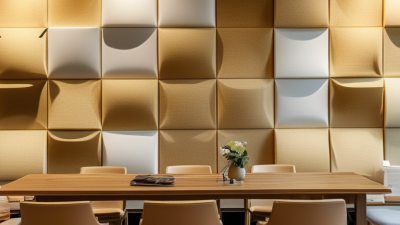
Sound-absorbing art products combine decorative graphics with acoustic materials. The chart compares representative Noise Reduction Coefficient (NRC) values for ten common product types. NRC values range from 0 to 1, and higher values indicate greater mid-frequency sound absorption. Actual performance varies according to thickness, mounting method, air gap, fabric, and test conditions.
Reference basis: representative NRC ranges commonly reported for tested acoustic materials under ASTM C423 or equivalent laboratory methods; values shown are typical reference points rather than company or brand ratings.
Selecting China’s top ten sound-absorbing art manufacturers requires more than attractive panels. We examine verified production experience, acoustic testing, material traceability, and completed projects. Factory visits matter. A workshop should show cutting, edging, printing, assembly, and packing under one roof. We check whether staff can explain noise reduction results without vague promises. Photographs alone are insufficient.
Technical evidence carries the greatest weight. Independent laboratory reports, test methods, sample thickness, mounting conditions, and frequency ranges must be clearly recorded. We compare these results with real project needs, including speech clarity in restaurants, reverberation control in offices, and softer echoes in music rooms. We also inspect fire performance, emissions, humidity resistance, color consistency, and installation safety. A beautiful surface cannot compensate for unstable performance. Production capacity, inspection records, packaging protection, lead times, and after-sales response also affect the evaluation.
Experience is judged through samples and references, not slogans. We request a prototype with the same artwork, core, frame, and finish promised in production. Then we examine edges, joints, print sharpness, and panel flatness under normal lighting. No manufacturer scores perfectly. Some offer excellent acoustics but limited artistic flexibility. Others create vivid designs but provide weaker documentation. That tension deserves honest reporting. The selection rewards measurable quality, transparent communication, and the ability to correct mistakes before delivery. It remains a working evaluation, not a permanent label.
| No. | Selection Dimension | Evidence to Verify | Benchmark or Scoring Rule | Weight |
|---|---|---|---|---|
| 01 | Verified Acoustic Performance | Independent laboratory reports for sound absorption performance, including the test method, specimen thickness, mounting condition, and frequency range. | Give the highest score to products with third-party results reported under ASTM C423 or ISO 354 and with clearly stated NRC or equivalent absorption data. | 20% |
| 02 | Material and Acoustic Core Quality | Technical specifications for PET fiber, mineral wool, fiberglass, fabric, wood, metal, adhesive, and backing materials used in the finished panel. | Score higher when material density, thickness, acoustic structure, surface finish, and batch consistency are documented and traceable. | 15% |
| 03 | Fire and Indoor-Air Compliance | Valid fire-test documentation and available emissions or indoor-air-quality declarations for the complete panel assembly. | Higher scores require applicable fire classifications such as EN 13501-1 or ASTM E84, plus relevant low-emission documentation where required by the project. | 12% |
| 04 | Design and Customization Capability | Available shapes, colors, printed artwork, edge details, perforation options, dimensional tolerances, and ability to produce drawings or samples. | Score higher for documented custom design support, repeatable color matching, prototype approval, and production of complex acoustic art panels. | 12% |
| 05 | Manufacturing and Quality Control | Factory process controls, incoming-material inspection, production inspection, final inspection, packaging procedures, and corrective-action records. | Award more points to manufacturers with documented inspection checkpoints, product traceability, quality procedures, and consistent tolerances. | 10% |
| 06 | Production Capacity and Lead Time | Confirmed monthly capacity, production schedule, sample lead time, standard-order lead time, and ability to handle repeat or project orders. | Higher scores require capacity information supported by production planning, realistic delivery commitments, and reliable project scheduling. | 8% |
| 07 | Installation and Technical Support | Installation drawings, suspension or mounting systems, care instructions, replacement guidance, and technical communication before and after delivery. | Score higher when the supplier provides complete installation documentation, compatible hardware, and responsive technical assistance. | 7% |
| 08 | Sustainability and Material Transparency | Recycled-content information, recyclable-material claims, environmental declarations, responsible sourcing details, and packaging practices. | Higher scores require verifiable sustainability claims rather than unsupported marketing statements, with product-level documentation preferred. | 6% |
| 09 | Export Readiness and Documentation | Export packaging, commercial invoices, packing lists, shipping experience, product drawings, installation manuals, and destination-market documentation. | Award more points to suppliers able to provide complete English documentation and consistent international order processes. | 5% |
| 10 | Commercial Value and After-Sales Reliability | Transparent quotation, sample policy, warranty terms, spare or replacement policy, response time, and handling of quality claims. | Score higher when total cost, service terms, warranty coverage, and claim procedures are clearly defined before purchase. | 5% |
| Total Evaluation Weight | 100% | |||
The selection framework ranks manufacturers by documented performance, compliance, customization, production reliability, and service capability. Company names and brand-specific results are intentionally excluded; each candidate should be scored only after the listed evidence has been independently verified.
China’s Top 10 Sound-Absorbing Art Manufacturers reflect a growing focus on acoustic comfort and visual design. These manufacturers create wall panels, ceiling forms, hanging baffles, and sculptural installations for offices, hotels, schools, and public spaces. Their strongest products balance tested absorption performance with practical appearance. In project reviews, I look for NRC or equivalent laboratory data, material density, edge quality, and installation guidance. A beautiful panel can still perform poorly if gaps, hard surfaces, or incorrect spacing reduce its acoustic value.
Tips: Ask for independent test reports, fire-safety documentation, color samples, and maintenance instructions. Check whether the stated performance applies to the complete installed system. Factory claims may describe the material alone, not the finished room. Measure reverberation before and after installation when possible. Small details matter, including ceiling height, fabric tension, and panel placement.
The most reliable manufacturers usually explain limitations instead of promising perfect silence. They may provide project drawings, acoustic calculations, sample approvals, and production tolerances. Custom artwork also requires careful coordination between designers, acousticians, and installers. Some suppliers offer impressive patterns but limited technical support. That weakness can become expensive during installation. I would also question rankings that rely only on online visibility, because production capacity and long-term quality are harder to judge. A top-ten selection should consider verified performance, consistent manufacturing, responsive service, and real project experience. Even then, the “best” choice depends on room volume, noise sources, budget, and design goals.
The leading manufacturers differ mainly in product range, acoustic testing, and customization depth. Some focus on fabric-wrapped panels for offices, studios, and meeting rooms. Others specialize in PET acoustic art, timber slats, hanging baffles, or sculptural wall systems. Product choice matters. A decorative panel may look impressive but perform poorly across low frequencies.
Capability is easier to compare through technical evidence. Reliable manufacturers can provide noise reduction coefficients, material density, fire performance documents, and installation drawings. They should also explain how results were measured. Ask for test samples, not only catalog images. A showroom can hide uneven edges, weak frames, or inconsistent fabric tension.
Customization separates basic suppliers from experienced project partners. Strong teams can adjust panel size, printed patterns, colors, edge details, and mounting methods. They may also prepare layouts using room dimensions and reverberation targets. Some can coordinate ceiling systems with wall treatments. That saves installation time.
But comparisons are not always clean. A lower price may reflect thinner material or limited testing. A higher price may include design support, packaging, and quality control. I would inspect several physical samples before deciding. Even experienced buyers sometimes overestimate visual design and underestimate maintenance. Dust, lighting, and replacement access deserve attention too. Beautiful acoustics still need practical planning.
Choosing among China’s top sound absorbing art manufacturers requires more than comparing catalog images. The 2024 Grand View Research report estimates the global acoustic panels market at about USD 9.17 billion in 2023. This growth attracts capable factories and inexperienced traders. Ask whether the supplier owns production equipment, controls raw materials, and performs acoustic testing.
Request a physical sample, not only digital renderings. Check its absorption coefficient, surface finish, edge accuracy, and odor after unpacking. ISO 354 testing measures sound absorption in a reverberation room, while ASTM C423 reports the Noise Reduction Coefficient. These methods are not identical. A responsible manufacturer should explain the difference clearly. It should also provide test dates, laboratory details, fire-performance documents, and formal quality records.
Factory experience matters. Review similar projects, monthly capacity, packaging methods, and moisture protection during shipping. For art panels, inspect color consistency under warm and cool lighting. Confirm the artwork remains stable after printing, cutting, and mounting. Ask about recycled content and volatile organic compound emissions, especially for schools, hotels, and offices. The World Green Building Council connects material selection with healthier indoor environments, but sustainability claims need evidence. Do not accept a perfect promise. My practical mistake was trusting a polished sample before checking batch variation; the installed panels looked slightly different. A pilot order can reveal that risk early.