How to Choose the Best Sound Reducing Panels for Your Needs?
Choosing the right sound reducing panels can significantly enhance your space. According to Dr. Emily Lawson, an acoustics expert, "Selecting the best panels starts with understanding your specific sound needs." Her insight emphasizes the importance of tailored solutions.
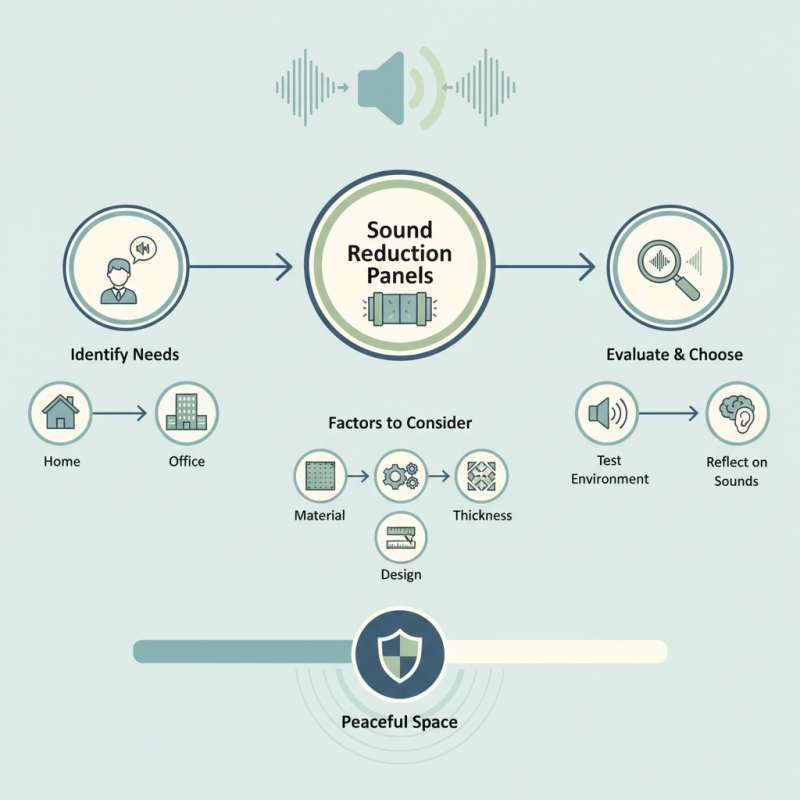
In various environments, be it home or office, sound reducing panels play a crucial role. They absorb unwanted noise, creating a more peaceful atmosphere. However, selecting the right panels involves careful consideration. Not every panel suits every situation. For example, materials, thickness, and design all influence effectiveness.
Many users overlook the importance of testing products before committing. A successful choice requires evaluating your acoustical environment. Think about the sounds you want to reduce. Reflecting on these factors will guide you to the best sound reducing panels for your needs.
Understanding Sound Reducing Panels: Types and Materials
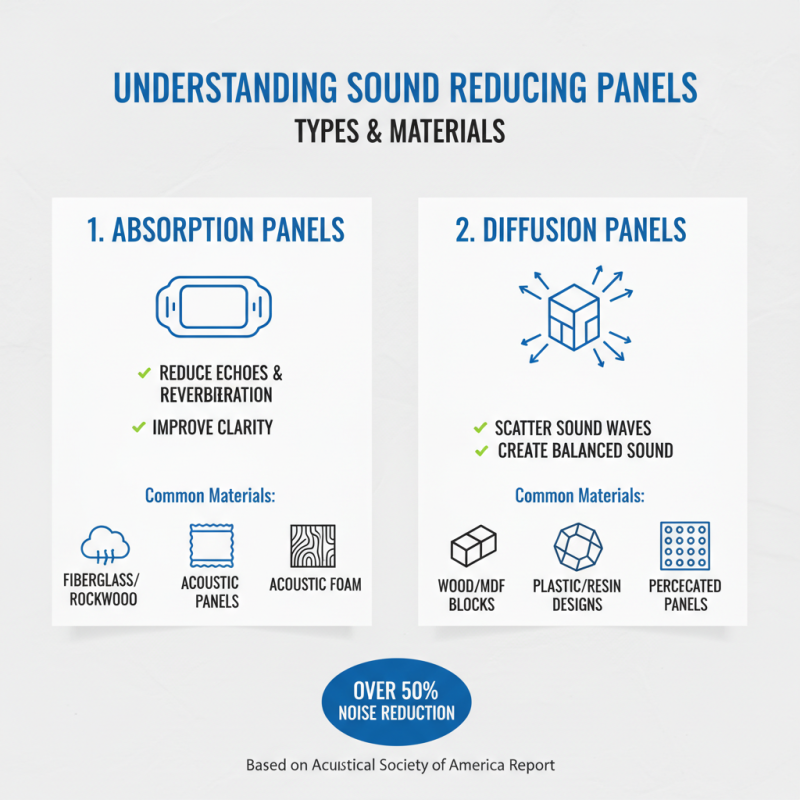
When selecting sound reducing panels, understanding the various types and materials is crucial. Acoustic panels commonly fall into two categories: absorption and diffusion. Absorptive panels reduce echoes and reverberation, while diffusive panels scatter sound waves, creating a more balanced sound environment. According to a report by the Acoustical Society of America, effective sound absorption can reduce noise levels by over 50%, proving their importance in both commercial and residential spaces.
Materials used in these panels also play a significant role in sound reduction effectiveness. Fiberglass, foam, and fabric-wrapped panels are popular choices. Fiberglass panels offer high sound absorption but require careful installation. Foam panels are lightweight, making them easy to install, but they may not provide as much absorption at lower frequencies. A study from the National Institute of Standards and Technology emphasized that choosing the right material can significantly impact overall performance.
Choosing the best sound reducing panels can sometimes be daunting. Different environments may require unique solutions. A panel that works well in a music studio may not suffice in an open office setting. Adjusting to these nuances is key. Understanding your specific needs leads to improved acoustic performance in your space. Remember, trial and error can help in this process, as every room reacts differently to sound treatment.
Evaluating Noise Reduction Ratings (NRC) for Effective Panels
When selecting sound reducing panels, understanding Noise Reduction Coefficient (NRC) is crucial. NRC measures how well a material absorbs sound. It ranges from 0 to 1, with higher values indicating better sound absorption. For effective noise reduction, look for panels with NRC ratings above 0.75. These panels can significantly minimize noise in your space, creating a more serene environment.
It's vital to consider where you'll use these panels. Different settings require different levels of sound absorption. For instance, a music studio demands higher NRC ratings than a home office. Panels may look appealing, but their real value lies in their sound absorption capability. Aesthetics should complement functionality, not overshadow it. You might find that installing panels does not eliminate all noise. Personal adjustments may still be necessary.
Installation plays a critical role in effectiveness. Panels need to be placed strategically. Their positions can impact overall performance. Experimenting with different configurations can lead to better results. Sometimes, you might find that additional soundproofing solutions are necessary. It's a process of trial and error. Keep refining your approach until you achieve the desired acoustics.
How to Choose the Best Sound Reducing Panels for Your Needs? - Evaluating Noise Reduction Ratings (NRC) for Effective Panels
| Panel Type |
Material |
NRC Rating |
Thickness (inches) |
Application |
| Acoustic Foam Panels |
Polyurethane Foam |
0.75 |
2 |
Recording Studios |
| Fabric Wrapped Panels |
Fiberglass |
0.85 |
1.5 |
Office Spaces |
| Wood Panels |
Plywood |
0.65 |
0.75 |
Theaters |
| Mass Loaded Vinyl |
Vinyl |
0.95 |
0.5 |
Recording Studios |
| Ceiling Tiles |
Mineral Fiber |
0.80 |
1 |
Commercial Buildings |
Assessing Acoustic Performance Based on Room Size and Use
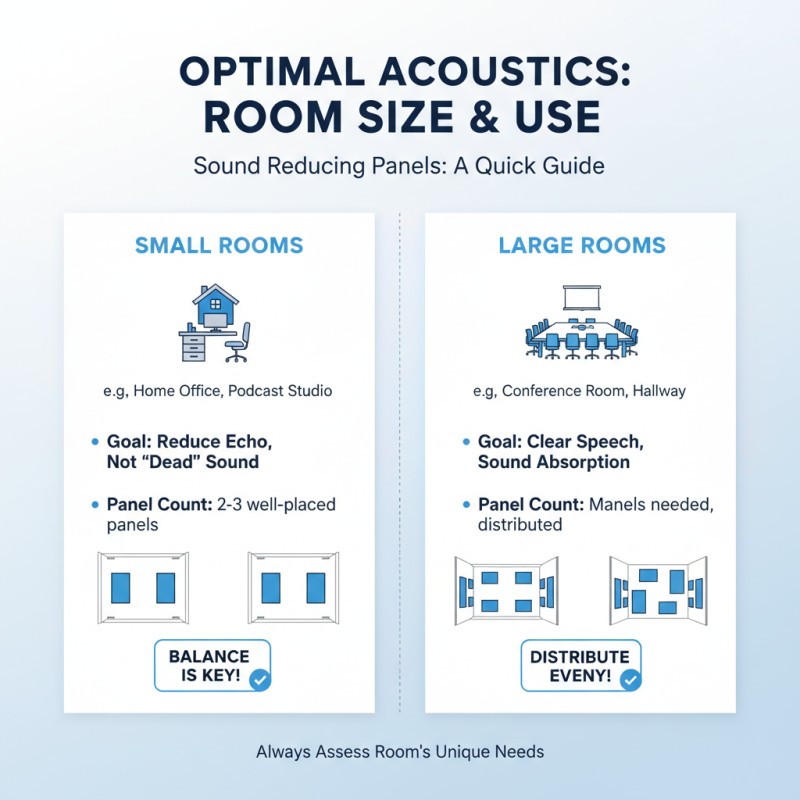
When selecting sound reducing panels, understanding the acoustic performance based on room size and use is crucial. A small room, such as a home office, requires different acoustics than a large conference room. In a compact space, too many panels can create an overly dead sound. Instead, balance is key. You may find that two or three well-placed panels can effectively minimize echoes without making the room feel dull.
Consider the activities that take place in the room. A music studio necessitates different treatment than a meeting space. For example, music studios benefit from variable absorption. This allows sound waves to bounce and blend, enhancing the richness of recordings. Meanwhile, a boardroom should prioritize clarity and focus. Sparse treatment can lead to confusion during discussions, while excessive absorption can mute important voices. Each space requires a tailored approach for optimum results.
Pay attention to the panel materials and their placement. Soft materials often absorb sound better than harder surfaces. Experimenting with angles and heights can reveal unexpected acoustics. It works sometimes, but you may need to reassess your setup as the needs change. Integrating feedback from users can also inform adjustments, leading to a more effective sound environment. Always be open to revisiting your choices, as every room is unique and may need ongoing improvements.
Installation Options: DIY vs. Professional Services
When considering sound-reducing panels, installation options play a crucial role. Many individuals face the dilemma of whether to undertake a DIY project or hire professionals. A study from the Acoustical Society of America suggests that improper installation can reduce the effectiveness of sound panels by up to 40%. This emphasizes the importance of understanding the nuances of installation techniques.
DIY enthusiasts often save money, but they must possess certain skills. Accurate measuring and cutting are essential. If panels are not aligned correctly, sound absorption may diminish. Conversely, professional installers bring expertise. They ensure panels are mounted at optimal angles. According to recent data, professional installation can improve sound absorption ratings by around 25% compared to subpar DIY efforts.
Your specific environment also matters. For instance, a home studio may require precise placement. An off-center installation could lead to uneven sound distribution. Seeking professional services may seem costly. However, it can lead to long-term satisfaction. Consider all factors before making your decision, as the wrong choice can impact your acoustic experience significantly.
Budget Considerations: Finding Quality Panels Within Your Range
When selecting sound reducing panels, budget considerations play a crucial role. Many individuals overlook this aspect, assuming quality correlates only with price. However, there are quality panels available at various price points. It's important to assess your specific needs before diving into the market. Understand the size of your space and the level of noise you want to mitigate.
Research different types of materials used in soundproofing. Some options are more affordable yet effective. Foam, for example, is cost-effective and widely accessible. Wood panels offer aesthetic appeal but may come at a higher cost. Remember, sometimes spending more doesn’t guarantee better results. Look for panels with good acoustic ratings that fit your budget constraints.
Evaluate customer reviews and ratings. Real-life experiences provide insight into the product's efficacy. Engage with online forums to understand common pitfalls. This can also save you from unsatisfactory purchases. Don’t hesitate to ask questions to manufacturers or consult professionals. Taking time to gather information can lead to a more informed choice. Balancing cost and quality is key to achieving your soundproofing goals effectively.
Sound Reducing Panels Cost Comparison
This chart shows the cost comparison of various types of sound reducing panels including basic, mid-range, premium panels, and acoustic foam. When selecting the best options, consider your budget against the effectiveness of sound reduction.