China Top Sound Boards for Walls for Global Buyers

China Top Sound Boards for Walls for Global Buyers

Choosing sound boards for walls is not just a matter of comparing prices or surface finishes. Global buyers need products that control echo, support speech clarity, and fit real installation conditions. A board may look attractive in a showroom, yet perform poorly in a large meeting room. That difference matters.

Professor Trevor Cox, an acoustics researcher at the University of Salford, puts the principle clearly: “Good acoustics is about making sound work for people.” His view helps buyers assess more than laboratory figures. They should examine noise reduction data, absorption ratings, fire performance, moisture resistance, edge quality, and installation methods. Product consistency matters too.

This guide explores leading Chinese manufacturers of sound boards for walls, with attention to export experience, material options, customization, and quality control. Some suppliers offer PET felt panels, wood slat systems, fabric-wrapped boards, and recycled acoustic solutions. Samples should be tested under practical conditions. A quiet office is not the same as a busy restaurant.

Look closely.

Reliable factories usually provide technical datasheets, test reports, packing details, and clear project references. However, no supplier is perfect. Marketing language can sound stronger than measured performance. Buyers should question unclear claims and request independent documentation when possible. Small details, such as panel density, mounting gaps, and wall preparation, can change the final result. This article offers a practical starting point, not a substitute for professional acoustic design.
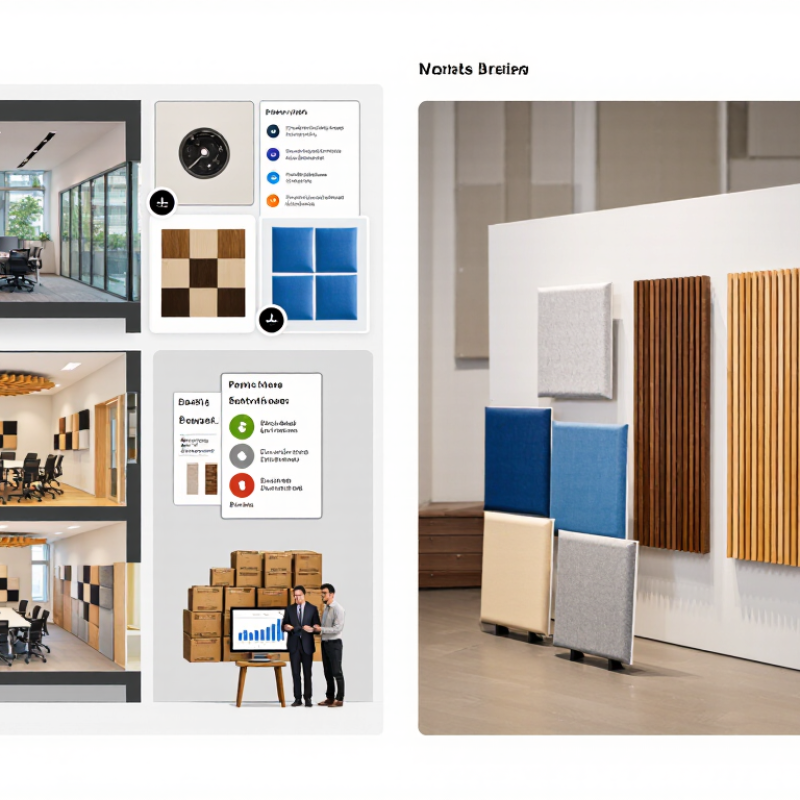
China Top Sound Boards for Walls for Global Buyers

What Are Sound Boards for Walls and How Do They Work?

A wall sound board is an engineered panel that manages sound inside a room. It usually contains porous fibers, mineral materials, or perforated surfaces. These structures trap moving air and convert part of sound energy into small amounts of heat.

The effect is absorption, not complete soundproofing. A board can reduce echo, speech reflection, and harsh high-frequency noise. It cannot stop heavy footsteps or low-frequency machinery alone. Installation matters greatly. Gaps, thin walls, and unsealed edges can weaken performance. Under ISO 354, laboratories measure sound absorption in reverberation rooms. Buyers should request tested absorption coefficients, not rely on appearance or marketing claims. The World Health Organization’s 2018 Environmental Noise Guidelines recommend indoor nighttime noise below 30 dB(A) for good sleep. A wall panel may support this goal, but it cannot replace proper wall mass and sealing.

Tips: Check the test standard, frequency range, thickness, fire classification, and humidity resistance. Ask for installation drawings. Leave no visible gaps. Remember, results vary.

Some panels are chosen too quickly. That is a mistake. A busy restaurant needs speech control, while a bedroom needs quieter reflections. Select the board after measuring the room, noise source, and wall construction. The best solution is often a combined system with absorption, sealing, and added mass.
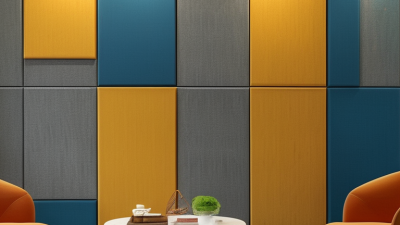
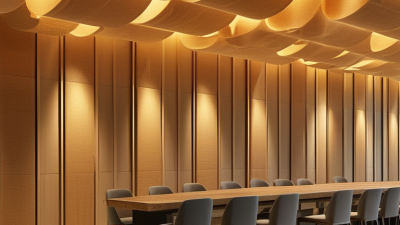
Key Materials and Acoustic Features of China-Made Sound Boards

China-made sound boards use several practical materials. PET felt offers a light, recyclable surface and flexible color options. Mineral wool provides strong mid- and high-frequency absorption. Perforated MDF adds a warmer, furniture-like appearance. Its rear cavity improves low-frequency performance.

Material choice changes the acoustic result. A thin PET panel may reduce speech reflections, but it cannot replace full room treatment. Mineral wool needs a protective fabric layer and careful edge sealing. Perforated wood requires accurate perforation rates and an air gap behind the panel. ISO 354 laboratory reports measure sound absorption by frequency, not by appearance. Buyers should request these test curves before comparing products.

The World Health Organization’s Environmental Noise Guidelines for the European Region recommend below 30 dB(A) in bedrooms at night. They also recommend below 35 dB(A) in classrooms. These figures show why quiet rooms need more than decorative panels. Field inspections often reveal gaps around corners, doors, and lighting. Small installation errors can weaken an otherwise good system.

Tips: Ask for ISO 354 data, fire classification, formaldehyde results, and moisture resistance. Check panel thickness, density, mounting distance, and edge details. A thicker board is not automatically better. I still find room dimensions and furniture overlooked too often.

China Top Sound Boards for Walls for Global Buyers - Key Materials and Acoustic Features of China-Made Sound Boards

Sound Board Type Typical Materials and Structure Indicative Acoustic Performance Key Acoustic Features Common Wall Applications Surface and Design Options Important Buyer Considerations
PET Felt Acoustic Panels Recycled or virgin polyethylene terephthalate fibers formed into a semi-rigid felt board. Typical thicknesses include 9, 12, 15, 20 and 24 mm. Approx. NRC: 0.30–0.90
Performance increases with thickness, spacing and an air cavity behind the panel.
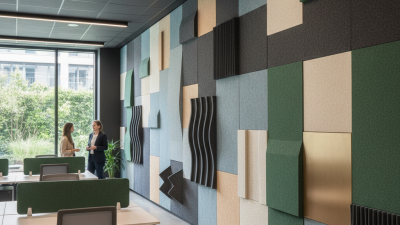
Mid-frequency absorption Lightweight Impact resistant Low-VOC options Offices, classrooms, libraries, corridors, meeting rooms, hospitality interiors and open-plan workspaces. Solid colors, CNC-cut patterns, geometric shapes, printed graphics and curved or suspended configurations. Confirm recycled content, density, edge quality, color consistency, formaldehyde/VOC test results and fire classification for the destination market.
Wood Slat Acoustic Panels Real-wood or wood-veneer slats fixed to an acoustic felt backing, commonly installed over battens or a mineral-wool cavity. Approx. NRC: 0.65–0.95
The air gap and cavity absorber strongly affect low- and mid-frequency performance.
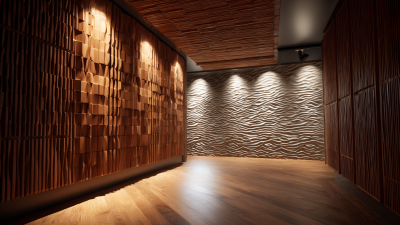
Broadband absorption Diffusion Decorative finish Warm visual appearance Feature walls, conference rooms, auditoriums, restaurants, recording spaces and premium residential interiors. Oak, walnut, ash or other wood-veneer appearances; clear, stained, painted or textured finishes; different slat widths and spacing. Request test results for the complete wall build-up, not only the slat surface. Check veneer grade, moisture control, substrate stability and fire treatment.
Perforated MDF or Wood-Based Acoustic Boards MDF, HDF or plywood panels with regular perforations or micro-perforations, normally installed with an absorptive backing and cavity. Approx. NRC: 0.45–0.85
Hole diameter, perforation ratio, backing material and cavity depth determine the result.
Resonant absorption Robust surface Pattern flexibility Moderate diffusion Schools, public buildings, cinemas, lecture rooms, music rooms and commercial interiors requiring a durable finish. Melamine, paint, natural veneer, laminate, woodgrain finishes, linear slots, round holes and custom perforation patterns. Verify formaldehyde emissions, edge sealing, moisture resistance, panel flatness, perforation accuracy and the complete system's fire performance.
Fabric-Wrapped Fiberglass Panels Rigid or semi-rigid glass mineral fiber core enclosed in acoustically transparent fabric, usually with a protective rear layer. Approx. NRC: 0.80–1.10
High absorption is achievable at mid and high frequencies; thicker cores improve lower-frequency absorption.
High absorption Broadband control Reflection reduction Custom shapes Recording and broadcast rooms, conference rooms, cinemas, classrooms, offices and hospitality spaces. Wide fabric color selection, printed fabric, beveled edges, framed panels, clouds, baffles and large-format wall modules. Check core density, fabric abrasion resistance, cleanability, edge protection, odor performance and fire testing for the full assembled panel.
Mineral Wool Acoustic Boards Semi-rigid rock wool or glass wool boards used as exposed panels, fabric-faced panels or concealed absorbers behind perforated surfaces. Approx. NRC: 0.90–1.15
Results depend on thickness, airflow resistance, facing and distance from the wall.
Excellent absorption Low-frequency support Non-combustible options Large-area treatment Industrial facilities, theaters, transport buildings, plant rooms, classrooms, studios and large public spaces. Painted or fabric-faced surfaces, edge-painted panels, suspended clouds, wall rafts and modular ceiling-to-wall systems. Confirm fiber containment, facing durability, moisture resistance, dust protection, handling requirements and the applicable reaction-to-fire classification.
Polyester Fiber Board Thermally bonded polyester fibers formed into rigid boards, often supplied without a separate fabric covering. Typical thicknesses range from 9 to 25 mm. Approx. NRC: 0.35–0.95
Thicker boards and rear air gaps improve absorption, especially at lower frequencies.
Lightweight Easy fabrication Pinable surface Design versatility Offices, schools, call centers, retail spaces, home theaters, studios and temporary or demountable interiors. Cut-to-size panels, printed patterns, routed grooves, three-dimensional forms, colored cores and acoustic artwork. Ask for density, thickness tolerance, color-fastness data, cleanability, recycled content and fire test documentation for the intended installation method.
Micro-Perforated Metal Acoustic Panels Aluminum or galvanized steel panels with micro-perforations, usually combined with an air cavity and absorptive backing. Approx. NRC: 0.50–0.90
Acoustic behavior is controlled by perforation ratio, panel depth, cavity volume and backing material.
Durable Moisture resistant Cleanable Controlled resonance Airports, transport facilities, swimming-pool areas, industrial buildings, kitchens and high-traffic public interiors. Powder coating, anodized finishes, linear or modular formats, concealed suspension systems and custom perforation layouts. Check corrosion resistance, perforation precision, panel deflection, edge safety, backing protection and the complete assembly's fire behavior.
Cork Acoustic Panels Agglomerated natural cork granules or cork composite boards, supplied as solid panels or decorative wall tiles. Approx. NRC: 0.20–0.55
Cork generally provides useful mid- and high-frequency absorption; thickness and mounting method are decisive.
Natural material Resilient surface Thermal benefit Decorative texture Offices, hospitality interiors, residential rooms, educational spaces and low-impact decorative acoustic walls. Natural grain, colored cork, hexagonal tiles, rolls, printed patterns and mixed-material wall compositions. Verify thickness, density, odor, moisture behavior, dimensional stability, adhesive compatibility and fire classification before specification.
Technical note: The acoustic values shown are indicative ranges for commonly supplied wall-panel constructions. Actual results vary with thickness, panel size, mounting method, air cavity, backing absorber, room conditions and test configuration. For international procurement, request laboratory reports based on applicable methods such as ASTM C423 or ISO 354, together with reaction-to-fire, VOC/formaldehyde and dimensional-stability documentation where required.

How to Compare Chinese Wall Sound Board Manufacturers

China Top Sound Boards for Walls for Global Buyers

How to Compare Chinese Wall Sound Board Manufacturers

Comparing Chinese wall sound board manufacturers requires more than checking prices. Start with acoustic performance, material composition, and production consistency. Ask for laboratory reports showing NRC or equivalent absorption data. Confirm the test method and product thickness. A 12 mm panel cannot be compared fairly with a 24 mm panel. Samples matter.

Review the core material, surface finish, edge treatment, and backing system. PET, wood fiber, and perforated panels perform differently in offices, studios, and hospitality spaces. Request fire-rating, formaldehyde, and moisture-resistance documents for your target market. Verify certificates with the issuing laboratory when possible. A polished PDF is not enough. Inspect several samples from different production batches. Small color shifts can affect a large wall.

Measure the details. Check panel dimensions, density, tolerances, packaging, and installation hardware. Ask how the factory controls cutting accuracy and protects corners during export. Reliable manufacturers should provide drawings, packing photos, inspection records, and a clear replacement policy. Compare minimum order quantities, tooling fees, lead times, and communication speed. A low quotation may exclude testing or custom packaging. That can become expensive later. One weakness in this process is relying too heavily on one sample. Production conditions change, so an independent pre-shipment inspection may be worthwhile. Ask practical questions, and record every answer.

Installation Methods for Different Wall and Room Types

Sound boards for walls can improve speech clarity, reduce harsh reflections, and make rooms more comfortable. However, installation must match the wall structure and room purpose. A solution that works in a meeting room may fail in a music studio.

On plasterboard walls, use mechanical anchors or locate the studs before fixing panels. Leave a small air gap when the design allows it. This gap can improve low-frequency absorption. Concrete walls need suitable masonry fasteners, not ordinary screws. In rented spaces, removable rails or adhesive systems may be safer, but surface dust can weaken the bond. Clean and test a hidden area first.

Large rooms often need distributed wall coverage rather than one dense feature wall. Place sound boards near reflection points, especially beside speakers and opposite hard glass surfaces. In classrooms, keep lower panels durable and easy to clean. Dining areas may need moisture-resistant materials and tighter fixing methods. Studios require careful spacing, corner treatment, and measurement with test recordings.

I once assumed thicker panels always performed better. That was wrong. Placement and room balance mattered more.

Avoid covering every wall, because an over-damped room can sound dull and unnatural. Check door swings, ventilation, lighting, and fire-safety requirements before drilling. Some walls hide pipes or cables. Never guess.

Global Buying Factors: Quality, Certification, Cost, and Shipping

China Top Sound Boards for Walls for Global Buyers

Quality should be judged beyond appearance. When reviewing wall sound boards, check acoustic absorption ratings, board density, edge finish, and backing strength. A clean surface can still hide weak bonding or uneven thickness. Ask for production samples, not only catalog photos. In practical inspections, tapping boards lightly can reveal hollow areas, but this simple test is not enough. Laboratory results remain essential. I have seen attractive samples fail after humid storage, so moisture resistance deserves attention.

Certification depends on the destination market. Request current reports for fire performance, formaldehyde or VOC emissions, and acoustic testing. Reports should identify the exact product structure and testing laboratory. Standards such as EN, ASTM, or ISO may support evaluation, but they are not automatically interchangeable. Confirm local building requirements with a qualified consultant. Some suppliers provide certificates without clear traceability. That is a warning sign.

Cost should include samples, tooling, packaging, customs clearance, inland delivery, and possible inspection fees. Compare landed cost, not factory price alone. Shipping also needs practical planning. Protective corner guards, moisture barriers, and strong cartons reduce damage during long transit. Confirm lead time, pallet dimensions, container loading, and shipping terms in writing. A small trial order can expose packing or color problems early. It may feel slower, but rushing a large order is harder to correct.