What Is a Car Perfume Diffuser and How Does It Work?
A Car Perfume Diffuser is a small device designed to release fragrance inside a vehicle. It may use a scented liquid, a replaceable cartridge, or a solid fragrance material. Depending on its design, the scent spreads through passive evaporation, airflow, or gentle heat. The exact method matters: a vent-mounted diffuser relies on moving air, while a standalone unit may disperse fragrance more gradually. Small device. Noticeable effect.
Understanding how a Car Perfume Diffuser works can help drivers choose one that suits their car and preferences. Look at its refill system, scent strength, placement, and care instructions before use. For example, a vent diffuser may smell stronger when the fan is running, then fade when airflow stops. A liquid-based model may need careful positioning to avoid spills, and heat can affect how quickly fragrance evaporates. These are practical details, not guarantees; performance varies with cabin temperature, ventilation, and the product itself.
Fragrance should remain a comfort, not a distraction. A scent that seems mild in a shop can feel overpowering in a warm, enclosed cabin. Some people may also be sensitive to fragrance, so start with a low setting, if available, and follow the manufacturer’s directions. I’ve found that “long-lasting” does not always mean consistently pleasant. That deserves a second thought. This guide explains the main diffuser types, how they release fragrance, and what to consider for everyday use.
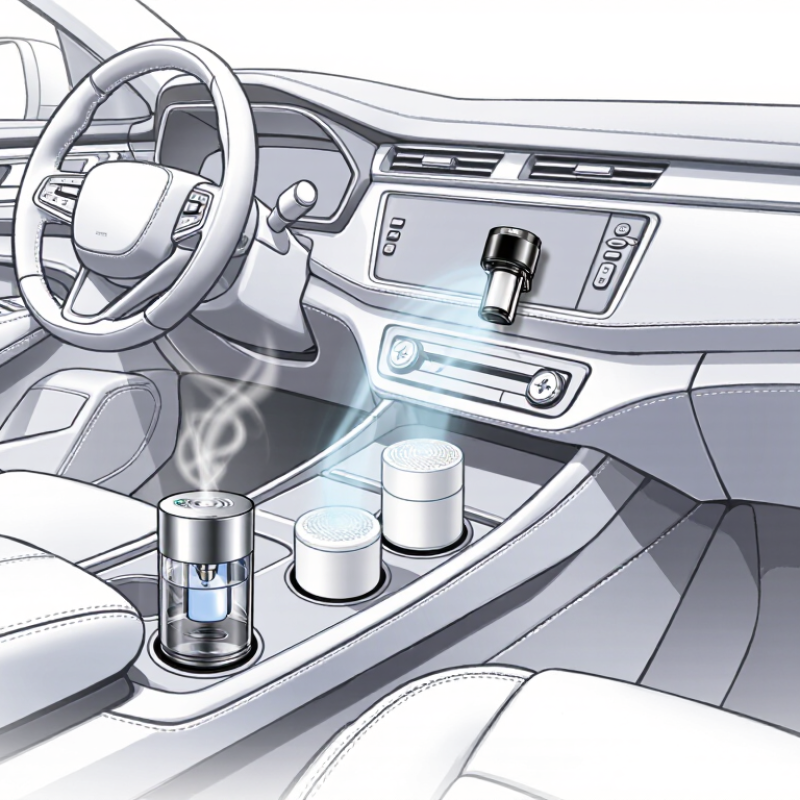
What a Car Perfume Diffuser Is
A car perfume diffuser is a small device that releases fragrance inside a vehicle. It may use a scented liquid, a replaceable pad, or solid fragrance material. Some models rely on airflow from a dashboard vent; others use gentle heat or a battery-powered fan. The goal is controlled scent dispersal, not simply covering an odor. Think of a vent-mounted diffuser on a warm afternoon: moving air carries fragrance through the cabin, while a closed car can make the scent feel stronger. Small device. Noticeable effect.
The wider air-freshener category offers useful context, though it is not limited to cars. Grand View Research estimated the global air-freshener market at about US$12.2 billion in 2023. That figure describes the broader market, not car diffusers alone. A diffuser’s output depends on its design, the fragrance material, cabin airflow, and temperature. So two devices can smell quite different, even with similar-looking housings. Check whether the fragrance source is replaceable and whether the unit can be adjusted. That distinction is easy to miss. A diffuser is not an air purifier; it adds scent rather than removing particles or gases. Choose a mild setting, especially in a compact cabin.
Key Components and Fragrance Materials
A car perfume diffuser usually has a housing, a fragrance reservoir, and a way to release scent. Passive models often use a porous ceramic insert, felt pad, or wooden piece. Fragrance travels through the material and evaporates into the cabin. Air from the vents can carry it farther. Simple, but not always even.
Some designs hold liquid in a small bottle with a wick. The wick draws fragrance upward, where airflow helps it evaporate. Powered diffusers may use a fan or gentle heat, so their output can feel stronger. Heat can also change how quickly certain ingredients fade. That detail matters.
Fragrance materials typically combine aromatic ingredients with a carrier that helps them spread or evaporate. Formulas may include essential oils, aroma compounds, or both; the exact blend affects scent strength and staying power. A light citrus note may seem vivid at first, while heavier woody notes often linger. This varies with cabin temperature, airflow, and the material’s absorption. A tiny reservoir can leak if tilted, and some plastics may react poorly to concentrated oils. Check the device instructions, keep it clear of controls and visibility, and wipe spills promptly. The hardware is small. Its placement still matters.
How the Diffuser Releases Scent
A car perfume diffuser releases scent by allowing fragrance molecules to evaporate into the cabin air. In a vent-mounted diffuser, moving air passes over a scented pad or liquid reservoir and carries the vapour outward. A passive diffuser relies on natural evaporation, so its scent may feel softer and less consistent. Heat can speed evaporation, while a stronger fan can spread
Using and Maintaining a Car Diffuser Safely
A car perfume diffuser releases fragrance into the cabin through airflow, gentle heat, or evaporation from a scented pad. The method matters. Heat-based units can become hot, while vent clips may release more scent when the fan is running. Read the device instructions before use, and keep the diffuser away from airbags, pedals, and the driver’s direct line of sight. A small unit near a vent can seem harmless, but loose fittings may shift during a sudden stop.
Start with the lowest fragrance setting, if one is available. Strong scents can distract or irritate passengers, especially in a warm, enclosed car. If you notice a headache, coughing, or eye irritation, remove the diffuser and air out the cabin. Don’t add oils or liquids unless the device is designed for them; the wrong fluid can damage plastic or leak onto trim. Keep fragrance products away from children and pets.
Maintenance is simple, but easy to neglect. Turn off or remove an electronic diffuser before cleaning, and follow its care instructions. Wipe spills promptly with a soft cloth, since some fragrance oils can stain dashboards. Replace pads or cartridges when the scent fades rather than soaking them with extra product. Check the mount now and then. I’ve found that even a slight wobble becomes annoying on rough roads, and it may be a sign the device needs repositioning.