2026 Top Stainless Steel Food Containers for Wholesale?
2026 Top Stainless Steel Food Containers for Wholesale: Introduction
Wholesale buyers are asking sharper questions about reusable food storage. Stainless steel containers must survive daily washing, crowded delivery bags, and repeated opening without loose lids or rough seams. The market context is significant, but the evidence needs careful reading. The World Stainless Association reported 58.4 million tonnes of global stainless steel crude production in 2023. That figure shows industrial scale, not demand for food containers specifically. It is a useful distinction.
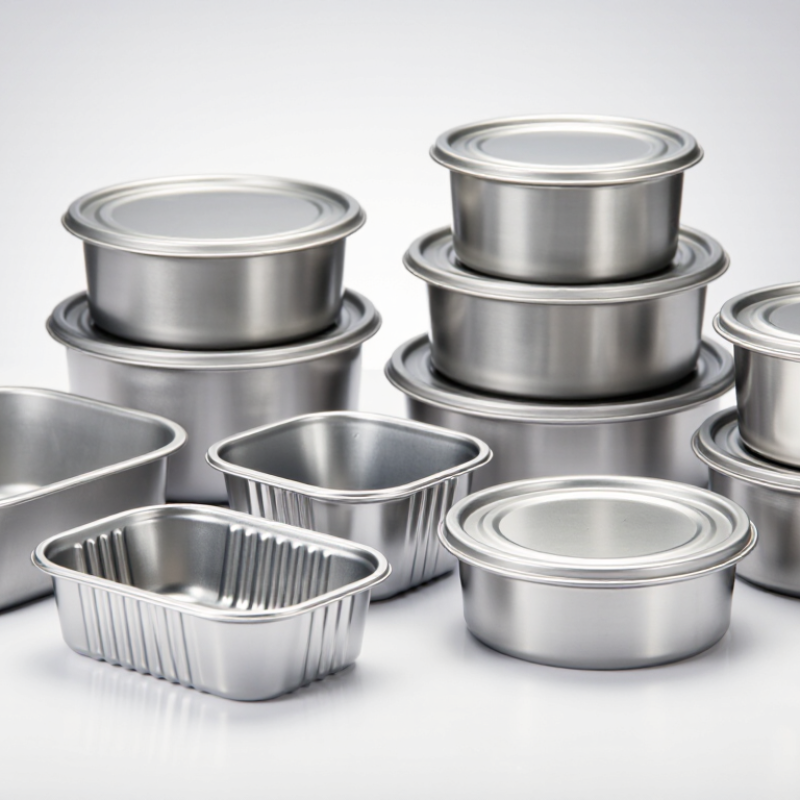
Environmental pressure also shapes purchasing. The OECD’s Global Plastics Outlook (2022) estimated that the world generated 353 million tonnes of plastic waste in 2019, with only 9% recycled. This is not a container-market forecast. Still, it helps explain why buyers compare durable, reusable options. Stainless Steel Food Containers can suit meal-prep programs, catering, and retail sets, but performance depends on details. Check steel-grade documentation, lid fit, seam finish, wall thickness, stackability, and cleaning guidance. Ask suppliers for sample testing and clear information on minimum order quantities, production times, and packaging. Small details matter.
Not every polished product is a dependable wholesale choice. A glossy finish cannot prove long service life. Nor does one sample confirm consistent production. This guide compares leading options through practical specifications and sourcing considerations, while noting where public data remains limited. Buyers should verify claims before placing large orders. That takes time. It may prevent costly surprises.
Stainless Steel Grades: 304 Contains 18–20% Chromium and 8–10.5% Nickel
Grade 304 is a common choice for wholesale food containers because its alloy chemistry supports corrosion resistance and practical forming. ASTM A240/A240M, Table 1, specifies 18–20% chromium and 8–10.5% nickel for this grade. These figures are useful checks, not marketing decoration.
Chromium helps form a thin passive surface film, while nickel supports the austenitic structure and helps maintain toughness during forming. Nickel Institute technical guidance on stainless steel in food contact explains why material selection and surface condition both matter. Not magic. Scratches, poor weld finishing, or long contact with salty foods can still create problems. A shiny sample alone cannot prove the alloy grade.
For wholesale orders, ask suppliers for mill test certificates showing chemistry, then compare the results with the specified grade. Check the actual container, too: inspect corners, seams, and lid edges where food residue may collect. ASTM gives a clear composition benchmark, but it does not tell you how well a finished container was made. That distinction is easy to miss.
Food-Contact Compliance: FDA 21 CFR and EU Regulation 1935/2004
For wholesale buyers, food-contact compliance starts with the finished container, not the word “stainless.” FDA requirements in 21 CFR depend on each food-contact material and its intended conditions of use. In the EU, Regulation 1935/2004 requires materials to avoid harmful transfer and unacceptable changes to food’s composition, taste, or smell. Good manufacturing practice and traceability also matter. See Commission Regulation 2023/2006.
Details matter. Check the steel grade, surface finish, welds, coatings, and any lid gasket. Ask suppliers for test reports that match the intended foods, temperatures, and contact times. A document for a steel sheet alone may not cover the assembled container. There is no single FDA certificate that automatically proves every finished product complies. The International Stainless Steel Forum reported global stainless steel production of 58.4 million tonnes in 2023, illustrating the material’s scale, not the safety of any particular item. That distinction is easy to overlook. Request material specifications, migration-test conditions, and batch traceability before approving a wholesale order. If a supplier’s evidence does not match real use, pause and investigate.
Wholesale Formats: Lunch Boxes, GN Pans, Canisters, and Meal-Prep Sets
Wholesale buyers need more than one container shape. Lunch boxes suit staff meals and takeaway portions, while GN pans fit prep lines, buffet counters, and cold storage. Canisters handle dry ingredients, sauces, or toppings. Meal-prep sets combine compartments and lids for repeatable portions. A small detail matters: lids should close securely without making daily cleaning awkward.
UNEP’s Food Waste Index Report 2024 estimates that 1.05 billion tonnes of food were wasted worldwide in 2022, equal to 19% of food available to consumers. Food service accounted for 28% of that waste. For operators, clearly sized pans and portion-ready sets can support tighter prep routines, though containers alone cannot prevent waste. Staff habits matter too.
When sourcing, compare usable capacity, stackability, lid fit, and finish quality across each format. Ask suppliers for material specifications and food-contact documentation, then test samples with real menu items. A deep GN pan may work well for bulk prep but slow access on a crowded line. It happens. Canisters need wide openings for scoops, while lunch boxes need compartments that keep sauces away from crisp foods. Check carton dimensions and nested storage before placing a volume order; warehouse space is easy to overlook.
Material Benchmark: Stainless Steel Contains at Least 10.5% Chromium
Stainless steel is not a single recipe. Industry definitions set its minimum chromium content at 10.5% by mass, helping form a protective oxide layer. Worldstainless uses this threshold to distinguish stainless steels from ordinary carbon steel. That number is a starting point, not a complete purchasing specification. For wholesale orders, request the grade, chemical composition, and matching mill test certificate. A shiny surface proves little. Check sample edges for rough seams, thin walls, and lids that wobble on a flat counter.
Worldstainless reported global stainless steel melt-shop production of 58.4 million tonnes in 2023. This industry figure shows the scale of supply, but it does not verify any container’s alloy or workmanship. A food container described only as “stainless steel” leaves important details unclear. Different grades contain different amounts of chromium and other elements, affecting corrosion resistance and performance. Even a correctly specified alloy can be poorly formed. A useful inspection checks welds, corners, and repeated lid closure. It is easy to focus on the chromium percentage and overlook those details. That is a real gap.
2026 Top Stainless Steel Food Containers for Wholesale? - Material Benchmark: Stainless Steel Contains at Least 10.5% Chromium
Compare common stainless-steel grades and practical wholesale considerations. Chromium figures are typical composition ranges by weight; exact limits depend on the applicable product standard and supplier specification.
| Material grade | Typical chromium | Typical alloy profile | Practical characteristics | Wholesale evaluation points |
| 304 (18/8) | About 18–20% | Typically 8–10.5% nickel; austenitic stainless steel. | Commonly selected for food-contact equipment; generally offers good corrosion resistance in everyday food-use conditions. | A versatile baseline for reusable containers. Confirm the stated grade, material traceability, finish, and food-contact requirements for the destination market. |
| 316 / 316L | About 16–18% | Typically 10–14% nickel and 2–3% molybdenum; austenitic stainless steel. | Molybdenum improves resistance to pitting and crevice corrosion, especially in chloride-containing environments, compared with 304. | Consider when exposure conditions justify the higher-alloy material. Verify grade documentation and assess whether the added material cost fits the application. |
| 430 | About 16–18% | Ferritic stainless steel; usually low in nickel or nickel-free, depending on specification. | Magnetic and generally less corrosion-resistant than 304 in many food-use environments; suitability depends on design and exposure. | Check corrosion-resistance requirements carefully. Do not treat a magnetic response alone as proof of grade or quality. |
| 201 | About 16–18% | Austenitic grade with manganese used partly in place of nickel; exact composition varies by standard. | Can be a lower-cost option, but corrosion performance is generally more limited than 304 in demanding conditions. | Request the precise grade and test documentation; compare intended use, cleaning conditions, and corrosion exposure before ordering. |
| Material benchmark: Stainless steel is defined by a minimum chromium content of 10.5% by mass under commonly used definitions. This threshold alone does not establish a particular grade, corrosion performance, or food-contact compliance. |
Purchasing note: Request a material test certificate or equivalent grade documentation, confirm applicable food-contact rules in the destination market, and evaluate the finished container—including seams, coatings, lids, and cleaning instructions—not just the base-metal grade.
Comparing Wholesale Offers: MOQ, Unit Cost, Lead Time, and Warranty
2026 Top Stainless Steel Food Containers for Wholesale?
Comparing Wholesale Offers: MOQ, Unit Cost, Lead Time, and Warranty
A wholesale quote is useful only when its terms are clear. Check the minimum order quantity (MOQ) before comparing unit prices. A low price may apply only to a large order, while a smaller trial batch can cost more per container. Ask whether lids, seals, and individual packaging are included. Small details matter.
Compare unit cost against the same specifications: steel grade, capacity, wall thickness, finish, and lid type. Request a sample and inspect its edges, closure fit, and surface after washing. Include freight and packaging in your cost estimate; the quoted price may not reflect the full landed cost. This comparison can still be imperfect if suppliers describe specifications differently, so confirm details in writing.
Lead time should distinguish production from shipping. Ask when the clock starts, whether samples require extra time, and how delays are handled. A calendar date is more useful than a vague estimate. Review the warranty for coverage, claim steps, and exclusions, including wear on seals or damage during transit. Read the actual terms. A longer warranty is not automatically better if the process is unclear.