Computer Graphic Animation is entering a practical yet uncertain phase in 2026. Studios are combining real-time rendering, artificial intelligence, virtual production, and physically based simulation. These tools can shorten production cycles, but they do not replace artistic judgment. A faster render still fails when movement feels weightless or a character lacks emotional clarity.
This overview examines the major trends shaping professional animation workflows. Real-time engines may support interactive lighting, virtual cameras, and rapid scene revisions. Neural rendering can create detailed surfaces from limited visual data. Volumetric capture may make performances feel more natural, especially in immersive experiences. Smaller teams can also use procedural systems to generate crowds, landscapes, and repeated motion. However, these methods require careful testing. A convincing demo is not always a reliable production solution.
Practical experience remains important. Artists must compare frame rates, render stability, asset quality, and revision costs before adopting new software. They should also check licensing terms, data handling, accessibility, and compatibility with established pipelines. Industry events, technical documentation, peer-reviewed research, and transparent case studies offer stronger evidence than promotional claims. Some predictions will age badly. That is normal.
The most valuable trend may be better collaboration between artists and technical specialists. Clear feedback, organized assets, and thoughtful direction still shape the final image. In 2026, successful Computer Graphic Animation will likely balance visual ambition with measurable performance, responsible practice, and human storytelling. The future looks impressive, but it remains unfinished.
In 2026, computer graphic animation is becoming a production landscape, not just a visual style. Real-time rendering now supports faster lighting changes, camera tests, and scene revisions. Small teams can build detailed environments with procedural tools and reusable assets. I have seen this reduce repetitive modeling work during early production. Yet the workflow still feels uneven. Complex scenes may render quickly, while character motion still needs careful human adjustment. Facial timing, hand gestures, and believable weight remain difficult to automate.
The defining landscape also depends on responsible collaboration between artists and intelligent software. Automated systems can suggest textures, motion paths, and background variations, but specialists must check anatomy, cultural detail, and visual consistency. That review protects quality and makes production decisions easier to explain. Virtual cameras are becoming more flexible, especially for mixed 2D and 3D scenes. Viewers may notice softer simulations, responsive environments, and more natural transitions between stylized and realistic imagery. However, speed can encourage shallow choices. More effects do not always create stronger storytelling. A quiet frame may still need the most work. My own expectation is cautious: the best 2026 projects will combine technical efficiency with visible human judgment, even when the final image looks effortless.
In 2026, computer graphic animation is shifting toward AI-assisted design and procedural animation. These tools can suggest color palettes, camera paths, textures, and character poses within seconds. Artists still define the visual language. Their judgment protects the story from becoming generic. In production tests, rough AI concepts often save hours during early planning. However, fast ideas are not always accurate ideas. Generated details may ignore anatomy, lighting logic, or cultural context.
Procedural animation is also becoming more practical for complex scenes. Artists can build rules for crowds, falling leaves, water ripples, and mechanical movement. A small change in one control can update thousands of objects. This approach improves consistency and reduces repetitive work. It also creates new risks. A mathematically clean motion may feel lifeless. Realistic animation needs timing, hesitation, and small imperfections. Human review remains essential, especially for emotional scenes and physically sensitive subjects.
Tips: Start with a clear visual brief. Test AI suggestions against reference footage and production goals. Keep editable layers and record major changes. Check hands, reflections, shadows, and object contact points carefully. Invite another artist to review the sequence. Their questions may reveal hidden errors. Do not trust a polished preview too quickly. The final result should feel intentional, not merely automated.
Exploring AI-assisted design and procedural animation through the projected growth of the global visual effects market.
The 2023 market value is based on a published industry estimate of US$10.21 billion. Values from 2024 onward are projections calculated using a 12.9% annual growth rate. This expansion reflects rising demand for faster content production, AI-assisted design, real-time workflows, and procedural animation systems that can generate complex scenes more efficiently.
In 2026, real-time rendering will shape computer graphic animation more than visual polish alone. MarketsandMarkets’ 2024 report estimates the real-time rendering market could grow from about $2.1 billion in 2023 to $5.8 billion by 2028. That equals an estimated 22.5% annual growth rate. The change is visible on production floors. Artists can adjust lighting, camera angles, and digital scenery while performers remain on set. Virtual production also reduces some location costs and shortens feedback cycles. Faster iteration matters.
Virtual production is expanding quickly. A 2024 MarketsandMarkets study projects its market could rise from $2.72 billion in 2023 to $8.67 billion by 2028. Large LED stages, camera tracking, and real-time compositing support this shift. A forest may appear behind an actor, with interactive light moving across the face. Yet the workflow is not effortless. Rendering delays can break eye lines. Incorrect color calibration can flatten a carefully designed scene. Teams still need skilled lighting artists, technical directors, and cinematographers. Hardware remains expensive. Forecasts are not guarantees. I remain cautious. Smaller studios may adopt hybrid pipelines instead of full virtual stages. That compromise can be less glamorous, but often more practical.
In 2026, computer graphic animation is moving beyond polished screens. Immersive 3D, extended reality, and interactive visuals are becoming connected design systems. The World Economic Forum’s Future of Jobs Report 2025 lists creative thinking among the fastest-growing workplace skills. That shift matters. Audiences now expect scenes to respond, not simply appear.
Industry forecasts support this direction. The International Data Corporation projects worldwide augmented and virtual reality spending to reach more than 50 billion dollars before 2027. Real-time rendering will support this growth. A virtual showroom may change lighting when a viewer turns their head. A training simulation may adjust difficulty after a user hesitates. These details make digital spaces feel physical.
The strongest work will combine spatial audio, responsive characters, and lightweight 3D assets. Mobile and wearable devices still impose limits, especially battery life and motion comfort. Designers must test these constraints early. Beautiful graphics can still cause fatigue. That is an uncomfortable truth.
I have also noticed a creative risk. Interactive scenes can become visually noisy when every object moves. Quiet moments matter. Clear navigation matters more. The 2026 animator will need artistic judgment, technical literacy, and evidence from user testing. Forecasts show market momentum, but they cannot guarantee meaningful experiences. Human behavior remains less predictable than any rendering engine.
Evidence-based trend outlook for production workflows, real-time rendering, spatial interaction, and digital experiences.
| Trend | What It Means | Verified Data or Technical Indicator | Primary Use Cases | 2026 Relevance | Maturity | Production Considerations |
|---|---|---|---|---|---|---|
| Real-Time 3D Rendering | Animated scenes are rendered interactively instead of relying only on offline frame rendering. | Modern real-time pipelines support physically based materials, dynamic lighting, skeletal animation, particle effects, and high-resolution output. | Interactive films, virtual production, digital twins, product visualization, games, training, and live events. | Very High | Established | Requires careful optimization of polygon count, texture memory, lighting complexity, frame rate, and device thermal limits. |
| Extended Reality and Spatial Computing | Computer-generated content is anchored to physical or virtual space through augmented, virtual, or mixed-reality systems. | OpenXR 1.1 was released in 2024, providing a cross-platform API specification for immersive applications and reducing dependence on device-specific interfaces. | Immersive storytelling, industrial guidance, education, simulation, architecture, remote assistance, and spatial data visualization. | Very High | Established | Design must account for tracking quality, user comfort, interaction latency, physical boundaries, and safety in shared spaces. |
| Web-Based 3D and WebGPU | Interactive 3D experiences run directly in browsers without requiring a conventional desktop installation. | WebGPU provides a modern GPU interface for web applications, while glTF 2.0 defines a widely used delivery format for 3D scenes and assets. | Interactive product pages, online configurators, virtual exhibitions, education, data visualization, and browser-based collaboration. | High | Developing | Performance varies by browser, operating system, graphics hardware, network quality, and asset-compression strategy. |
| Generative and Procedural Animation | Rules, simulations, and machine-assisted tools generate variations in motion, environments, materials, or scene composition. | Procedural methods are already used for particle systems, crowd motion, terrain, foliage, destruction, and repetitive environment construction. | Rapid concept development, environment generation, crowd scenes, motion variations, simulations, and personalized content. | High | Developing | Human review remains necessary for continuity, artistic direction, copyright control, physical plausibility, and consistent character identity. |
| Neural Rendering and Gaussian Splatting | Machine-learning-based methods reconstruct or render complex scenes from captured images or video. | 3D Gaussian Splatting was introduced in a 2023 academic paper as a real-time radiance-field rendering approach using optimized 3D Gaussian primitives. | Scene capture, cultural heritage, location visualization, digital twins, immersive documentaries, and rapid environment prototyping. | High | Developing | Current challenges include editable geometry, animation control, data capture quality, artifact removal, memory usage, and reliable export pipelines. |
| Digital Humans and Advanced Facial Animation | Characters combine physically based skin, facial rigs, performance capture, and detailed eye and mouth motion. | Facial animation commonly uses blend shapes, skeletal controls, marker-based or markerless capture, and audio-driven lip synchronization. | Film, episodic content, virtual presenters, games, education, simulation, and interactive customer experiences. | High | Established | Believable results depend on subtle timing, eye focus, facial asymmetry, skin shading, hair simulation, and culturally appropriate character design. |
| Volumetric Capture and 4D Content | People or objects are captured as time-varying three-dimensional performances rather than as flat video. | Volumetric workflows combine synchronized cameras, depth information, reconstruction, cleanup, compression, and playback optimization. | Immersive performances, sports analysis, training, virtual production, heritage documentation, and interactive storytelling. | Medium–High | Developing | Large capture volumes, substantial storage, complex post-production, and high bandwidth can limit routine deployment. |
| Physics-Based Simulation | Cloth, hair, fluids, rigid bodies, soft bodies, smoke, and destruction respond to physical rules or controlled approximations. | Simulation systems use numerical methods and collision detection to produce repeatable, controllable motion for complex materials and environments. | Film effects, product engineering, medical training, scientific visualization, games, and virtual prototyping. | High | Established | Artists must balance physical accuracy with determinism, processing cost, art direction, collision reliability, and iteration speed. |
| Interactive Data Visualization | Animation is used to explain changing datasets, relationships, forecasts, and system behavior in real time. | Effective visualizations use coordinated views, filtering, transitions, spatial encoding, and user-controlled playback rather than decorative motion alone. | Science, finance, public information, logistics, healthcare, climate communication, and operational dashboards. | High | Established | Accuracy, readable scales, semantic color, uncertainty disclosure, keyboard access, and reduced-motion options are essential. |
| Cloud Collaboration and Remote Production | Assets, scenes, reviews, rendering tasks, and version history are shared across distributed teams through networked workflows. | OpenUSD provides a framework for describing, composing, and exchanging complex 3D scenes across applications and production departments. | Animation production, virtual art departments, architectural review, training, visualization, and multi-location collaboration. | High | Established | Success depends on asset governance, permissions, version control, bandwidth, data security, color management, and clear review processes. |
| Sustainable Graphics and Efficient Computing | Rendering and delivery are optimized to reduce energy use, memory consumption, data transfer, and unnecessary computation. | Practical measures include level-of-detail systems, texture compression, adaptive resolution, efficient lighting, frame-rate control, and smaller delivery packages. | Web animation, mobile experiences, XR applications, large-scale installations, digital twins, and long-running simulations. | High | Established | Performance budgets should be defined during design, with testing across representative devices and network conditions. |
| Accessible and Inclusive Motion Design | Interactive visual experiences are designed for different sensory, motor, cognitive, and visual needs. | WCAG 2.2 includes guidance relevant to keyboard access, focus visibility, non-text alternatives, contrast, timing, and motion-related user preferences. | Public information, education, commerce, entertainment, workplace tools, and immersive installations. | High | Established | Provide captions, audio alternatives, clear focus states, scalable interfaces, reduced-motion controls, readable contrast, and non-XR fallback paths. |
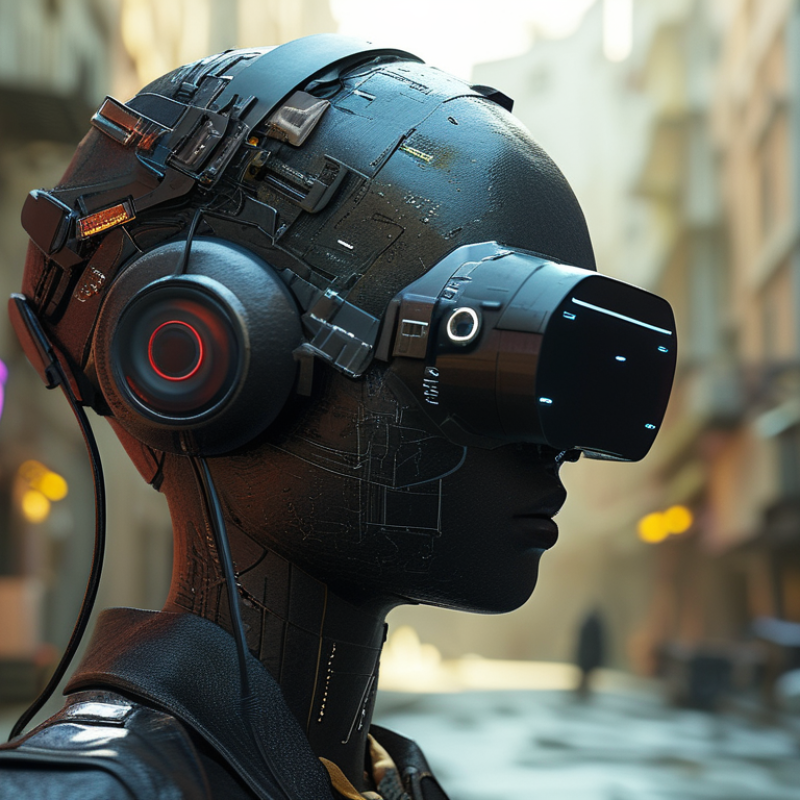
In 2026, computer graphic animation will face stricter questions about energy, access, and long-term value. Production teams can measure render time, electricity use, file size, and equipment lifespan. These details reveal hidden environmental costs. A shorter sequence is not always greener. Poorly optimized assets may require repeated rendering and extra storage. In production reviews, simple scene structures often prove more efficient than visually crowded designs. That is measurable.
Accessibility will influence animation decisions from the earliest storyboard. Clear contrast, readable captions, reduced flashing, and meaningful audio descriptions should guide visual development. Interfaces for animated content also need keyboard support and adaptable text sizes. Testing with disabled viewers can expose problems that technical teams overlook. I have seen beautiful motion become confusing when captions move too quickly or important details rely only on color. The gap remains.
Future industry impact will depend on practical skills, not novelty alone. Artists who understand sustainable workflows, inclusive design, and transparent documentation may shape stronger production standards. Training should include energy-aware rendering, accessible review tools, and ethical use of generated assets. Yet these improvements may increase budgets during the transition. Smaller studios could struggle to hire specialists or test every audience group. Ignoring that weakness would make sustainability sound polished but incomplete. Progress may look uneven, especially when deadlines reward speed over careful design.