Premium Plywood is more than a smoother-looking panel. It combines carefully selected veneers, stable construction, and consistent bonding for demanding interior and architectural work. Its face may show clean grain, balanced color, and fewer visible repairs. Its inner layers matter just as much.
Wood scientist R. Bruce Hoadley observed, “Wood is not a uniform material.” That warning remains valuable when evaluating Premium Plywood. Each sheet responds to grain direction, moisture, temperature, and manufacturing quality. A beautiful surface cannot correct a weak core or poor storage.
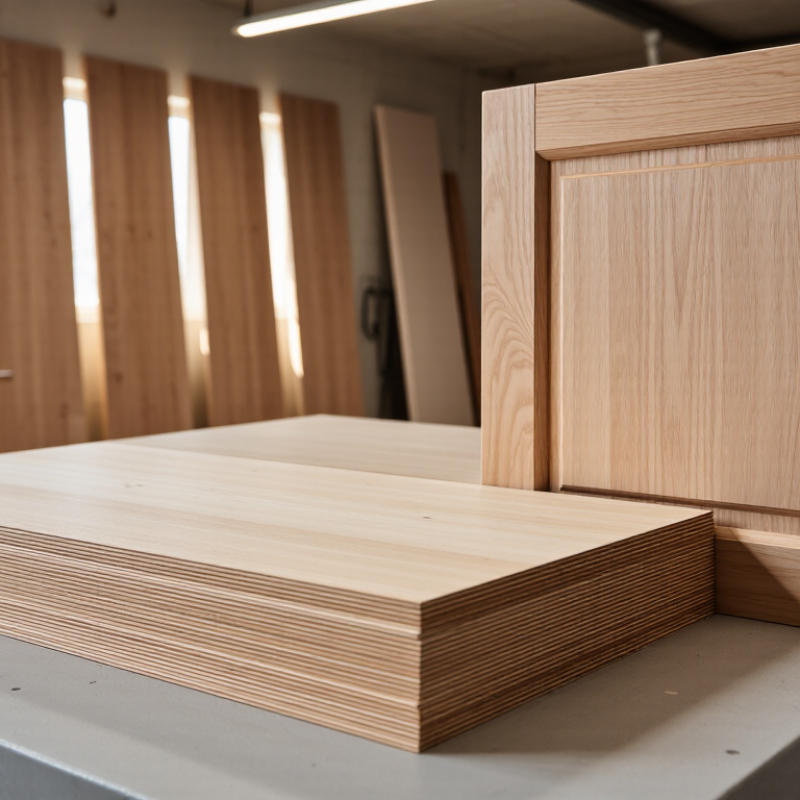
Look closely at the edges. The plies should appear even, tight, and free from large gaps. Run your hand across the face. It should feel smooth, not heavily patched or uneven. Cabinetmakers may select this material for doors, wall panels, shelving, furniture, and built-in storage. Designers also use it when exposed edges and natural texture are part of the visual language.
Premium does not mean flawless. It means controlled quality for a defined purpose. That distinction is often missed.
A high-grade sheet can still warp after installation. Humidity, unsupported spans, unsuitable fasteners, or careless cutting may create problems. Even the best panel needs correct handling. Store it flat, protect its edges, and seal exposed surfaces when the application requires it.
This guide explains how Premium Plywood is graded, where it performs best, and what buyers should inspect before choosing it. It also considers appearance, durability, environmental documentation, and practical installation limits. The goal is simple: make a confident choice without treating a premium label as a guarantee.
Premium plywood is a high-grade engineered panel made from thin wood veneers. Each layer is placed with its grain crossing the next layer. This construction improves strength, stability, and resistance to splitting. The term “premium” is not perfectly uniform. It usually describes clean surfaces, consistent thickness, strong bonding, and fewer internal voids.
The USDA Forest Products Laboratory’s Wood Handbook explains that cross-laminated veneers reduce movement caused by moisture changes. That matters around windows, cabinets, and interior walls. Premium panels often use carefully selected face veneers and calibrated cores. Their surfaces feel smooth under the hand, with fewer patches, open knots, or visible repairs. Adhesive quality also matters. Weak bonding can create bubbles or delamination after humidity changes.
FAO’s Forest Products Annual Market Review reported global plywood production at roughly 170 million cubic metres in 2022. That volume reflects broad demand, but it does not make every panel premium. Buyers should check thickness tolerance, formaldehyde-emission classification, and applicable product standards. A panel may look excellent yet perform poorly in damp conditions. This is an easy mistake. For furniture, premium plywood provides clean edges and reliable screw holding. In construction, structural grades require verified strength ratings, not attractive surfaces alone. Site experience also shows that careless storage can damage good plywood; panels should remain flat, dry, and elevated from concrete floors.

What Is Premium Plywood and How Is It Used?
Premium plywood begins with carefully selected logs, often chosen for straight grain and consistent density. Manufacturers soften the logs with heat or steam before peeling them into thin veneers. Each veneer is trimmed, dried, and inspected for splits, knots, and uneven thickness. The sheets are then layered with alternating grain directions. This cross-lamination improves strength and limits movement.
Adhesive is applied between the layers under controlled pressure and temperature. The panel may be calibrated, sanded, and cut to exact dimensions. Quality checks usually examine bonding strength, moisture content, thickness tolerance, surface appearance, and core construction. A premium grade normally has fewer open defects and a cleaner face. However, “premium” is not one universal grade. Buyers should check the product standard and intended application.
Grading often separates appearance from performance. Face veneers may receive ratings based on knots, patches, color variation, and repairs. Structural ratings focus more on stiffness, durability, and resistance to delamination. A flawless surface does not always mean a stronger panel. This is easy to overlook.
In practical use, premium plywood suits visible furniture parts, cabinetry, wall panels, doors, and demanding interior construction. Before installation, experienced users check every sheet for edge swelling, hidden voids, and warping. Storage also matters. Panels should remain flat, dry, and raised above the floor. The manufacturing process is precise, but not perfect. A careful inspection still protects the final result.
Premium plywood is made from carefully selected veneer layers, cross-laminated for stability, and bonded under controlled pressure and heat. Higher-quality panels typically have better face veneers, fewer core voids, consistent thickness, and tighter grading requirements.
The chart shows representative ply counts commonly used for balanced plywood panels at different nominal thicknesses. Actual construction varies by wood species, manufacturing standard, and product specification. Face grades are commonly identified as A, B, C, or D, with A-grade faces offering the cleanest visual appearance.
Premium plywood is not a universally regulated grade. The term usually describes panels with cleaner face veneers, fewer internal voids, tighter thickness control, and stronger bonding. FAO forestry statistics reported about 375 million cubic metres of global wood-based panel production in 2022. That scale makes quality differences important. A premium sheet should show even grain, sealed edges, and minimal surface patches under bright workshop lighting.
Its main advantage is consistency. Standard plywood may contain more core gaps, uneven layers, or rougher faces. Premium plywood cuts more cleanly and holds screws more reliably. It also reduces sanding before clear finishing. In cabinets, doors, furniture, and visible wall panels, this saves labor and limits rejected parts. Structural versions can offer better dimensional stability during humidity changes, although the product’s certified rating matters more than the word “premium.” Check the technical sheet.
UNECE and FAO’s 2023 Forest Products Annual Market Review recorded continuing pressure for efficient, higher-value wood products as material costs and resource concerns increased. Premium plywood can support that goal through longer service life and fewer replacements. However, it is not automatically waterproof or stronger in every direction. A damp garage can still damage an unsuitable panel. Look for bond classification, formaldehyde-emission data, veneer thickness, and test results under standards such as EN 314 or ASTM specifications. Some suppliers use “premium” too loosely. That deserves skepticism.
Premium plywood is not one universal grade. It usually means carefully selected veneers, consistent thickness, fewer core voids, and a cleaner face. In real workshops, those details affect sanding, edge finishing, screw holding, and panel stability. The FAO’s 2023 Forest Products Yearbook recorded global plywood production above 170 million cubic metres, showing its continuing importance in construction and interior manufacturing.
Hardwood plywood suits cabinets, wall panels, doors, and furniture because its smooth face accepts paint, veneer, and clear finishes. Cabinet-grade panels work well where appearance matters, but exposed edges still need sealing. Softwood structural plywood is better for subfloors, roof sheathing, and wall framing. It prioritizes strength over visual perfection. Check the structural rating, not only the surface.
Exterior plywood uses water-resistant adhesives and performs better in humid locations, such as covered balconies, outdoor furniture, and workshop enclosures. Marine plywood offers tighter construction and stronger durability for demanding wet environments, but it is not automatically waterproof after cutting. Seal every exposed edge. Edges matter.
Flexible plywood bends around curved counters, display forms, and rounded furniture parts. Aircraft-style thin plywood can serve models and lightweight interior details, though it needs careful support. The American Plywood Association’s technical guidance emphasizes matching panel grades and exposure ratings to end use. A common mistake is choosing premium-looking plywood for a structural job. Beauty cannot replace engineering. Always inspect the core, confirm certification, and test a sample before ordering large quantities.
| Plywood Type | Typical Construction and Features | Common Thicknesses | Suitable Applications | Main Advantages | Important Limitations |
|---|---|---|---|---|---|
| Premium Hardwood Plywood | High-quality hardwood face veneers over a balanced veneer core, with relatively consistent thickness and fewer visible defects. | 6–25 mm | Cabinet doors, furniture, wall panels, shelving, built-ins, and decorative interior joinery. | Attractive appearance, good screw-holding capacity, reliable machining, and a strong surface for staining or clear finishing. | Standard interior grades are not automatically suitable for prolonged moisture or outdoor exposure. |
| Baltic Birch-Style Plywood | Multiple relatively thin birch veneer layers, often with a consistent all-wood core and exposed edge laminations. | 3–24 mm | Drawers, cabinets, stools, desks, shelving, toys, laser-cut parts, and precision furniture components. | Uniform structure, clean edges, good stiffness, strong fastener retention, and attractive layered edges. | The appearance and performance can vary by grading system; edges may require sealing for humid environments. |
| Marine Plywood | Manufactured with durable veneer layers, minimal core gaps, and waterproof adhesive. Some products are certified to marine plywood standards such as BS 1088. | 6–25 mm | Boat components, exterior panels, wet-area construction, outdoor furniture, docks, and exposed joinery when properly sealed. | Improved resistance to delamination, moisture, and core voids compared with ordinary interior plywood. | It is not rot-proof or maintenance-free; all faces, edges, holes, and joints require appropriate protection. |
| Exterior-Grade Structural Plywood | Structural veneer panels bonded with exterior-rated adhesive and graded for defined strength, stiffness, and surface quality requirements. | 9–32 mm | Roof decking, wall sheathing, subfloors, roof overhangs, temporary structures, and load-bearing timber assemblies. | Good panel strength, dimensional stability, and resistance to short-term weather exposure when installed correctly. | Structural grade does not necessarily mean a decorative face; prolonged exposure still requires cladding, paint, or a suitable coating. |
| Flexible Plywood | Very thin veneers arranged to allow bending along one direction or, in some constructions, in two directions. | 3–8 mm | Curved furniture, rounded counters, display forms, architectural features, boat interiors, and model-making. | Can form smooth curves with fewer joints than standard plywood and reduces the need for multiple narrow strips. | Usually needs a supporting frame or laminated layers and is not intended for heavy structural loading by itself. |
| Fire-Retardant Plywood | Plywood treated or manufactured to achieve a specified fire-performance classification under a recognized building or test standard. | 9–25 mm | Public interiors, wall and ceiling panels, exhibition spaces, transport interiors, and areas with documented fire-performance requirements. | Can help meet specified flame-spread, smoke, or fire-performance requirements when the complete assembly is approved. | Fire performance is product- and assembly-specific; cutting, sanding, coating, or installation may affect compliance. |
| Film-Faced Plywood | Structural plywood covered with a resin-impregnated film that creates a smoother, more moisture-resistant working surface. | 12–21 mm | Concrete formwork, reusable casting panels, truck floors, industrial platforms, and high-wear temporary surfaces. | Smooth release surface, improved abrasion resistance, easier cleaning, and better resistance to occasional moisture. | Damaged film and exposed edges can permit water ingress; it is generally unsuitable where a natural decorative face is required. |
| Aircraft-Grade Plywood | Thin, lightweight, closely controlled veneer construction made for specialized applications requiring a high strength-to-weight ratio. | 1–6 mm | Scale models, lightweight instrument panels, specialty furniture details, musical instruments, and small engineered components. | Light weight, thin uniform layers, precise machining, and high stiffness relative to its thickness. | More expensive and less widely available; it must not be used in certified aircraft structures without the required engineering approval. |
Selection note: “Premium plywood” is a quality description rather than one universal technical grade. Select the panel according to face appearance, core construction, adhesive durability, structural rating, moisture exposure, fire requirements, and applicable local standards.
Premium plywood is not a universal legal grade. It usually describes panels with consistent veneers, strong bonding, and fewer visible defects. It is used for cabinetry, furniture, wall panels, doors, and detailed interior work. Some projects also use it outdoors when the panel has suitable moisture resistance.
Check the core before judging the surface. A quality panel should have tightly joined layers, minimal gaps, and even thickness along its edges.
Choose the plywood according to its environment. Interior-grade panels suit dry rooms, while exterior-rated panels handle changing humidity better. Confirm the adhesive type and emissions documentation when indoor air quality matters.
Face veneer should match the desired finish, whether clear-coated, painted, or covered.
Also inspect the sheet under bright light. Warping, open knots, swollen edges, and uneven sanding can create problems during installation.
Premium does not mean flawless. I still measure several points because one sheet can vary slightly.
