Choosing the right Mesh Playpen is not simply a matter of color, size, or price. It is a daily safety decision for your baby.
Dr. Benjamin Hoffman, a pediatrician and injury-prevention specialist, offers a useful reminder: “Safety begins with the environment adults create.” That idea matters when comparing mesh density, frame strength, floor support, locking systems, and ventilation. A well-designed Mesh Playpen should feel stable when your baby pulls against the side. Its seams should look even, tight, and free from loose threads. The base should remain flat on the floor, without soft gaps that could shift during movement.
Look closely.
This guide explores the details parents often overlook. It considers age suitability, interior dimensions, portability, cleaning, visibility, and independent safety testing. It also explains why breathable mesh does not automatically mean safe mesh. Openings must be small enough to reduce entrapment risks, while the structure should resist tipping during ordinary use.
Real homes create real challenges. A playpen may stand beside a sofa, near a window, or on uneven flooring. Those details can change how safely it performs. I have found that convenience sometimes encourages poor placement, even with a high-quality product. That is worth admitting.
No checklist is perfect. Parents still need active supervision and regular inspections. Check the hinges, fasteners, mattress area, and fabric after moving the playpen. If anything bends, tears, loosens, or smells strongly of chemicals, stop using it until the concern is resolved. The best choice combines thoughtful design, reliable materials, suitable sizing, and careful everyday habits.
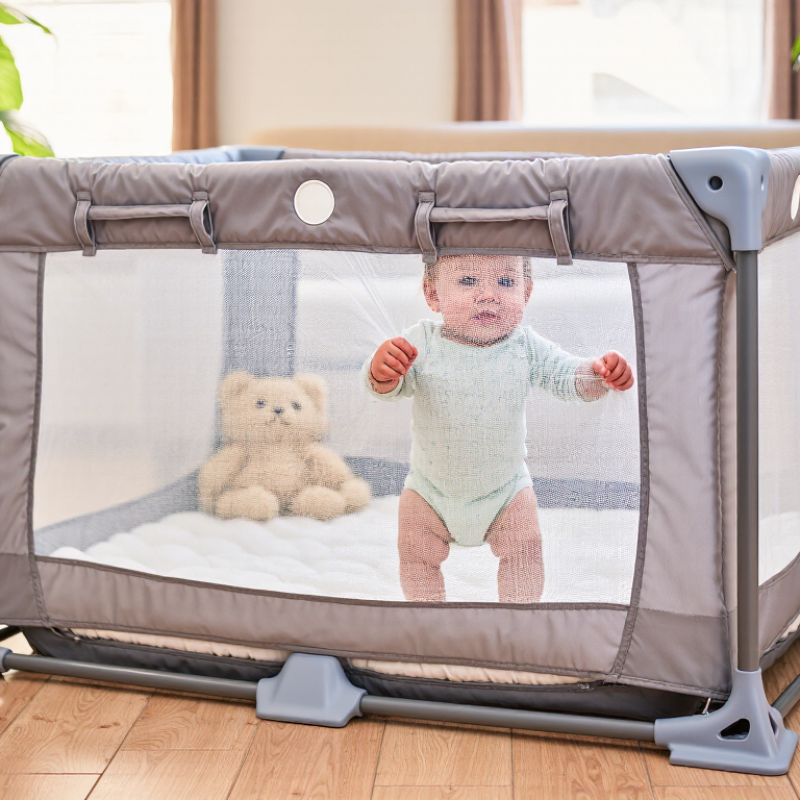
Choosing a mesh playpen starts with its safety standard, not its color or fold size. For U.S. use, look for compliance with ASTM F406 and 16 CFR 1221. ASTM F406 evaluates play yard features such as stability, folding mechanisms, mattress support, side structure, and entrapment risks. The federal rule, 16 CFR 1221, adopts this standard with required modifications.
Check the product label and instruction manual carefully. The playpen should lock firmly when opened, without a half-engaged position. Its mesh should remain tightly attached, with no loose seams, torn areas, or enlarged openings. Run your fingers along the rails and corners. Small gaps matter. Follow the supplied mattress instructions exactly, because adding a thicker pad can create dangerous spaces.
Ask the seller for clear compliance information, not vague claims like “tested for safety.” Manufacturers and importers must support compliance through appropriate testing and certification procedures. A current product certificate or laboratory information is more useful than a decorative safety badge. Regulations can change, so verify details through official U.S. Consumer Product Safety Commission resources.
A tidy appearance can mislead. I would inspect the locking joints each time after folding and transport. Even a compliant playpen can become unsafe after damage, missing parts, or incorrect assembly. Keep cords, pillows, and added accessories outside the sleeping area. The manual may feel overly cautious, but that caution deserves attention.
| Safety Dimension | What the Requirement Covers | What Parents Should Check | Relevant Standard or Rule |
|---|---|---|---|
| Product Scope | A mesh playpen may fall within the scope of the U.S. play yard safety requirements when it is designed for a child to play or sleep in and has a non-rigid or fabric-sided enclosure. | Confirm that the product is intended for infants or toddlers and that its instructions clearly define permitted use, age, weight, and developmental limits. | ASTM F406; 16 CFR 1221 |
| Frame and Structural Stability | The frame, floor, support system, and enclosure must withstand applicable structural and performance tests without hazardous collapse or failure. | Before each use, inspect joints, tubes, floor supports, corners, and connection points for bending, looseness, cracks, or missing parts. | ASTM F406 structural and performance provisions; 16 CFR 1221 |
| Folding and Locking Mechanisms | Folding components and locking mechanisms must resist unintended release or accidental collapse during normal use. | Operate every lock according to the instructions. Verify that all rails and supports are fully engaged before placing the child inside. | ASTM F406 locking and folding requirements; 16 CFR 1221 |
| Side Rails, Hinges, and Joints | Side rails, hinges, connectors, and other moving parts must be designed to reduce collapse, pinch, shear, and entrapment hazards. | Check that rails do not sag or partially fold and that no hinge or joint is exposed in a way that could trap fingers or limbs. | ASTM F406 hazardous openings and structural provisions |
| Mesh Attachment and Fabric Integrity | Mesh and fabric panels must remain securely attached to the frame and should not create hazardous tears, separations, or openings during normal use. | Look for intact stitching, tight seams, secure fasteners, and mesh without rips, pulled threads, detached edges, or enlarged openings. | ASTM F406 fabric, attachment, and opening-related provisions |
| Entrapment and Hazardous Openings | The design must limit openings and spaces that could allow a child’s head, neck, torso, or limbs to become trapped. | Do not use the playpen if a seam, opening, gap, or damaged component has developed beyond the original design. | ASTM F406 entrapment and opening requirements; 16 CFR 1221 |
| Mattress Pad and Floor Surface | The supplied pad or floor system must remain properly positioned and must not create gaps, instability, or an unsafe sleeping surface. | Use only the pad and accessories specified by the manufacturer. Do not add an extra mattress, cushion, or padding unless expressly permitted by the instructions. | ASTM F406 mattress and floor provisions; 16 CFR 1221 warning and instruction requirements |
| Sharp Points, Edges, and Protrusions | Accessible components must not present hazardous sharp points, sharp edges, exposed fasteners, or dangerous protrusions. | Run a visual and careful hand inspection over accessible frame parts. Stop using the product if metal, plastic, screws, or broken parts become exposed. | ASTM F406 sharp-point, sharp-edge, and protrusion provisions |
| Small Parts and Detachable Components | Components that could detach and become accessible to a young child must meet applicable small-parts and durability requirements. | Check wheels, caps, buttons, fasteners, toys, and accessories for looseness. Remove damaged or detached components immediately. | ASTM F406 durability and small-component provisions; applicable CPSC requirements |
| Wheels, Casters, and Movement | If included, movement-related components must not cause unintended rolling, instability, or structural failure during normal use. | Place the product on a stable, level surface and use wheel locks or brakes as instructed. Do not move it while the child is inside unless the instructions specifically allow it. | ASTM F406 stability and performance provisions |
| Warnings and Instructions | Required warnings and instructions must communicate safe assembly, setup, use, folding, maintenance, age or developmental limits, and prohibited modifications. | Read all labels and instructions before use. Keep the instructions available and follow warnings about climbing, added accessories, and use on elevated or unstable surfaces. | 16 CFR 1221; ASTM F406 labeling and instructional provisions |
| Compliance Evidence | Products subject to the federal standard must be manufactured and tested for compliance with the applicable requirements and supported by the required certification and testing records. | Ask the seller or manufacturer for the applicable compliance information. Check the product label, model identification, production information, and current recall status. | 16 CFR 1221; applicable CPSA and CPSIA certification requirements |
| Routine Inspection and Recall Check | Safety depends on continued product integrity; wear, damage, missing parts, and recalls can make a previously compliant product unsafe. | Inspect before every use, discontinue use after damage or modification, and check the U.S. Consumer Product Safety Commission recall database. | General safe-use practice; CPSC recall information |