How to Choose the Best Metal Cutting Board in 2026?
Choosing the best Metal Cutting Board in 2026 requires more than comparing shiny product photographs. The right board must balance hygiene, durability, knife performance, noise, weight, and everyday comfort.
In professional kitchens, stainless steel remains popular because it resists stains, odors, and moisture. However, not every stainless board performs equally well. A thin sheet may flex on the counter, while a heavier board can feel stable but become difficult to store. Food-grade 304 stainless steel usually offers strong corrosion resistance, especially around acidic ingredients. Surface texture also matters. A rough finish can trap residue, while an overly polished surface may make food slide unexpectedly.
Food-safety expert Dr. Ben Chapman states, “Cleaning and sanitizing are two different things.” That distinction should guide every Metal Cutting Board decision. A board may look spotless and still require proper washing, rinsing, and sanitizing. Check whether the board has rounded edges, non-slip feet, and a design that dries completely after use. These small details often matter more than marketing claims.
There is no flawless option. Metal can be loud.
It may also feel harsh against delicate knife edges, particularly during long preparation sessions. Some cooks prefer a removable silicone mat or a separate wooden board for slicing. That choice is not a failure; it reflects practical experience. This guide will compare materials, thicknesses, finishes, cleaning requirements, and real kitchen limitations. The goal is not to name one universal winner. It is to help you choose a reliable board for your cooking habits, workspace, and maintenance routine.
What Is a Metal Cutting Board and How Does It Work?
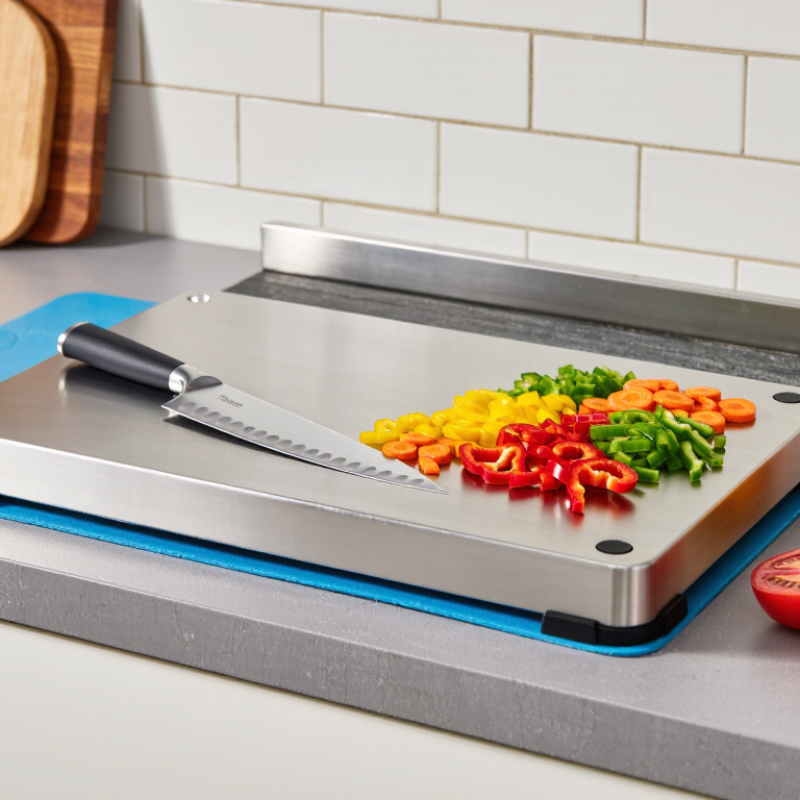
A metal cutting board is usually made from stainless steel or aluminum.
It provides a dense, nonporous surface for slicing, chopping, and portioning food. The knife applies downward force, while the board resists bending beneath the ingredient. Food stays in place through friction, not through deep grooves or absorption.
The surface works differently from wood or plastic. It does not readily absorb meat juices, onion oils, or colored vegetables.
The CDC estimates that foodborne illnesses cause about 48 million illnesses and 3,000 deaths annually in the United States. Cleaning still matters. The FDA Food Code 2022 emphasizes cleanable, durable, and smooth food-contact surfaces. A metal board can meet those principles when its joints and finish are properly made.
Metal is not perfect. A wet cucumber may slide unexpectedly. Repeated chopping can also dull a fine knife edge faster than softer materials. That assumption needs testing.
Place a damp towel beneath the board, then check stability with firm hand pressure. Inspect welded corners, scratches, and surface pitting. A rough seam can trap residue and undermine the board’s hygiene advantage. For 2026, choose a thick, stable design with a genuinely smooth finish, rather than judging quality by shine alone.
How to Compare Hygiene, Durability, and Knife Safety
How to Choose the Best Metal Cutting Board in 2026?
Choosing a metal cutting board means comparing hygiene, durability, and knife safety together. A nonporous surface does not absorb juices, odors, or bacteria. However, cleanliness still depends on regular washing and thorough drying. I prefer boards with rounded edges and minimal seams. Food residue often hides in sharp corners. A smooth, well-finished surface is easier to inspect after preparing raw meat or vegetables.
Durability can be impressive, but thickness matters. A heavier board usually resists bending and feels steadier on the counter. Look for a firm underside or a nonslip layer. A sliding board can cause more trouble than a dull knife. Scratches are another concern. They may not ruin the board, but deep marks become harder to clean. I once assumed metal meant unlimited lifespan. That was too simple. Even strong steel needs inspection, especially around joints and damaged edges.
Tips: Use a separate wooden or plastic board for delicate knives when possible. If you use metal daily, choose a softer cutting technique and avoid forceful chopping. Wash the surface soon after use with hot water and mild detergent. Dry it completely before storage. Check the knife edge regularly; repeated contact with metal can create tiny bends or dull spots. Test the board on your counter before cooking. Stability matters more than appearance.
What Features Should You Check Before Buying?
Choosing a metal cutting board in 2026 requires more than checking its shine. Examine the material grade, surface finish, thickness, and edge design. A food-contact-safe stainless steel surface is usually easier to clean and resist corrosion. However, “stainless” alone says little about quality. Look for clear material information and reliable testing details. The surface should feel smooth, without pits, sharp burrs, or peeling coatings. Run a clean fingertip across the edge. It should not catch.
Stability matters during real preparation. Choose a board with non-slip feet, a firm underside, or enough weight to stay still. Check its size against your counter and storage space. A thin board may flex, while an overly heavy board becomes awkward to lift. Consider noise too; metal can sound harsh under a chef’s knife. More importantly, it can dull some knife edges faster than softer surfaces. Use it for suitable tasks, and inspect your knives regularly. I once underestimated this detail. It was annoying.
Tips: Ask how the board handles heat, staining, and repeated washing. Confirm whether its corners are rounded and easy to wipe. Avoid deep grooves that trap food residue. Check care instructions before buying, especially if the board includes rubber parts. A removable, cleanable underside is useful. Look for honest feedback about warping, slippery movement, and discoloration. Product photos can hide small flaws. Buy slowly. Reliability often appears in details.
How to Choose the Best Metal Cutting Board in 2026?
Compare common stainless-steel grades by their typical alloying content before checking thickness, surface finish, edges, and stability.
Typical nominal alloying content by mass (%). Actual composition varies by product specification.
304 stainless steel A common all-purpose choice with good corrosion resistance for normal kitchen use.
316 stainless steel The added molybdenum improves resistance to chlorides, salt, and acidic environments.
430 stainless steel Often magnetic and more economical, but generally less corrosion-resistant than 304 or 316.
Features to check before buying
- Choose a smooth, non-porous, corrosion-resistant food-contact surface.
- Check the metal grade and avoid products that only say “stainless steel” without specifying it.
- Look for a practical thickness that resists bending and includes rounded, safe edges.
- Confirm that the board has non-slip feet or a stable base.
- Check cleaning instructions, dishwasher compatibility, weight, and available workspace.