How to Choose the Best Sound Insulation Panels for Your Space?
Choosing the right sound insulation panels can significantly enhance your living or working environment. In fact, studies show that proper soundproofing can reduce noise by up to 50%, greatly improving comfort. High-quality sound insulation panels play a vital role in controlling sound transmission. Many professionals stress the importance of selecting the right material for specific needs.
The acoustic performance of sound insulation panels varies widely. For instance, materials like fiberglass tend to be more effective than foam in certain settings. Additionally, improper installation can lead to missed opportunities for sound reduction. It's crucial to understand the specifics of your space before making a decision.
A common oversight is focusing solely on aesthetics without considering performance. Many buyers find themselves frustrated when their chosen panels do not meet expectations. The key lies in balancing design with functionality. Conducting thorough research or consulting experts can guide better choices in sound insulation panels, ultimately leading to a more peaceful environment.
Understanding Sound Insulation: Key Concepts and Importance
Sound insulation is a critical factor in creating a comfortable environment. It helps minimize noise pollution from outside and between rooms. Poor sound insulation can lead to distractions and decreased productivity. According to a report by the World Health Organization, excessive noise exposure can contribute to stress and even cardiovascular diseases. Addressing sound insulation is not just an upgrade; it's a necessary component for well-being.
When considering sound insulation, understanding key concepts is essential. The Sound Transmission Class (STC) rating measures how well a material reduces sound. For effective sound insulation, materials should have an STC rating of at least 40. However, achieving this rating often requires multiple layers of insulation and careful installation. Space layout also plays a significant role in sound management. Open floor plans can create challenges in controlling noise.
Another important factor is the choice of materials. Common options include acoustic panels, foam, and mass-loaded vinyl. Each has unique properties and performance metrics. The acoustic panels, for instance, can absorb sound waves effectively but might not block them. This distinction can lead to unmet expectations. Reflecting on material choices and space design is crucial in making informed decisions.
How to Choose the Best Sound Insulation Panels for Your Space?
| Panel Type |
Material |
NRC Rating |
Thickness |
Best Use Cases |
| Acoustic Foam |
Polyurethane |
0.8 |
2 inches |
Studios, Home Theaters |
| Mass Loaded Vinyl |
Vinyl |
0.9 |
0.5 inches |
Apartments, Offices |
| Fabric Wrapped Panels |
Wood, Fabric |
0.75 |
1 inch |
Auditoriums, Conference Rooms |
| Polyester Acoustic Panels |
Recycled Polyester |
0.85 |
1 inch |
Residential, Commercial Spaces |
| Gypsum Board |
Gypsum |
0.7 |
0.5 inches |
Stud Walls, Ceilings |
Identifying Your Space's Unique Acoustic Needs and Challenges
When addressing the acoustic needs of your space, start by assessing the environment. Is it a home office or a music studio? Each setting has unique sound challenges. Homes can suffer from outside noise or echoes from hard surfaces. Concert halls may require sound diffusion and absorption. These distinctions shape your choices.
Consider the activities held in the space. For example, a room used for meetings needs clarity. Speech intelligibility is crucial there. On the other hand, a recording studio may require more stringent insulation. Here, controlling reverberation is vital. Understanding these functionalities will lead to more effective panel selections.
It is beneficial to involve a bit of trial and error. Test different materials to see how they perform in your space. Sometimes, even the best solutions don't fit right away. Reassess your needs as you go along. This reflective process can uncover unexpected acoustical challenges. The key is to listen and adapt continuously.
Types of Sound Insulation Panels: Materials and Their Effectiveness
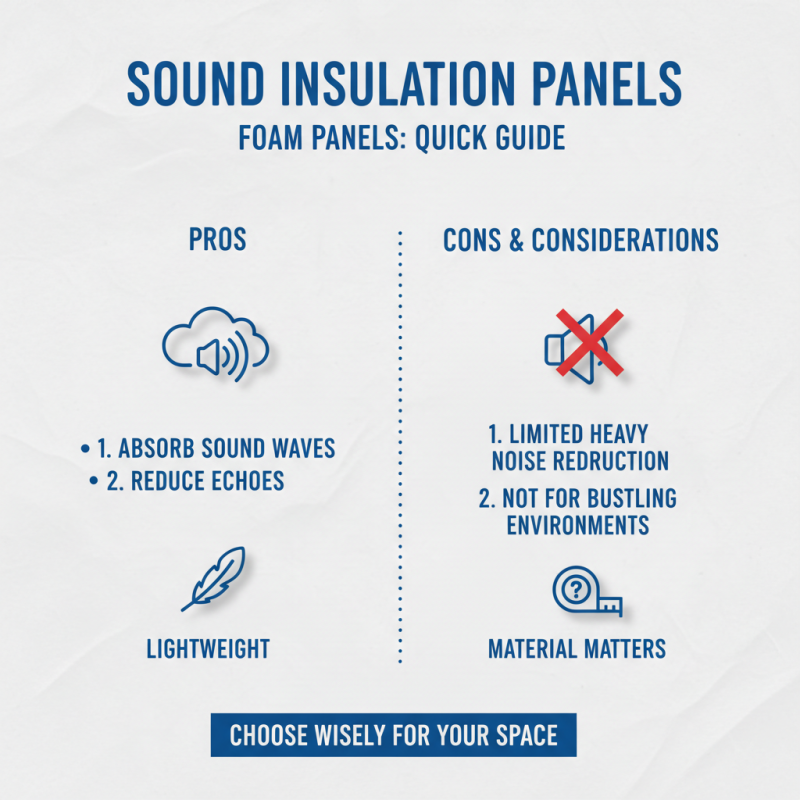
When selecting sound insulation panels, understanding the types available is crucial. Different materials can significantly affect their effectiveness in reducing noise. Foam panels are popular for their lightweight properties. They absorb sound waves and reduce echoes. However, they may not be sufficient for heavy noise reduction. Consider their limitations when choosing for a bustling environment.
Mass-loaded vinyl panels are denser and effective for blocking sound. They provide great results in noisy areas. While installation can be more complex, they are worth the effort if peace is your goal. On the other hand, acoustic wooden panels add aesthetic appeal and can enhance sound quality. Still, they may not perform as well in terms of overall noise reduction.
Tip: Always test the panel's absorption ratings before purchasing. Comparing sound absorption coefficients can guide your decision. Remember, what works well in one space might not be perfect for another. It’s wise to assess your specific needs and environment. Sometimes, blending different materials will yield rewarding results. Balancing style and function can be challenging, yet it’s essential for an ideal setup.
Factors to Consider When Choosing Sound Insulation Panels
When selecting sound insulation panels, several important factors come into play. First, consider the material. Acoustic foam, for example, is lightweight and effective, but it might not suit every space. Dense materials, like mass-loaded vinyl, provide better sound blocking but can be harder to install.
Next, think about size and thickness. Panels that are thicker generally offer better soundproofing. However, they may not fit well in smaller areas. The design should blend with your décor while also fulfilling soundproofing needs. The wrong choice can be distracting and might not deliver the expected results.
Lastly, assess the room’s purpose. A music studio requires different panels than a home theater or office space. Reflection and absorption need to be balanced. Overly dense panels can create an echo problem. Take your time to evaluate your specific requirements. There's no one-size-fits-all solution, and trial and error may be necessary to find the perfect fit for your unique environment.
Sound Insulation Panel Effectiveness Comparison
Installation Tips for Optimal Soundproofing Performance
When installing sound insulation panels, proper placement is crucial. Start by identifying the main sources of noise in your space. Position the panels where sound is most problematic, like walls facing busy streets or areas with high foot traffic. These panels can absorb sound waves effectively, but if they are poorly placed, their benefits diminish.
Pay attention to the panel size and density. Thicker panels usually absorb more sound, but they also take up more space. If your area is small, consider using slimmer panels. Remember, applying panels in corners can enhance sound absorption due to the way sound waves travel.
Don’t forget about the mounting process. Secure panels firmly to prevent them from falling, which can happen if they are heavy. Use strong adhesive or brackets depending on the wall material. Hanging them at different heights can also increase effectiveness. Reflect on your first installation. You might find that not all panels perform the same, so adjust your approach based on experience.