Buying a Pop Up Canopy in China can offer broad choices, from compact market shelters to larger event models. But a low quote does not tell the whole story. Buyers should compare frame material, fabric specifications, packed dimensions, replacement parts, and sample quality. Small details matter. A leg that locks smoothly and a seam that stays straight can reveal more than a polished product photo.
China-based sourcing adviser Li Wei puts the buying principle this way: “Check the sample, the specifications, and the supplier’s consistency before judging the price.” Use that as a practical guide, not a guarantee. Ask suppliers to confirm the steel or aluminum frame, fabric weight, coating, canopy size, and included accessories in writing. Request close-up photos of joints and stitching. If possible, inspect a sample in person or through a trusted third-party service.
This guide will help readers compare where to buy, how to assess suppliers, and which questions to ask before placing an order. It will also distinguish factory-direct options from trading companies and online marketplaces. Those channels can all be useful, though their service levels vary. A sample may look excellent while bulk production differs. That risk deserves attention. No checklist removes uncertainty, but careful checks can make the decision more dependable.
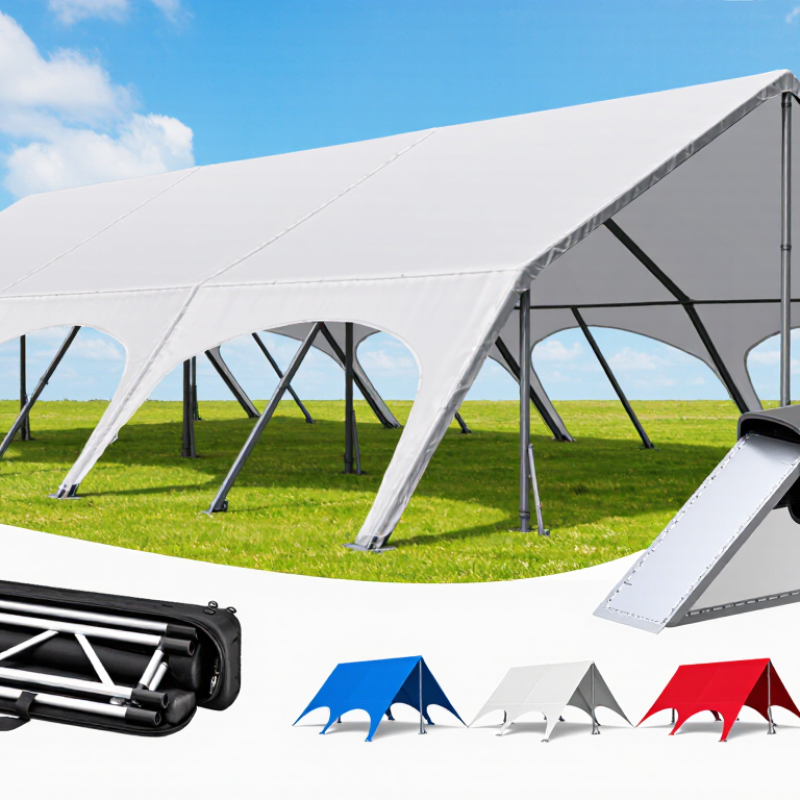
China’s pop-up canopy market offers several practical frame styles. Steel-frame instant canopies suit occasional markets and family gatherings; their heavier legs feel stable but add carrying weight. Aluminum-frame models are lighter for frequent transport. Slant-leg designs reduce packed size, though their smaller footprint may provide less usable shade. High-peak commercial canopies offer more headroom for stalls and event tables. Beach models often use lighter frames and sand anchors, not heavy-duty event hardware.
Choose by setting.
Grand View Research’s 2024 camping-tent report valued the adjacent global camping-tent market at about US$3.6 billion in 2023; this is not a pop-up-canopy sales figure, but it signals demand for portable outdoor shelter.
When comparing Chinese suppliers, ask for frame material, fabric weight, UV protection details, water-resistance test results, packed dimensions, and replacement-part availability. A coated fabric can look convincing under showroom lights. Ask how seams and joints perform after repeated setup, too.
Wind limits matter; no ordinary canopy should be treated as storm shelter.
Not by price alone.

When comparing pop up canopies from suppliers in China, look beyond the fabric color and quoted price. Check the frame material, tube thickness, joint design, and locking mechanism. These details affect setup, durability, and repair. Ask for the canopy’s open dimensions and packed size, then compare them with your vehicle, stall, or storage space. A few centimeters can matter.
Fabric specifications deserve close attention. Ask about the material, coating, seam construction, and stated water resistance. “Waterproof” can mean different things, so request test details rather than relying on a label. UV protection claims also need supporting information. I still find this easy to overlook when a product photo looks convincing. Ask for close-up images of seams, corners, and attachment points, or request a sample if practical.
Stability matters. Compare leg adjustment options, ground anchors, and any guidance for safe use in changing weather. A canopy is not automatically suitable for strong wind. Check how replacement parts are supplied, what the warranty covers, and whether instructions are clear. Request a written quotation that separates product cost, packaging, shipping, and customization. Small details get missed. Confirm production lead time and inspection arrangements before placing an order; a polished sample may not reflect every unit in a large shipment.
| What to Compare | Practical Options or Target | What to Check Before Ordering | Suitable Buying Route in China |
|---|---|---|---|
| Supplier type | Manufacturer-direct, a wholesale sourcing platform, or a local sourcing agent | Confirm whether the seller manufactures the canopy, trades it, or outsources production. Ask for a factory address and a live production or product inspection when relevant. | Manufacturer-direct can suit repeat or customized orders; wholesale platforms can help compare multiple suppliers; an agent can help with communication and inspections. |
| Canopy size | Common pop-up sizes include 3 × 3 m and 3 × 4.5 m; confirm whether dimensions refer to the roof or the footprint. | Request a dimensioned drawing showing roof dimensions, leg spacing, peak height, and clearance height. Usable shade area can be smaller than the roof dimensions suggest. | Any route; specify the required dimensions in the quotation and purchase agreement. |
| Frame material and construction | Steel or aluminum frames are widely used. Compare tube dimensions, wall thickness, joints, and finish—not material name alone. | Ask for a frame specification, close-up photos of joints, corrosion-protection details, and the packed product weight. Check that replacement parts are available. | Manufacturer-direct is useful for customized frame details; request a sample or pre-shipment inspection for larger orders. |
| Fabric and water protection | Polyester canopy fabric is common. Coatings and fabric specifications vary; select them for the intended use and destination. | Request fabric composition, measured weight, coating details, seam construction, and a water-resistance test report if performance is important. A water-resistant canopy should not be assumed to be suitable for storms. | Any route; have the precise fabric and test requirements written into the order rather than relying on a product listing alone. |
| UV protection | If high UV protection is required, specify a target such as UPF 50+ and the applicable test method for the destination market. | Ask for a current test report that identifies the tested fabric and method. Do not treat a printed claim or fabric color as proof of a rating. | A sourcing agent or inspection service can help verify reports and that the delivered fabric matches the approved sample. |
| Stability and anchoring | Look for adjustable legs, secure locking points, and suitable anchoring accessories such as stakes or weight bags. | Ask how any wind-performance claim was tested, including setup and anchoring conditions. Follow the supplier’s instructions and avoid using a canopy in unsafe wind or severe weather. | Any route; confirm which anchoring accessories are included and which are optional. |
| Setup and portability | Compare the folding mechanism, number of setup steps, packed dimensions, carrying bag, and total packed weight. | Request a setup video using the quoted model and confirm the package contents. Check whether the canopy can be assembled by the number of people available. | Wholesale platforms are useful for initial comparison; obtain a physical sample before committing to a large order. |
| Order terms and quality control | Compare minimum order quantity, sample cost, production lead time, packaging, payment terms, and warranty coverage. | Use a written specification and approved sample. Agree on inspection criteria, defect handling, spare parts, and delivery terms before payment. | For in-person supplier evaluation, trade fairs in China can support direct discussions; for remote buying, use documented samples and independent inspection where appropriate. |
| Best overall approach | Shortlist several suppliers, compare like-for-like specifications, and test a sample before a larger purchase. | Evaluate verified specifications, sample quality, communication, order terms, and inspection options together—not price alone. | Choose the route that fits order size and support needs: direct sourcing for customization, a wholesale platform for comparison, or an agent for local coordination. |
Note: Canopy specifications, test methods, and order terms vary by supplier and destination market. Verify claims and applicable requirements before purchasing.
Where to find dependable pop-up canopy suppliers in China? Start with manufacturing regions such as Zhejiang, Jiangsu, and Guangdong, then compare suppliers through trade directories, sourcing platforms, and major trade fairs. Search for factories that make portable shelters, not only trading companies. Ask for a live video tour of the cutting, sewing, and frame-assembly areas. A close-up of corner stitching tells you more than a polished catalogue. Small detail. Big signal.
Use trade data to narrow your search. The International Trade Centre’s Trade Map and UN Comtrade track tents under HS code 6306.22, covering tents made from synthetic fibres. This category is broader than pop-up canopies, so treat it as a market-screening tool, not proof of a supplier’s sales. Request recent export records and confirm product specifications against actual samples. Fabric weight, frame tubing, joint design, and packed dimensions should be listed clearly.
Check logistics as well as production. The World Bank’s 2023 Logistics Performance Index rated China 3.7 out of 5, offering useful context for evaluating transport infrastructure and shipment performance. Still, a national score cannot predict one factory’s reliability. Ask for a pre-shipment inspection, sample lead time, and carton measurements before placing a large order. I would also test the canopy in wind and rain; showroom photos rarely show the weak points.
A dependable pop-up canopy supplier should explain how its frame and fabric perform, not just show attractive photographs. Ask whether the frame uses steel or aluminum, how the joints are reinforced, and whether replacement parts are available. For the canopy top, request details about fabric weight, water resistance, and UV protection. Small details matter. A sample lets you inspect stitching, corner reinforcement, and the feel of the fabric before placing a larger order.
Assess the manufacturer’s process as carefully as the product. Request a written specification sheet, production timeline, and recent quality-control records. Ask how the supplier checks frame stability and fabric seams, and whether test reports apply to the exact model you plan to buy. A certificate alone may not answer that question. If possible, arrange a third-party inspection before shipment. It adds cost, but can reveal uneven stitching, loose fittings, or inconsistent finishes. A glossy catalog can still hide these flaws.
Retailers need a different check. Confirm that the item is actually in stock, clarify delivery estimates, and read the return and warranty terms before paying. Ask who handles damaged parts after delivery. One detail is easy to miss: wind safety. A canopy’s performance depends on anchoring and conditions, so seek clear setup guidance rather than promises that it can withstand any weather. I would not judge a supplier by one conversation; written answers and consistent details are more useful.
When sourcing a pop-up canopy in China, verify the sample before comparing quotations. Check the fabric’s stated weight, seam stitching, frame-tube thickness, and locking joints. Ask for a test report matching the exact fabric and frame offered, not a generic product sheet. Take photos of the opened canopy and its joints during inspection. Small details matter.
Grand View Research valued the global outdoor furniture market at USD 50.3 billion in 2023 and forecast 5.9% annual growth through 2030. That broad market figure is not a canopy price guide. Compare itemized quotes instead: canopy size, fabric specification, frame material, printing, spare parts, packaging, and inspection fees. Confirm whether the price is EXW or FOB, and ask what could change it. I still find “same specification” surprisingly vague.
For delivery, get the production time, dispatch date, shipping method, and named destination in writing. UNCTAD’s Review of Maritime Transport 2024 reported 2.4% growth in global maritime trade during 2023; port schedules can still shift. Request carton dimensions and gross weight before calculating freight. Agree on a pre-shipment inspection and payment milestones. Keep a little buffer. A signed sample record helps when the delivered canopy differs in color, fit, or finish.
