A nightstand should fit your bedtime routine, not just look good beside the bed. In 2026, shoppers can choose from slim wood tables, metal-frame designs, and compact cabinets with raised legs. A well-chosen Night Stand With Legs can create a lighter visual feel while keeping essentials within reach. Think of a reading lamp, a glass of water, and a charging cable that never quite stays put. Small details matter.
Leg height affects more than appearance. It can make vacuuming easier, change how much storage fits beneath the table, and influence whether the piece works with your bed frame. Yet a delicate silhouette does not guarantee sturdy construction. Some designs may wobble on uneven floors, and open space beneath the tabletop will not suit everyone. Looks matter, too—but they are not the whole story.
This guide compares nightstands by size, storage, materials, stability, and everyday usability. It also considers practical measurements, such as tabletop height and the clearance needed for drawers to open comfortably. Product descriptions can be helpful, but they do not always answer every question about assembly or long-term wear. That is worth remembering. The best choice depends on your room, budget, and habits—not a single style trend. We’ll look at options for different needs and point out the trade-offs, so you can choose a bedside table with fewer surprises.
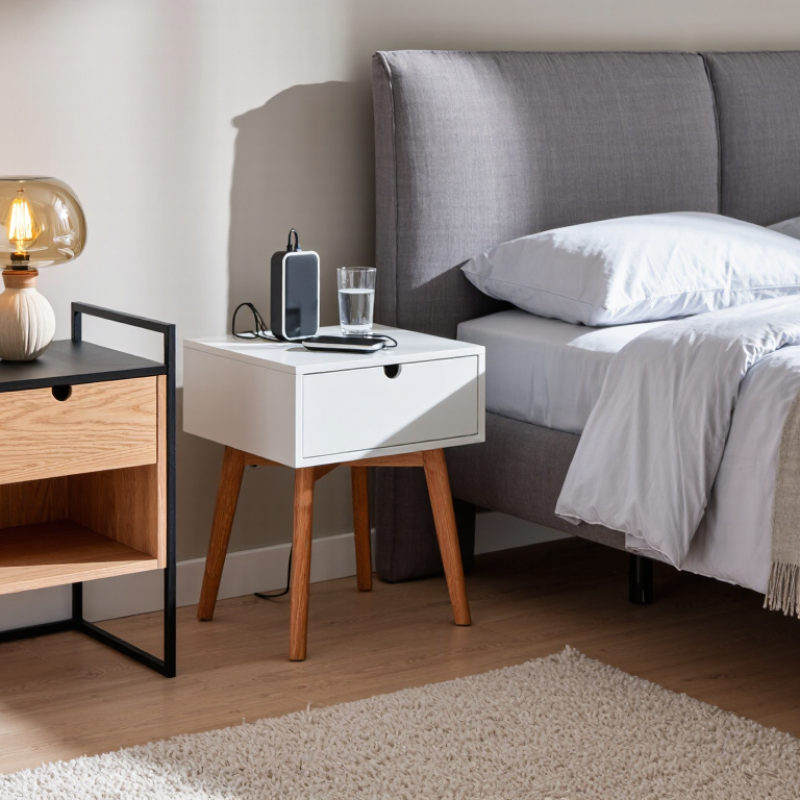
A nightstand with legs is a bedside table whose main body sits above the floor on separate supports. The space beneath may be open or partly enclosed by a lower shelf. This raised construction can make a small bedroom feel less crowded, while leaving room for a vacuum or a slipper to slide underneath. That gap matters.
Leg shape helps define the look. Slim, tapered legs often suggest mid-century or Scandinavian-inspired design; turned legs feel more traditional. Straight, square supports suit many modern and transitional rooms, while angled metal legs can create a lighter industrial effect. These labels are useful, but not exact rules. A simple wooden table can mix styles without looking confused.
When comparing designs, check how the legs meet the frame and whether the table stays steady on your flooring. A delicate profile may look elegant, yet wobble if the joints are weak or the top is overloaded. Measure from floor to mattress, too: the tabletop is usually easiest to reach when it sits close to mattress height. Open legs also reveal dust more readily. Not always a deal-breaker, but worth noticing.

A nightstand’s legs shape more than its appearance. Four widely spaced legs can leave a clear path for a vacuum and make a compact room feel lighter. Yet slim legs may wobble if joints are loose or the floor is uneven. Check for solid corner connections, level-adjusting feet, and a top wide enough for a lamp without crowding the bed. Small details matter.
Storage changes the stability equation. Deep drawers add useful capacity, but a loaded drawer can shift the center of weight toward the front. The U.S. Consumer Product Safety Commission’s 2022 Tip-Over Report estimated about 17,800 emergency-room-treated injuries from tip-overs involving furniture, televisions, or appliances that year. This figure is not specific to nightstands, but it supports a practical check: open each drawer fully and test whether the unit rocks. Heavier items belong low. For taller models, consider anchoring them.
Room fit deserves a tape measure, not guesswork. Measure the bed height, walking clearance, and space needed to pull drawers open. A legged design can reveal more floor and suit a tight footprint, while a low shelf or stretcher may collect dust—or provide a spot for books. I would not treat any leg shape as automatically stable; rugs, loose fasteners, and uneven floors can change the result.
| Leg Design | Stability Considerations | Storage and Floor Clearance | Room Fit | Best Suited For | Potential Trade-Off |
|---|---|---|---|---|---|
| Four straight, square legs | A sturdy, well-joined frame can provide reliable support. A broad stance and solid corner connections help limit wobble. | Open space beneath the case makes floor cleaning easier; drawers or shelves determine enclosed storage. | Works with many furniture styles. Measure the leg placement if the nightstand must sit close to a wall or bed frame. | Everyday use and shoppers seeking a simple, versatile design. | Four legs can rock on an uneven floor unless they have adjustable levelers or suitable protective pads. |
| Splayed legs | Legs angled outward create a wider footprint, which can help resist tipping when the frame and joints are sound. | Typically leaves the area below the case open, though outward angles occupy more floor space. | Useful where a lighter visual profile is desired; check the full outside width at floor level. | Rooms where extra footprint stability and an open look are priorities. | Angled legs may protrude into walkways or conflict with nearby furniture. |
| Tapered legs | Stability depends on leg thickness, material, attachment, and overall stance—not on taper alone. Check for secure, rigid joints. | Usually provides clear floor space beneath the cabinet. The smaller visual profile does not necessarily mean less storage. | Often suits compact rooms because the base looks less bulky; confirm actual dimensions rather than relying on appearance. | Bedrooms where a streamlined, visually lighter piece is preferred. | Very slender legs may be less tolerant of rough handling than heavier legs, depending on their material and construction. |
| Metal hairpin legs | Metal legs can be strong, but thin rods and lightly secured mounting plates may allow side-to-side movement. Look for rigid attachment and a stable stance. | Open beneath the case for easy access and cleaning; storage is provided by the cabinet, drawers, or shelves above. | The exposed, narrow base can suit small rooms, but the legs may extend beyond the cabinet edges. | Shoppers who want an open base and a light, contemporary appearance. | May feel less rigid than a braced frame if the legs or fasteners are undersized or poorly installed. |
| Legs connected by stretchers | Crossbars between legs can reduce independent movement when securely joined. Their effectiveness depends on the frame and connections. | Stretchers occupy some of the space beneath the cabinet and can limit access for a vacuum or storage basket. | A practical choice where sturdiness matters more than completely open floor space. | Frequent-use rooms or households that value a more braced base. | Low stretchers can catch toes or interfere with items placed under the nightstand. |
| Tall legs with a raised cabinet | As leg height increases, a narrow stance or heavy, top-loaded cabinet can feel less secure. Prefer a well-braced frame and avoid overloading the top. | Provides generous floor clearance for cleaning or low-profile baskets; usable storage still depends on the cabinet dimensions. | Can make a small room feel more open, but the taller silhouette may look out of scale beside a low bed. | Rooms where easy floor access is important or the nightstand needs to visually match a taller bed. | Check that the top height is comfortable from the mattress and that the raised design does not feel top-heavy. |
Quick fit check: Compare the nightstand’s top height with the mattress height; a top close to mattress level is often convenient for reaching items. Measure the available width, depth, and walkway clearance, including any legs that angle outward. For stability, check the base stance, joint quality, and whether adjustable levelers are included. Clearances and performance vary by individual design.
A nightstand’s legs affect more than its appearance; they change stability, cleaning access, and how the piece sits beside a bed. Solid hardwood legs usually resist everyday knocks, while metal legs can feel firm and visually lighter. Check whether the legs attach to a reinforced frame or only to a thin panel. That small detail matters. A wobbly corner is hard to ignore.
Material names alone do not tell the whole story. Veneered wood can look refined, but inspect the edges for lifting and the surface for uneven seams. Finishes should feel even around corners and drawer fronts, not tacky or rough. Matte coatings tend to hide fingerprints, while glossy finishes show scratches more readily. Feel the difference. A finish may look beautiful in a showroom and still be awkward to maintain at home.
Construction deserves a close, practical check. Open each drawer and notice whether it glides smoothly, even when lightly loaded. Look for sturdy joinery, aligned drawer gaps, and feet that sit level on the floor. Adjustable glides help on uneven boards, though they can look less elegant. I would not assume a heavier nightstand is automatically better; weight can come from bulky materials rather than careful assembly. If possible, inspect the underside and gently test for side-to-side movement before choosing.
When comparing legged nightstands in 2026, start with the bed, not the product photo. Measure from the floor to the top of the mattress, then look for a tabletop near that height or a few inches lower. This keeps a phone, book, or water glass within easy reach. Check the leg spacing as well. A tall, narrow table may wobble on thick carpet. Stability matters.
Choose a size that leaves room to move. In a tight bedroom, a tabletop around 16 inches wide may be more practical than a broad cabinet. Measure the gap beside the bed, including space for drawers to open. One drawer can hide charging cables and sleep masks; an open shelf makes larger books easier to grab. Small detail. Look for smooth drawer travel and a finish that wipes clean without special care.
Value is more than the lowest price. Compare the materials, joinery, weight limit, and whether the legs need frequent tightening. A sturdy, simple table may serve longer than a cheaper model with thin panels, though appearance can be hard to judge online. I would treat unclear assembly instructions as a warning, not a deal-breaker. And be honest about your habits: a beautiful shelf is less useful if clutter quickly takes it over.
Choosing the best legged nightstand starts with the space beside your bed. Measure the gap, including baseboards and nearby drawers, before comparing styles. Leave enough room to walk without catching a shin on a corner. That small clearance matters.
Match the tabletop height to your mattress, or keep it slightly lower for easy reach. A lamp, phone, and glass of water should fit without crowding the surface. Check the drawer opening, too; a wide drawer can hit a bed frame even when the cabinet itself fits. Try the reach from your usual sleeping position.
Leg design affects both stability and cleaning access. Tapered legs can make a compact room feel less crowded, while thicker legs often provide a steadier stance. Inspect the joints and look for firm, even contact with the floor. Uneven floors happen. Adjustable feet can help, though they may look less refined up close. Choose materials that suit your routine: sealed wood is easier to wipe after a spill, while textured finishes may show dust sooner. One trade-off is easy to miss: more open space beneath the table helps with cleaning, but small items can roll underneath.
