A Bubble Pendant Lamp can make a room feel lighter without making the design feel cold. Its rounded glass shades catch daylight, soften the bulb’s glare, and add a gentle focal point above a dining table or kitchen island. The effect depends on more than appearance. Shade size, hanging height, glass finish, and bulb brightness all change how the fixture works in a real home. Small choices matter.
Lighting designer Ingo Maurer is often associated with the line, “I don’t design lamps; I design light.” That idea is a useful lens for comparing these seven options. Look beyond the product photograph: imagine warm reflections on a pale wall, clear glass above a busy countertop, or several pendants hanging at slightly different heights. Then consider cleaning, dimming, and whether the fixture provides enough task light. Some designs look effortless online but can feel visually crowded in a compact room. That is worth admitting. The best choice balances atmosphere with everyday use, rather than chasing a dramatic image alone. This guide explores seven Bubble Pendant Lamp styles for modern homes, noting where each one may shine—and where it may not.
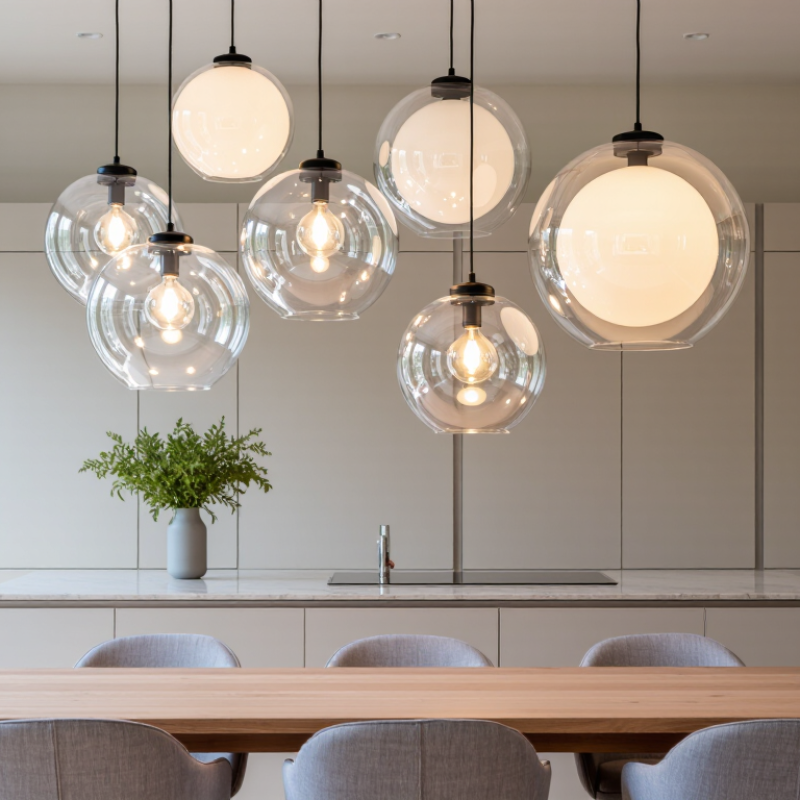
A bubble pendant is defined less by a single style than by its glass, rounded form, and the way it spreads light. Clear glass keeps the bulb visible and creates crisp reflections on nearby walls. Opal or lightly frosted glass softens the source, which can feel easier on the eyes above a dining table. Glass thickness and small surface variations also affect the result. They are not always flaws, but uneven bubbles may look distracting when lit.
Shape changes where the light goes. A round globe sends light in several directions, while a wider, shallow shade can cast more light across a tabletop. Clustered globes add visual depth, but they may create overlapping highlights. In a room with glossy cabinets or a polished table, that sparkle can become busy. I still find this easy to underestimate when judging a fixture in a showroom.
Light distribution depends on the bulb as well as the glass. A clear shade may reveal a bare bulb, so a dimmable, warm-toned bulb can make evening light gentler. Check the pendant from seated eye level, not only from across the room. Small details matter. A bubble pendant can look airy overhead, yet feel glaring if it hangs too low or shines directly into the usual line of sight.

A bubble pendant can bring soft, layered light to a kitchen, but its height matters as much as its shape. The NKBA recommends hanging a pendant 30–36 inches above a countertop, measured from the counter surface to the fixture’s lowest point. This range helps illuminate food preparation while keeping the fixture from dominating the work area.
Measure carefully. A tape measure, a helper, and a temporary stand-in can make the decision easier before installation. Hold the proposed height with a cardboard outline or an unlit sample. Check the view from across the island, too. If the globes block eye contact or cast strong shadows, the standard range may not feel right in your room. It happens.
Ceiling height, pendant size, and the number of fixtures all affect the result. A wide cluster of glass globes may need more breathing room than a compact single pendant. Keep the lowest glass above the recommended clearance, then adjust within the range for comfortable sightlines. For unusually high ceilings or sloped surfaces, ask a qualified installer to confirm mounting and wiring details. Measurements help, but living with a mock-up for a day can reveal what a quick glance misses.
7 Best Bubble Pendant Lamps for Modern Homes
Seven bubble pendants differ in material, brightness, and where they work best. Clear-glass globes spread light widely, making a cluster useful over a dining table. Opal glass softens glare for bedrooms and sitting areas. Acrylic is lighter above stairwells, while seeded glass adds texture but can cast uneven patterns. Smoked glass suits a low-glare corner, though it may make an already dim room feel darker. Metal-framed bubbles direct more light downward. A tiered glass cluster makes a strong focal point in rooms with high ceilings. Soft, not dim.
Compare brightness in lumens, not watts. The U.S. Department of Energy’s Energy Saver guide gives about 800 lumens as a typical 60-watt incandescent replacement. For a pendant, actual output depends on bulb choice, shade tint, and fixture design; check the product’s rated capacity before buying. DOE also reports that LEDs use at least 75% less energy and last up to 25 times longer than incandescent bulbs. That is useful context, not a guarantee for every fixture.
Tips: For a kitchen island, look for clear or lightly tinted globes and enough total lumens for food preparation. Choose opal shades where people sit and look toward the lamp. Check the ceiling. Measure the drop above tables, and consider dimmable bulbs if the fixture supports them. One trade-off is easy to miss: a beautiful smoked globe may need more light than expected. I’d test the bulb temperature in the room before committing.
Bubble pendant lamps add soft curves above a kitchen island, dining table, or reading nook. Their glass globes can spread light gently, though clear shades may expose the bulb and create glare. The energy story depends less on the shape and more on the light source inside.
The U.S. Department of Energy reports that LED bulbs use at least 75% less energy than incandescent bulbs. For a pendant used several hours each evening, that difference can reduce electricity use over time. LEDs also produce less heat, which can make a small glass shade more comfortable near eye level. Check the fixture’s specifications before choosing a bulb. Some pendants require particular bulb sizes or compatible dimmers.
Small details matter. A warm-white LED can keep a dining area inviting, while a dimmer helps adjust brightness for different tasks. Compare the lamp’s rated output with the room’s needs; a decorative globe is not automatically useful task lighting. I have found that attractive glass can still feel too bright when the bulb is exposed. That is worth reconsidering. A frosted bulb, lower brightness, or better placement may make the pendant more comfortable without giving up its clean, modern look.
DOE reports that LED lighting uses at least 75% less energy than incandescent lighting.
Energy use is indexed to an incandescent light source at 100 units. An LED using 25 units represents 75% less energy for comparable lighting. Source: U.S. Department of Energy.
Bubble pendant lamps can feel surprisingly heavy once glass globes, a metal frame, and suspension hardware are assembled. Check the fixture’s total weight against the ceiling box’s marked rating before installation. The 2023 National Electrical Code, Section 314.27(A)(2), requires listed support for luminaires weighing more than 50 pounds. A box that looks sturdy may not be rated for that load. Small details matter.
Look beyond the box itself. Confirm that its fasteners connect to suitable framing, and inspect the ceiling for cracking or movement. If the fixture weight is unclear, or the box has no visible rating, pause and ask a qualified electrician to assess it. The NFPA report Home Fires Involving Electrical Failure or Malfunction estimates 32,620 U.S. home structure fires annually involved electrical distribution or lighting equipment from 2015 to 2019. This broad figure does not mean pendant lamps caused those fires; it does support careful electrical work.
Tips: Weigh the assembled lamp, not just its glass shades. Compare that number with the box rating, and include the canopy and mounting hardware. Take a photo of the rating before lifting the fixture. I would not guess when the label is missing.
