For global buyers, choosing the 2026 best Protective Flooring means examining performance beyond appearance. A polished surface may look excellent, yet fail under forklifts, sharp equipment, moisture, or constant foot traffic. The right system should match the building’s use, climate, maintenance routine, and expected service life.
Ceramic tile and stone consultant Donato Pompo offers a practical perspective: “A successful floor begins with preparation, not decoration.” That principle remains valuable when comparing epoxy coatings, rubber flooring, vinyl systems, interlocking tiles, and temporary protection mats. Each option solves a different problem. Epoxy can resist chemicals and heavy loads, while rubber may reduce impact and walking fatigue. Vinyl often supports easier cleaning, but seams and subfloor moisture deserve careful attention.
Details matter. A warehouse floor may need forklift-rated resistance and a textured finish. A hospital corridor requires cleanability, low joints, and dependable slip performance. A renovation project may need removable Protective Flooring that shields finished surfaces from dust, wheels, and dropped tools. Regional temperature changes can also affect bonding and expansion.
There is no universal winner.
Buyers should request test data, installation guidance, warranty limits, and maintenance instructions. They should also verify relevant local building and safety requirements before ordering. Some product claims sound impressive but lack context. That is where careful review matters.
This guide compares practical options for international purchasing in 2026. It considers durability, safety, installation complexity, total cost, and environmental conditions. The final choice may not be the most expensive product. It should be the one that keeps performing when real work becomes messy.
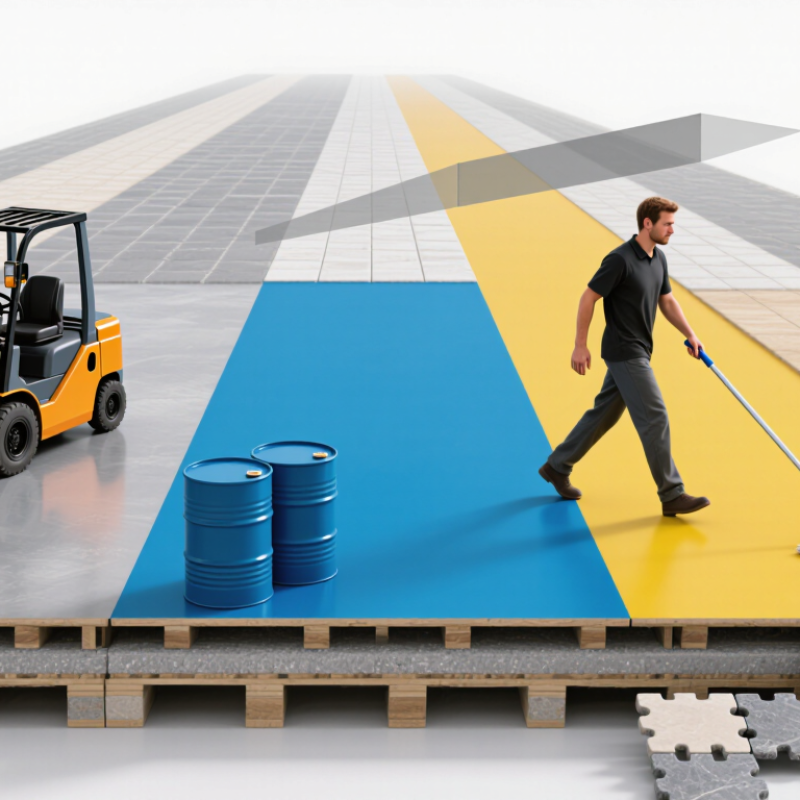
Protective flooring is more than a tough surface underfoot. It is a planned barrier against impact, abrasion, moisture, dust, stains, and slipping. In warehouses, workshops, loading areas, and public facilities, the right system protects both the base floor and daily operations. A damaged floor can slow carts, create trip risks, and increase cleaning costs.
Global buyers need it because site conditions vary widely. A flooring system suitable for a dry warehouse may fail in a humid coastal facility. Temperature changes, heavy wheels, cleaning chemicals, and installation skills all affect performance. During project reviews, buyers often focus on thickness first. That can be misleading. Bond strength, surface preparation, drainage, repair access, and verified test data matter just as much. No floor is perfect. A practical choice balances service life, maintenance, local availability, and installation risk.
Tips: Define the traffic clearly. Record wheel loads, impact points, moisture conditions, and cleaning methods. Request slip resistance, abrasion, chemical, and fire-performance documentation where relevant. Check whether local installers can prepare the substrate correctly. Small trial areas are valuable, although they cannot represent every seasonal condition. Recheck the specification before purchase; real sites often expose assumptions that drawings miss.

2026 Best Protective Flooring for Global Buyers?
How Protective Flooring Types Compare by Material and Use
Protective flooring performs differently because each material solves a different site problem. Rubber tiles absorb impact well and resist heavy equipment, making them suitable for gyms, workshops, and loading areas. However, rubber can smell after installation and may need ventilation. PVC rolls offer smooth cleaning and strong chemical resistance, which helps in clinics, laboratories, and production rooms. Their seams require careful welding to prevent moisture entry.
EVA foam is lightweight, soft, and easy to replace. It suits playrooms, temporary work zones, and standing areas, but sharp tools can damage its surface. Polypropylene tiles handle moisture and quick installation better than many softer options. They work well in garages, exhibition spaces, and damp utility rooms. Cork feels warm underfoot and reduces noise, yet it needs sealing and careful moisture control. No material wins every site. I have seen buyers choose comfort when load capacity mattered more.
Tips: Match the floor to the real hazard, not the catalog image. Check impact strength, slip resistance, thickness, edge design, temperature range, and cleaning chemicals. Ask for independent test data and installation guidance. A 10-millimeter surface may protect equipment, but it cannot correct an uneven concrete base. Consider local climate, replacement access, and worker footwear. Small samples help, though they can hide long-term seam movement. Trial the flooring under actual loads before purchasing at scale.
| Flooring Type | Primary Material | Typical Thickness | Best Protection | Typical Applications | Load and Impact Performance | Moisture and Chemical Resistance | Installation | Key Limitations |
|---|---|---|---|---|---|---|---|---|
| Rubber Flooring | Natural or synthetic rubber | 3–20 mm | Impact absorption, vibration reduction, and anti-fatigue support | Gyms, workshops, play areas, equipment rooms, and commercial interiors | Excellent shock absorption; suitable for repeated foot traffic and moderate equipment loads | Generally water-resistant; resistance to oils and solvents varies by rubber formulation | Loose-lay, interlocking, or adhesive installation | Heavy; may have a noticeable rubber odor; prolonged sunlight can affect some products |
| PVC or Vinyl Protection Mat | Polyvinyl chloride, often with a reinforced structure | 1.5–6 mm | Protection from dirt, spills, abrasion, and rolling traffic | Offices, corridors, exhibitions, construction renovations, and temporary access routes | Good abrasion resistance; reinforced products handle wheeled traffic better than thin mats | Good water resistance; verify compatibility with solvents, oils, and plasticizers | Loose-lay, tape-fixed, or interlocking formats | Can crease if stored incorrectly; some formulations may become less flexible in cold conditions |
| HDPE Ground Protection Panel | High-density polyethylene | 10–20 mm | Load distribution, rut prevention, and protection of soil or finished surfaces | Construction sites, outdoor events, landscaping, temporary roads, and emergency access | Very high impact and compressive performance when supported correctly; panel design affects capacity | Very good resistance to water, many acids, alkalis, and salts; check specific chemical exposure | Interlocking or mechanically connected; may require handling equipment for large panels | Rigid and relatively heavy; can become slippery when wet without a textured surface |
| Polypropylene Modular Tile | Polypropylene copolymer or homopolymer | 8–25 mm | Durable surface protection, drainage, and fast temporary installation | Garages, workshops, warehouses, sports areas, retail spaces, and event floors | High resistance to wear and localized impacts; supported subfloors improve performance | Good resistance to water and many household or industrial chemicals | Click-lock modular installation; damaged sections can usually be replaced individually | May transmit noise; uneven subfloors can cause movement or joint stress |
| EVA Foam Mat | Ethylene-vinyl acetate foam | 8–40 mm | Cushioning, comfort, and protection against light impacts | Playrooms, martial arts areas, home gyms, nurseries, and light-duty workstations | Excellent cushioning but limited resistance to sharp loads, heavy casters, and concentrated equipment loads | Resistant to water; some oils, solvents, and high temperatures can damage the foam | Lightweight interlocking or roll-out installation | Can dent, tear, or shrink; not recommended for heavy industrial traffic |
| Corrugated Plastic Floor Protector | Fluted polypropylene or polyethylene sheet | 2–6 mm | Short-term protection against dust, paint, light abrasion, and minor spills | Painting, remodeling, moving operations, exhibitions, and interior fit-outs | Lightweight and moderately impact-resistant; unsuitable for concentrated heavy loads | Water-resistant; chemical resistance depends on the polymer and exposure conditions | Cut-to-fit, taped, or temporarily fixed over a clean, dry floor | Edges may curl or shift; flutes can collapse under point loads |
| Masonite or Hardboard Protection Sheet | Compressed wood fiber board | 2.5–6 mm | Scratch and abrasion protection during indoor construction or relocation work | Floor refinishing, interior construction, furniture moving, and temporary walkways | Good resistance to surface abrasion and rolling loads when fully supported | Poor moisture resistance unless specially treated or protected at the seams | Loose-laid or taped; sheets can be cut with standard woodworking tools | Can swell, warp, or delaminate when exposed to water; heavier than plastic sheet products |
| Plywood Protection Panel | Layered wood veneer panel | 9–25 mm | Heavy-duty impact protection and load distribution | Construction access routes, temporary platforms, ramps, and protection over fragile floors | High stiffness and good load distribution; performance depends on grade, span, and support spacing | Limited inherent moisture resistance; exterior-rated or treated panels are better for damp conditions | Loose-laid, screwed, or mechanically fixed; requires careful lifting and edge handling | Heavy, bulky, and vulnerable to moisture; fasteners can damage the underlying floor |
| Epoxy Resin Floor Coating | Two-component epoxy resin and hardener | 0.5–5 mm | Permanent protection against abrasion, dusting, and selected chemical exposure | Factories, laboratories, warehouses, garages, and food or process areas | Hard, durable surface with strong abrasion resistance; not a cushioning layer | Good chemical resistance after full cure; resistance must be checked against the specific chemical | Professionally prepared and applied; requires clean, dry, suitably profiled concrete | Permanent installation; can crack or delaminate if the substrate moves, is damp, or is poorly prepared |
Protective flooring should be judged by measured performance, not appearance alone. Slip resistance matters in entrances, kitchens, and wet work areas. Impact resistance helps floors survive dropped tools, carts, and heavy equipment. Abrasion testing also shows how surfaces may perform under repeated traffic. No floor is perfect. Selecting for the wrong environment remains a common and costly mistake.
Buyers should request test reports, installation guidance, and maintenance requirements before placing an order. Check fire performance, chemical resistance, moisture tolerance, and indoor air emissions. These factors can affect safety and long-term usability. Local building rules still apply, even when products meet international standards. A reliable supplier should explain test methods clearly, not only provide attractive numbers.
Tips: Match the floor to actual traffic, temperature, and cleaning routines. Inspect the subfloor carefully. Small cracks or trapped moisture can weaken a strong surface. Ask for samples, then test them with realistic footwear, wheels, and cleaning tools. The most durable option may not be the thickest one. It may be the material installed correctly and maintained consistently.
2026 Best Protective Flooring for Global Buyers?
How to Select Protective Flooring for Different Environments
Protective flooring should match the environment, not just the project budget. In warehouses, choose surfaces that resist forklift abrasion, rolling loads, and impact from dropped tools. Dense resin flooring can work well on concrete when the base is dry and properly prepared. Add a textured finish where oil or water may reach the walking area. Smooth floors clean easily, but they can become dangerously slippery.
Healthcare rooms need seamless, low-porosity surfaces with simple cleaning requirements. Welding areas demand stronger heat and spark resistance. In food-processing spaces, check whether the flooring tolerates frequent washing, temperature changes, and approved cleaning chemicals. Outdoor loading zones need UV stability, drainage, and reliable performance during freezing or heavy rain. Cold-storage floors also require materials that remain stable at low temperatures.
I have seen excellent materials fail because installers rushed moisture testing. The specification looked right. The preparation was not. A perfectly universal floor does not exist. Buyers should request samples, review technical data, and inspect a similar completed site when possible. Check local fire, hygiene, slip-resistance, and accessibility requirements before ordering. Consider repair time, worker safety, and disposal conditions, not only the purchase price. Sometimes a modestly priced system becomes expensive after repeated repairs.
How to Select Protective Flooring for Different Environments
How to read this chart: The 1–5 planning index compares the relative importance of impact protection, slip resistance, chemical resistance, acoustic comfort, and maintenance efficiency in typical environments. A higher score means that the flooring characteristic should receive greater priority during specification. The index is a practical buying framework, not a certification or laboratory test result.
For final selection, buyers should verify project-specific requirements against applicable standards, including ANSI A326.3 for dynamic coefficient of friction, EN 14904 for indoor sports surfaces, and ASTM F1292 for playground impact attenuation.
Global buyers should assess protective flooring as a complete project, not a simple product purchase. Warehouses need resistance to forklifts, pallets, and dropped tools. Clinics require smooth surfaces, sealed joints, and easy cleaning. Wet corridors may need textured finishes with reliable slip performance. A small sample tested under real traffic can reveal more than a polished catalogue image.
Global sourcing demands careful document checks. Request technical data, chemical resistance results, installation instructions, and batch consistency records. Confirm dimensions, packaging, export terms, and replacement availability before placing an order. Landed cost includes freight, insurance, duties, local delivery, installation labor, and possible downtime. A cheaper floor can become expensive after delays or rejected materials. Currency changes can also disturb a carefully planned budget.
Installation begins with the subfloor. Moisture, cracks, dust, and uneven areas can weaken adhesion or create visible seams. Experienced contractors should record temperature, humidity, surface preparation, and curing time.
Maintenance teams need a written cleaning schedule, approved detergents, repair procedures, and spare material. Daily sweeping may protect busy entrances better than aggressive chemical cleaning. This detail is often overlooked.
I still see projects selecting impressive finishes without checking local repair skills. That decision deserves more reflection. A realistic lifecycle estimate should compare replacement frequency, cleaning labor, energy use, and business disruption over several years.
